
Funnelish has carved out a strong niche as an ecommerce funnel builder for Shopify and WooCommerce merchants. With a 4.7/5 rating, one-click upsells, and fast-loading pages, it's a solid tool for brands running paid traffic through sales funnels. But as your business scales, you'll inevitably hit Funnelish's ceiling—and that's when you need to explore alternatives.
This isn't a hit piece on Funnelish. It's a practical analysis of where Funnelish excels, where it falls short, and what modern ecommerce brands should consider when evaluating funnel builder alternatives in 2026.
What Funnelish Does Well
Let's give credit where it's due. Funnelish has several genuine strengths that have made it popular with ecommerce entrepreneurs:
True One-Click Upsells
Funnelish's post-purchase upsells are genuinely one-click—customers don't re-enter payment information. This is a real competitive advantage over generic page builders that require workarounds for upsells.
Fast Page Loading
Funnelish pages load in milliseconds, which directly impacts conversion rates. In ecommerce, every 100ms of additional load time reduces conversions by ~1%.
Seamless PayPal Integration
Automatic shipping and tracking sync with PayPal is genuinely useful and saves manual work that other platforms require.
Unlimited Funnels & Traffic
All Funnelish plans include unlimited funnels and traffic. No penalizing you for growth, which is refreshing compared to competitors like ClickFunnels that limit pages per plan.
Where Funnelish Falls Short
The limitations become apparent as you scale beyond $10K-$50K/month in revenue:
Shopify/WooCommerce lock-in. Funnelish requires Shopify or WooCommerce. Period. If you want to go headless, build a custom storefront, or sell through channels beyond Shopify—Funnelish can't support it. This is the single biggest limitation for scaling brands.
No built-in payment orchestration. While Funnelish has "gateway pools" for basic multi-gateway routing, it lacks true payment orchestration. You can't route based on card type, BIN data, customer geography, processor health, or LTV-based logic. As your volume grows and chargebacks become a concern, you need real payment orchestration—not just round-robin routing.
No subscription management. Funnelish doesn't handle recurring billing, dunning, or subscription lifecycle management. You need a separate tool for that—adding another data silo and integration point to manage.
No CRM or email. Funnelish is purely a funnel builder. For email marketing, customer data management, and lifecycle communication, you need Klaviyo, Omnisend, or another ESP. That means your funnel data and customer data live in separate systems—creating the data fragmentation problem we've written about extensively.
Limited design flexibility. Multiple reviews note that Funnelish's page builder offers less customization than competitors like GemPages. For brands that need pixel-perfect control over their storefront, this can be limiting.
Funnelish vs ClickFunnels vs GemPages vs Tagada
When merchants search for Funnelish alternatives, they typically compare it against these platforms. Here's how they stack up:
| Feature | Funnelish | ClickFunnels | GemPages | Tagada |
|---|---|---|---|---|
| Price | $49–$199/mo | $97–$297/mo | $29–$199/mo | Competitive |
| Best For | Ecommerce funnels | Digital products | Shopify design | Full-stack commerce |
| 1-Click Upsells | Yes (native) | Yes | Limited | Yes (native) |
| Payment Routing | Gateway pools | Basic | None | Smart AI routing |
| Subscriptions | No | Basic | No | Full (dunning, retry) |
| CRM + Email | No | Yes (basic) | No | Yes (unified) |
| Platform Required | Shopify/WooCommerce | Standalone | Shopify only | Any / standalone |
| A/B Testing | Yes | Yes | No | Yes |
The Real Cost of Using Funnelish
Funnelish's sticker price ($49-$199/month) is attractive. But the real cost includes everything you need alongside it:
| Item | Cost |
|---|---|
| Funnelish plan | $79-$199/mo |
| Shopify plan (required) | $29-$299/mo |
| Email platform (Klaviyo, etc.) | $45-$350/mo |
| Subscription management (Recharge, etc.) | $99-$499/mo |
| Analytics / attribution | $50-$300/mo |
| True total cost | $302-$1,647/mo |
With Tagada, checkout, funnels, payments, subscriptions, CRM, and email are unified in one platform—eliminating the need for 4-5 separate subscriptions and their associated integration headaches.
Who Should Use Funnelish (And Who Shouldn't)
Funnelish is a good choice if: You're a Shopify merchant doing under $50K/month, running simple paid traffic funnels, and don't need subscription management or advanced payment routing. It's fast to set up, affordable, and does funnel building well.
Consider a Funnelish alternative if: You're scaling beyond $50K/month, need multi-processor payment routing, want to manage subscriptions, need a unified CRM, or want to break free from the Shopify/WooCommerce requirement. This is where platforms like Tagada or CheckoutChamp (for enterprise) become relevant.
Why Tagada Is the Best Funnelish Alternative
Tagada was built to solve the exact problem that Funnelish users encounter as they grow: needing to bolt on more and more tools. Instead of a funnel builder that integrates with other systems, Tagada is a unified commerce platform that includes funnel building as one capability among many.
Visual Funnel Builder + Checkout in One
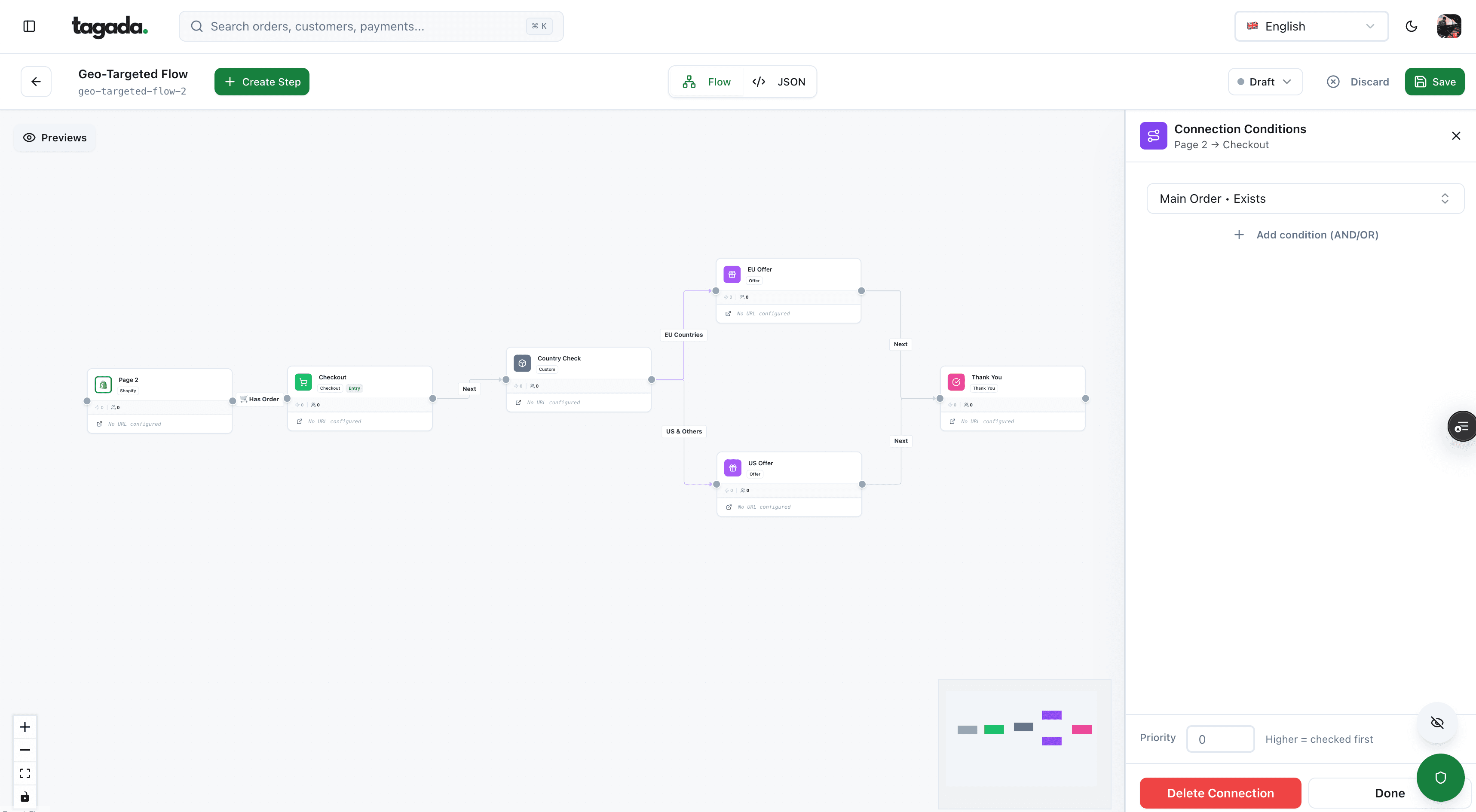
Build landing pages, checkout flows, upsells, and downsells with a drag-and-drop editor—all connected to real payment processing and fulfillment. No Shopify required.
Smart Payment Routing (Beyond Gateway Pools)
Tagada's payment orchestration routes transactions based on card type, BIN, geography, processor health, and customer LTV—not just round-robin. This means higher approval rates and lower chargebacks as you scale.
Built-in Subscription Management
Recurring billing, intelligent dunning, pause/resume, and subscription analytics—no Recharge or Bold subscription app needed.
Unified Customer Data
Every funnel interaction, email click, payment, and support ticket writes to a single customer record. Your email sequences adapt based on checkout behavior. Your funnels adapt based on email engagement.
Migrating from Funnelish to Tagada
Funnelish migrations are typically simpler than CRM migrations since Funnelish is primarily a frontend funnel builder. Most merchants complete the switch in 2-4 weeks:
Recreate your top-performing funnels in Tagada's visual builder. Connect payment processors and set up smart routing rules.
Configure subscription flows, email sequences, and A/B tests. Import customer data if needed.
Run traffic in parallel—splitting between Funnelish and Tagada to compare conversion rates and validate the switch.
Full cutover. Redirect all traffic to Tagada funnels. Cancel redundant Shopify apps and email subscriptions.
Conclusion: Funnelish Is a Starting Point, Not an Endpoint
Funnelish is a capable funnel builder for early-stage ecommerce brands on Shopify. If you're just starting out and running simple funnels, it's a reasonable choice at $49-$199/month.
But the moment you need payment orchestration, subscription management, unified customer data, or platform independence—you've outgrown Funnelish. The total cost of Funnelish plus all the bolt-on tools you need ($332-$1,747/month) often exceeds what a unified platform costs.
Tagada gives you everything Funnelish offers—visual funnel building, one-click upsells, A/B testing—plus payment orchestration, subscription management, CRM, and email in one platform. No Shopify requirement. No data silos. No integration headaches.