You’re usually dealing with this question when revenue is already leaking.
A customer emails support asking for their money back. Another files directly with their bank. Both events remove cash from the business, but they are not the same problem. One is a controllable service and retention decision. The other is a formal dispute that can drag operations, margins, and processor relationships down with it.
For high-growth DTC brands, subscription businesses, creators selling digital products, and merchants in higher-risk categories, chargeback vs refund isn’t a support policy topic. It’s a revenue strategy topic. The right response affects cash flow, approval rates, customer lifetime value, fraud exposure, and your ability to keep processing cleanly across providers.
The biggest mistake is treating each event as isolated. Strong operators don’t. They read refunds and chargebacks as signals. A refund can tell you where fulfillment, expectations, billing communication, or trial conversion is breaking. A chargeback can tell you where fraud controls, descriptor clarity, support responsiveness, or subscription cancellation flow is failing. Both belong inside the same decision system.
The Two Notifications Every Merchant Dreads
The refund request is frustrating. The chargeback notice is heavier.
A refund request usually means the customer came to you first. You still control the conversation, the timing, and often the tone of the outcome. A chargeback means the customer went around you and asked their issuer to reverse the payment. At that point, the process is no longer driven by your support team. It’s driven by bank procedures, deadlines, network rules, and evidence.

In practical terms, a refund is a merchant-led reversal. A chargeback is a bank-led dispute. That distinction changes everything. It changes who controls the timeline, who defines the next step, and whether the event becomes part of the risk profile attached to your merchant account.
That’s why experienced operators prefer the customer to ask for a refund first, even when the sale is already lost. A refund is damage control. A chargeback is damage plus process.
According to Zen Payments’ breakdown of chargeback vs refund, chargebacks can cost merchants up to 2.40 times the original transaction amount, and Ethoca by Mastercard projects 337 million chargebacks by 2026. If you process at scale, that’s not a side issue. It’s a core operating risk.
A refund returns money. A chargeback can also strip control.
Merchants in subscriptions, digital goods, nutraceuticals, continuity offers, and cross-border ecommerce feel this faster than most. Billing confusion, trial misunderstandings, fulfillment gaps, and fraud pressure create more openings for disputes. If that sounds familiar, it helps to ground the discussion in one clean definition first: a chargeback meaning for merchants is not just a reversed payment. It’s a formal claim against a transaction that can affect processor confidence in your business.
A Head-to-Head Comparison of Chargebacks and Refunds
A customer emails support on Monday asking where their order is. By Friday, that same order can be one of two things. A controlled refund that closes the issue fast, or a chargeback that drags your team into bank deadlines, evidence collection, and processor scrutiny.
That is the relevant comparison. Both outcomes reverse revenue. Only one gives the merchant room to manage cost, risk, and future customer value.
Chargeback vs. Refund at a Glance
| Criterion | Chargeback | Refund |
|---|---|---|
| Initiator | Customer goes through their bank | Merchant issues funds back to customer |
| Parties involved | Customer, issuer, acquirer, card network, and merchant can all be involved | Usually merchant and customer |
| Control | Merchant reacts inside a formal dispute process | Merchant controls the response |
| Resolution speed | Can take much longer and require follow-up | Typically handled much faster |
| Merchant effort | Evidence gathering, documentation, deadline management | Operationally simple through PSP dashboard or API |
| Direct cost structure | Disputed sale plus fees and administrative burden | Returned purchase amount plus original processing loss |
| Relationship impact | Often adversarial | Can preserve trust if handled well |
| Risk to merchant account | Can affect chargeback ratios and processor standing | Does not carry the same network dispute consequences |

Why the same returned dollar produces different outcomes
On a P&L, a refund and a chargeback can look similar at first glance. Revenue leaves either way.
Operationally, they are very different events.
A refund is a merchant decision. You review the order, check the complaint, and choose the lowest-cost path. In a strong support operation, that might mean issuing the money back immediately. It might also mean offering a replacement, store credit, or partial refund if the facts support it and your policy allows it. The point is control.
A chargeback removes that control. Funds can be debited before your team finishes its internal review. Then the work starts. Support has to reconstruct the customer interaction. Finance has to reconcile the loss and fees. Ops often has to pull shipment scans, cancellation records, usage logs, or renewal notices to decide whether the case is even worth fighting.
This difference matters most in businesses where disputes cluster. Subscription brands, digital goods sellers, continuity offers, and other higher-risk models do not just need to close tickets. They need to decide which revenue is recoverable, which cases threaten processor tolerance, and which customers are still worth saving.
Practical rule: If the complaint is legitimate and the customer has not gone to the bank yet, a prompt refund is usually the lower-cost outcome.
That does not make refunds harmless. Overused refunds can train customers to push harder for concessions, and weak policies invite abuse. But a refund is still a managed loss. A chargeback is a managed loss plus network exposure.
There is also a customer value question. A well-handled refund can preserve the relationship, especially when the issue is service failure, fulfillment delay, or billing confusion. A chargeback usually turns the interaction into a formal dispute record. For brands that depend on repeat purchase behavior, that distinction matters.
For teams building policy, a clear refund definition for ecommerce teams helps. Refunds should not be treated as random leakage. They are a deliberate retention and risk-control tool. Used with clear thresholds and clean data, they protect lifetime value in cases you can still recover and keep preventable disputes from becoming a processor problem.
The Hidden Costs and Effects on Your Merchant Account
A customer disputes a $79 subscription renewal. On paper, that looks like a small loss. In practice, the sale is usually the cheapest part of the problem.
Patterns matter more than isolated cases. Operators who manage payments well track dispute reasons, processor feedback, refund volume, and account-level risk together. That is how you spot whether revenue leakage is coming from fraud, billing confusion, fulfillment gaps, or a weak post-purchase experience.

The damage sits below the disputed sale
The visible loss is straightforward. You lose the order value and often the product, shipping cost, ad spend, and fulfillment labor attached to it.
The larger cost is operational drag. A refund usually closes inside your own workflow. A chargeback pulls multiple teams into evidence collection, timeline reconstruction, processor coordination, and deadline management. For a fast-growing DTC brand, that means support hours, finance hours, and ops hours spent defending revenue that may never come back.
The burden gets heavier when the business model is harder to explain after the fact. Subscription brands, digital goods sellers, continuity offers, and other higher-risk models often need to prove trial disclosure, rebill consent, delivery, usage, cancellation access, and customer communication history. If that data lives across a storefront, CRM, PSP, fulfillment tool, and help desk, each dispute becomes a manual investigation.
That is why I treat refunds and chargebacks as signal, not just loss events. A refund says the business still has control of the outcome. A chargeback says the issue reached the bank and is now affecting both margin and risk posture.
Why account health matters more than winning one case
Processor confidence is built on trends. Acquirers and PSPs look at dispute ratios, reason codes, merchant category risk, and complaint patterns over time. A merchant can recover a few cases and still weaken its processing position if the overall dispute picture keeps getting worse.
For high-growth brands, the economics shift. Higher dispute pressure can trigger rolling reserves, stricter monitoring, delayed payouts, added compliance reviews, or tougher pricing at renewal. Those costs do not show up in the original order margin, but they hit cash flow and operating flexibility fast.
The smarter question is not "Did we win this one?" It is "What does this case tell us about future revenue risk?"
Strong teams review disputes against a short list of failure points:
- Descriptor clarity: Does the cardholder recognize the charge on the statement?
- Billing transparency: Are renewal terms, trials, and upsells clear before purchase?
- Support accessibility: Can the customer get help before going to the bank?
- Fulfillment evidence: Can the business prove delivery, access, or product use?
- Retention logic: Is a prompt refund cheaper than letting a low-value dispute become processor risk?
This video gives a useful practical view of how merchants think about those downstream effects:
<iframe width="100%" style="aspect-ratio: 16 / 9;" src="https://www.youtube.com/embed/ETcGBY4R47U" frameborder="0" allow="autoplay; encrypted-media" allowfullscreen></iframe>
The merchant account is the asset. Individual disputes are symptoms.
Refunds still reduce margin. Used carelessly, they can hide policy weakness or invite abuse. But they stay inside a controlled revenue strategy. Chargebacks do more than erase a sale. They raise operating cost, create network exposure, and put pressure on the account that keeps the business processing.
A Tale of Two Workflows How to Handle Each Process
The easiest way to understand chargeback vs refund is to compare the actual work each one creates.
One is a service workflow. The other is a dispute workflow.
Refund workflow
A good refund workflow should feel boring. If it’s messy, the business usually hasn’t built enough operational discipline around support, policy, and order data.
A clean refund flow usually looks like this:
- Verify the order. Confirm the purchase, payment status, customer identity, and the reason for the request.
- Check policy and context. Review whether the request falls inside your published policy, but also check practical context such as delayed shipping, duplicate orders, trial confusion, or known support gaps.
- Issue the refund in the PSP. In Stripe, Adyen, or another processor, this is usually handled directly in the dashboard or via API.
- Confirm it in writing. Tell the customer what was refunded and what they should expect next.
- Tag the reason internally. Don’t stop at resolution. Record whether the cause was fraud concern, fulfillment issue, quality problem, recurring billing confusion, or simple buyer remorse.
The last step matters more than merchants think. Refunds are feedback. If you don’t categorize them well, you lose the chance to fix the source.
Chargeback workflow
Chargebacks are not just slower. They force the merchant into evidence mode.
A practical response flow usually includes:
- Read the reason code carefully. Don’t assume every dispute is fraud. Some are billing confusion, service dissatisfaction, or non-delivery claims framed through the issuer.
- Freeze assumptions early. Pull the exact order record, customer communication, billing terms shown at checkout, fulfillment proof, and access logs before anyone edits or overwrites data.
- Decide whether to fight. If evidence is weak or the amount is small, accepting the loss may be smarter than spending internal effort on a poor case.
- Build a coherent narrative. Networks don’t reward data dumps. They reward relevant evidence tied directly to the dispute claim.
- Submit before the deadline. Late evidence usually means an automatic loss.
A weak representment package often fails because the merchant proves the order existed, but not that the disputed claim is false.
Dispute Evidence Checklist
| Evidence Type | Description & Example |
|---|---|
| Order record | Order ID, item purchased, timestamp, customer details, and transaction reference |
| Billing consent | Checkout terms, subscription consent, renewal disclosure, cancellation terms shown at purchase |
| Customer communication | Support emails, chat transcripts, refund discussions, cancellation requests, and responses |
| Fulfillment proof | Carrier delivery confirmation, tracking events, signed delivery where available |
| Digital access logs | Login records, account creation, download or stream access, usage timestamps |
| Device and transaction data | IP logs, device fingerprinting if available through your stack, authorization details |
| Refund history | Prior refunds, credits, or goodwill actions relevant to the case |
| Policy display evidence | Screenshots or stored versions of return, cancellation, and billing terms active at checkout |
Merchants lose disputes when evidence exists but isn’t organized. The winning habit is simple. Keep a dispute-ready record for every order before anything goes wrong.
How to Prevent Disputes with Payment Orchestration
The cheapest dispute is the one that never reaches support, and the next cheapest is the one that never reaches the bank.
That shifts the conversation from policy to system design. If your stack treats checkout, payment routing, messaging, subscriptions, and event tracking as separate tools with weak handoffs, dispute prevention will always be reactive. Merchants see the symptom after the money is already at risk.

Prevention starts before the transaction is disputed
Most avoidable disputes begin with one of a few familiar failures. The buyer didn’t recognize the descriptor. The rebill wasn’t understood. The shipment lagged without clear communication. The customer couldn’t find support quickly. The digital product was delivered, but the merchant couldn’t prove access later.
An orchestrated setup reduces those gaps by connecting the commercial flow and the payment flow:
- At checkout, billing terms, trial conditions, shipping expectations, and renewal language are made clear before the customer pays.
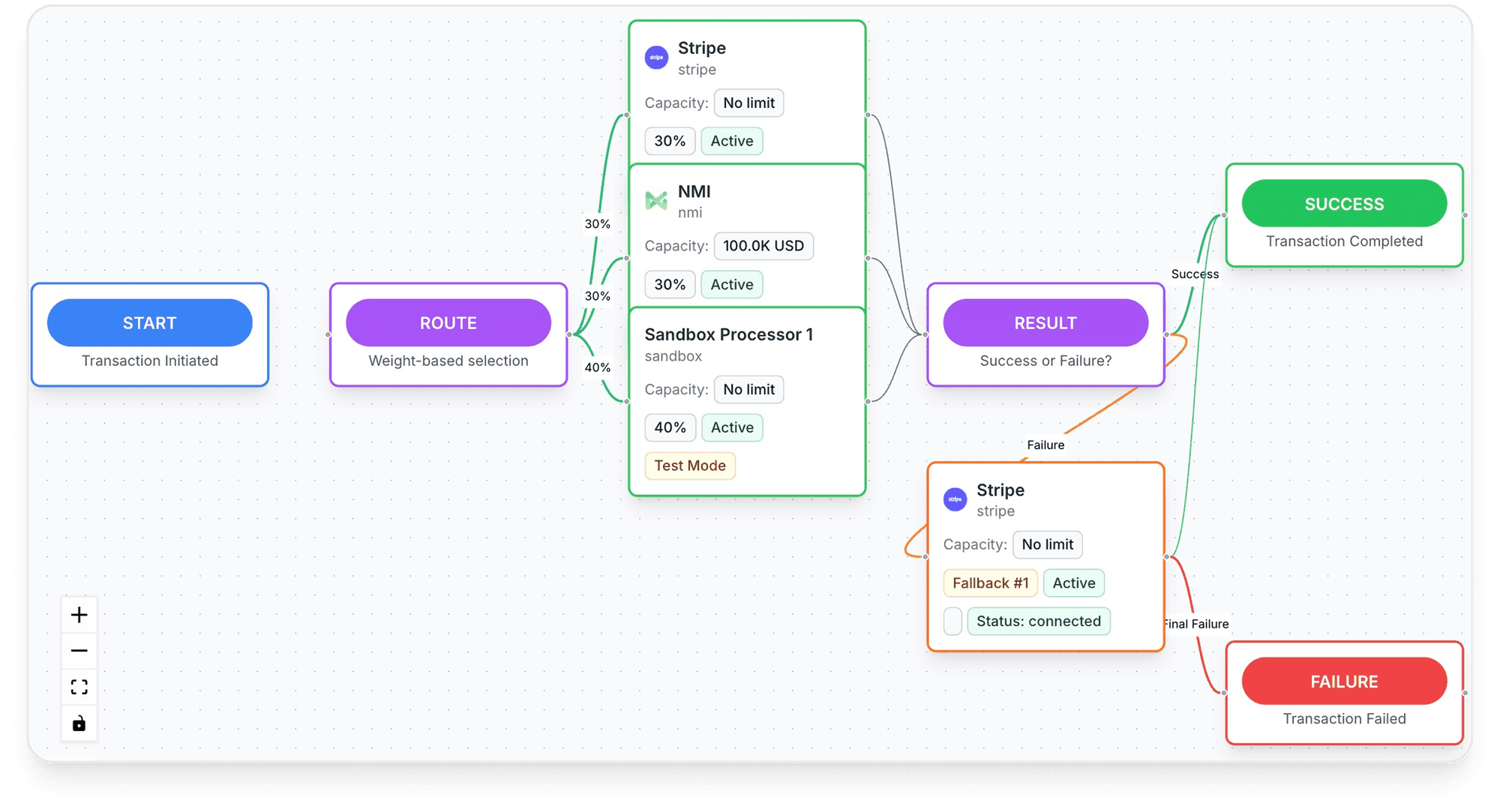
- At the payment layer, merchants can route transactions across providers, use smart retries, and reduce avoidable declines that often create duplicate attempts or customer confusion.
- In subscriptions, dunning and payment-event messaging can explain failed rebills, successful renewals, and cancellation outcomes before cardholders assume something improper happened.
- For digital goods, server-side event tracking creates a much better audit trail of delivery, access, and use than fragmented client-side signals.
What an orchestrated setup changes operationally
The main gain is not cosmetic. It’s evidentiary and operational.
When systems are connected, support can see the payment event, the page or funnel context, the subscription state, the communication history, and the fulfillment record in one trail. That changes refund handling because agents can make decisions quickly. It also changes chargeback handling because the business can gather coherent proof instead of stitching screenshots together from six tools.
This is also where payment strategy and dispute strategy meet. Multi-processor setups, local payment methods, and retry logic are often discussed only in the context of conversion. They also affect dispute pressure. Cleaner retries, clearer messages, and better routing reduce customer confusion. Better event records improve your ability to explain what happened after the fact.
Merchants don’t prevent disputes with one rule. They prevent them with a connected system that removes ambiguity for the customer and preserves evidence for the business.
If you want a broader framework for that approach, this guide to payment orchestration for ecommerce teams is a useful reference point. The core idea is simple. Don’t treat payments, messaging, subscriptions, and risk as separate workflows if the customer experiences them as one journey.
The Strategic Choice When to Fight and When to Fold
Not every chargeback deserves a defense. Not every refund request deserves an automatic approval either.
The strategic decision comes down to economics, evidence, and account health. Good operators make that call quickly and consistently.
Cases worth fighting
Fight when the evidence is clean and the principle matters operationally. A few examples stand out:
- Clear digital usage after purchase. If the buyer accessed the course, downloaded the file, or actively used the service after claiming non-delivery, that’s often worth defending.
- Recognizable subscription consent. If you can show clear acceptance of terms, renewal disclosure, and relevant communication, you may have a case.
- Repeat abuser patterns. Some customers learn that merchants default to concession. If your records are strong, selective defense can discourage that pattern.
Cases better resolved with a refund or acceptance
Other cases aren’t worth the internal drag.
If your support team was slow, your descriptor was confusing, fulfillment evidence is incomplete, or the customer has a credible complaint, the practical answer is usually not to fight. It’s to resolve and fix the root cause. A weak defense consumes staff time and can distract from the actual issue in the funnel or post-purchase flow.
A simple decision framework works well:
- Check transaction context first. Is this likely fraud, confusion, or genuine dissatisfaction?
- Review proof quality second. Can you clearly disprove the claim with records you already have?
- Consider account pressure third. If dispute levels are already uncomfortable, reducing future incidents matters more than moral victory on one case.
- Look at customer history last. A loyal buyer with a legitimate complaint should be handled differently from a repeat abuser.
The right question isn’t “Can we fight this?” It’s “Does fighting this improve the business outcome?”
That mindset keeps teams from turning dispute management into a pride contest.
Advanced Scenarios in Dispute Management FAQs
What is friendly fraud in practice
Friendly fraud usually means the customer completed a real purchase, received the value, and still disputed the charge through the bank. In practice, it often looks less dramatic than merchants expect. It can be a customer forgetting a descriptor, regretting a purchase, denying a family member’s order, or trying to avoid a subscription rebill they previously accepted.
The operational lesson is simple. Don’t treat all chargebacks as criminal fraud. Many are preventable through better descriptors, better messaging, clearer renewal flows, and stronger evidence retention.
Can a customer get both a refund and a chargeback
Yes. Merchants often call this double dipping. It happens when support approves a refund while the cardholder has already gone to the issuer, or when the customer intentionally pursues both paths.
The fix is process discipline. Support, finance, and dispute teams need one shared view of payment status. If a chargeback has already been initiated, refund handling should be reviewed carefully before anyone issues funds blindly.
Are refunds always safer than chargebacks
No. They’re usually safer for account health, but they can still be abused.
According to Sift’s analysis of chargebacks and refund fraud, refund abuse costs merchants over $10B annually in major US and EU markets, and for some digital-goods merchants, the hidden operational cost can be twice as costly as a successfully prevented chargeback. That’s why a loose refund policy can create a different leak, especially in courses, downloads, subscriptions, and other low-recovery categories.
A strong policy balances both risks. Make legitimate refunds easy enough to keep real customers out of the dispute channel. Make abuse harder through reason tracking, customer history review, fulfillment proof, and tighter coordination between support and payments.
Tagada helps ecommerce brands treat chargebacks and refunds as part of one revenue system instead of scattered back-office tasks. If you want a cleaner way to connect checkout, payment routing, subscriptions, messaging, and payment-event data so you can reduce leakage and keep more control, take a look at Tagada.