

The most popular advice about the best subscription management software is usually wrong. There isn't one platform that fits every recurring-revenue business, because billing requirements change dramatically between a self-serve SaaS product, a Shopify brand, a creator business, an enterprise contract model, and a high-risk merchant.
The right choice depends on your catalog complexity, merchant-of-record requirements, processor control, global tax exposure, failed-payment recovery, checkout experimentation, and reporting workflow. A platform that works well for fixed monthly plans may struggle with usage billing, partner allocations, hybrid pricing, or cross-border payment operations.
This comparison ranks tools by operating model and merchant fit, not by feature count alone. It looks at billing flexibility, dunning, global payments, processor control, experimentation, analytics, developer access, and migration effort. Tagada is also relevant for merchants that need subscription management alongside checkout orchestration, multi-PSP routing, A/B testing, server-side tracking, dunning, and chargeback-aware payment operations.
1. Stripe Billing
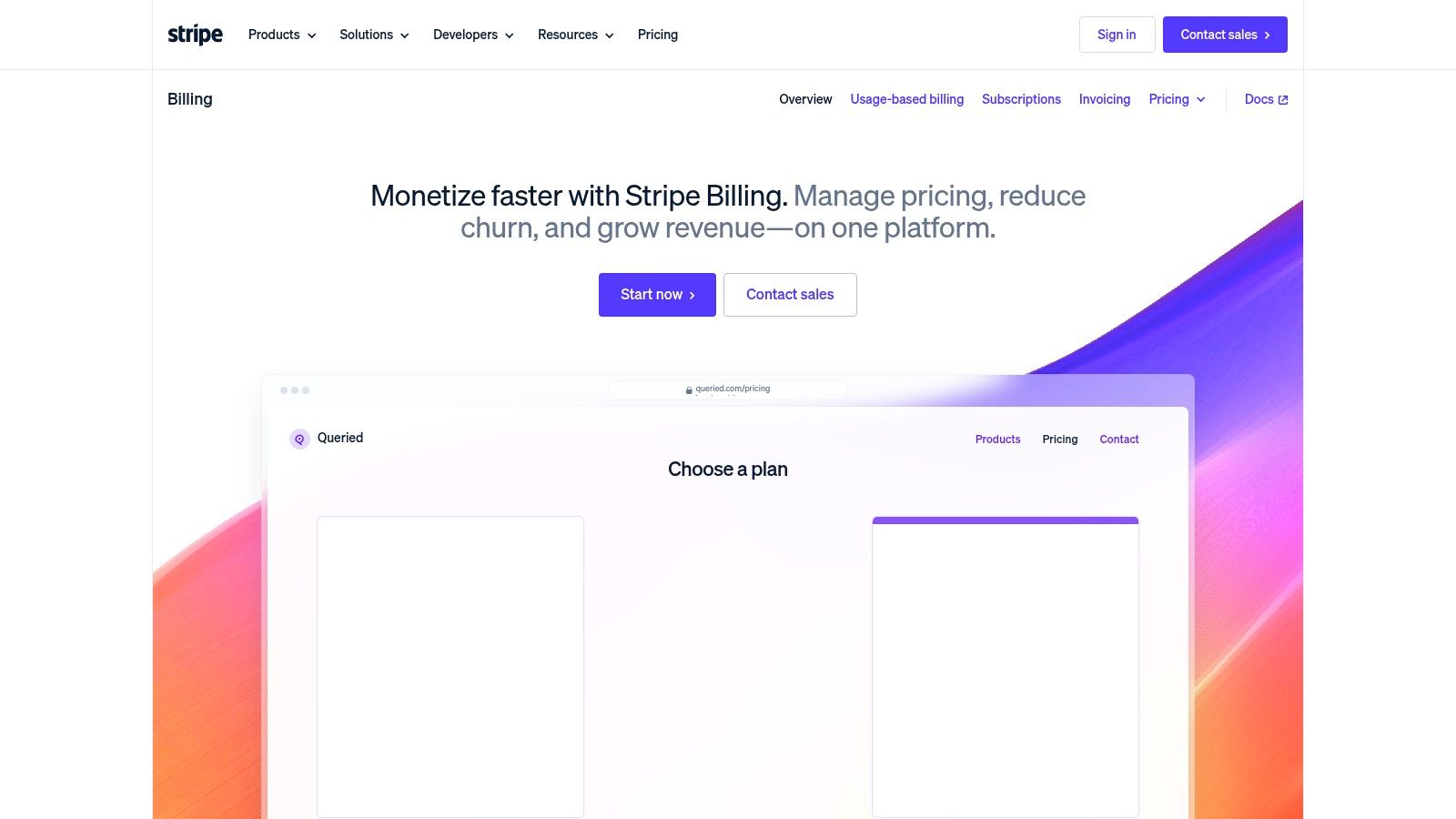
Stripe Billing is a strong default for SaaS companies, memberships, and ecommerce teams that want an API-first subscription engine while remaining the merchant of record. It sits on top of Stripe Payments, so teams can connect recurring billing, invoicing, checkout, and payment methods without stitching together an unfamiliar billing stack.
Stripe supports hosted Checkout, Payment Links, and embeddable components for trials and subscriptions. Its pricing engine handles seat-based, tiered, volume, and metered models, while dunning, smart retries, and account updater tools help address involuntary churn. A customer portal gives subscribers control over payment methods, plan changes, and cancellations.
Where Stripe Billing fits best
Developers get excellent documentation, broad APIs, and a large ecosystem. Product teams can launch pricing experiments quickly, while finance teams can add Stripe Revenue Recognition, Stripe Tax, and data pipelines for BI. The trade-off is operational ownership. You control the payment relationship and processor environment, but you're also responsible for tax registrations and filings unless you add appropriate services.
Practical rule: Choose Stripe Billing when developer control and payment ownership matter more than having every revenue operation managed for you.
Some advanced capabilities and Managed Payments can add fees. Teams also need to design their own operating discipline around tax, reconciliation, and payment routing. For a deeper look at the payment layer behind subscriptions, review this guide to subscription payment processing.
2. Chargebee
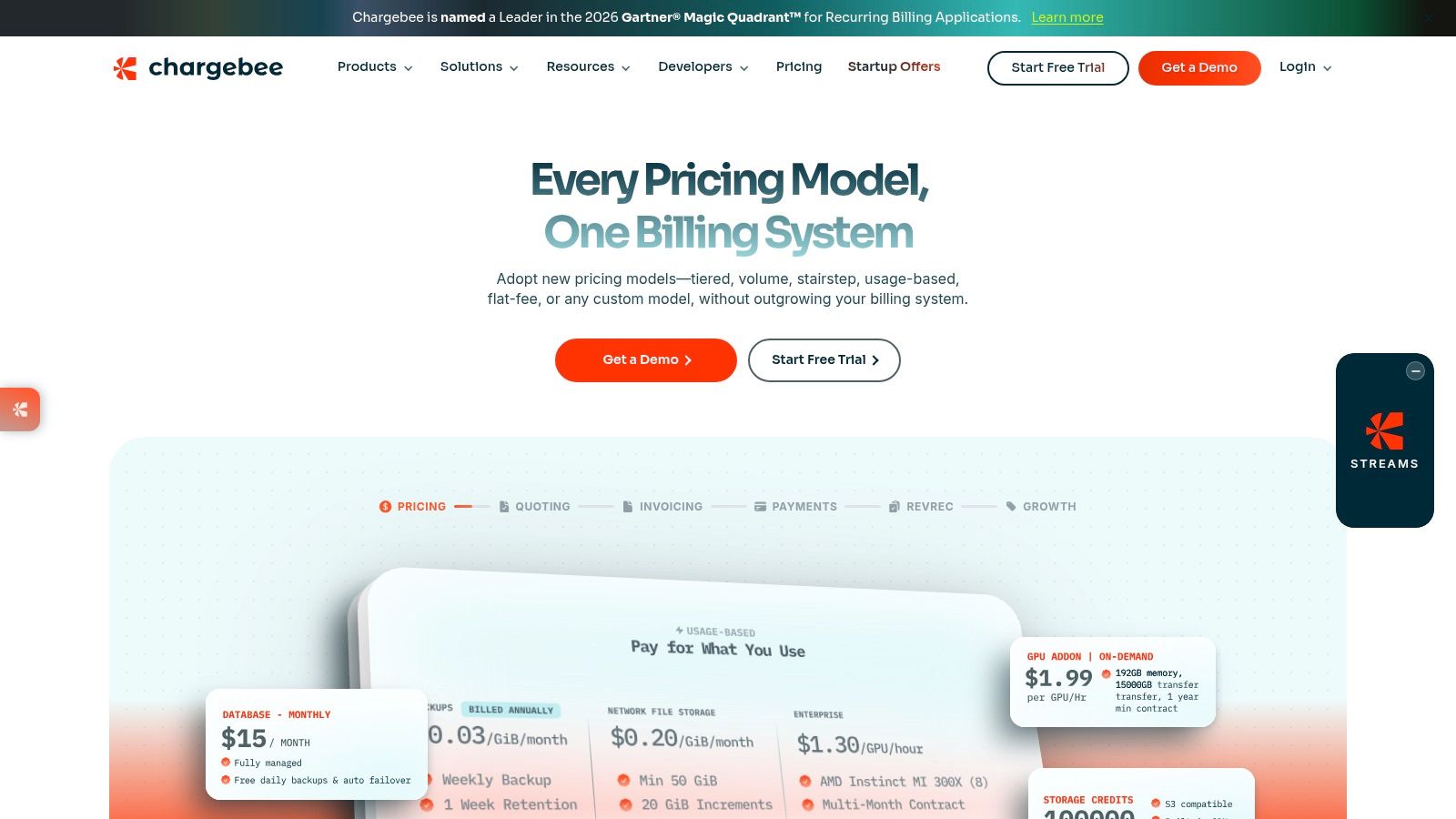
Chargebee is built for SaaS and digital businesses that have outgrown a simple recurring invoice workflow. Its strength is the product catalog. Teams can manage plans, add-ons, regional price points, promotions, trials, proration, and subscription lifecycle changes without turning every commercial adjustment into a custom engineering project.
Chargebee also connects subscription data to revenue operations. Native integrations with Salesforce and HubSpot support sales-led workflows, while reporting and connectors for ERP, tax, and fraud tools help finance and operations teams work from a more consistent billing record.
Why complex catalogs change the decision
Chargebee is a good fit when pricing experimentation, usage billing, and migration flexibility matter. It can support businesses moving from straightforward plans toward more involved packaging, including add-ons and region-specific offers. Dunning, proration, and lifecycle automations reduce the manual work around upgrades, downgrades, renewals, and failed payments.
The cost is complexity. Implementation requires careful modeling of products, price versions, tax behavior, invoices, and downstream integrations. Enterprise features may require higher tiers, and public pricing can be difficult to assess outside startup programs.
Chargebee works best when the business has enough catalog complexity to justify a dedicated revenue operations layer, but doesn't yet need the heavier implementation model associated with a large enterprise platform.
Teams evaluating the category should also examine subscription billing software through the lens of contract changes, data ownership, and integration maintenance, not just checkout features.
3. Recurly
Recurly is a mature choice for businesses that treat payment recovery and churn management as core revenue operations. Its platform combines subscription billing with intelligent retries, card updating, multi-campaign dunning, churn forecasting, and operational dashboards.
The platform suits companies with meaningful recurring volume and a clear need to understand why renewals fail. It supports plans, segments, add-ons, pricing changes, and integrations across gateways and ERP systems. That breadth gives revenue teams room to test recovery campaigns without rebuilding the billing engine.
A recovery-led operating model
Recurly's main advantage isn't the ability to charge a card on a schedule. It's the ability to create a structured response when a payment fails. A retry strategy, customer notification, payment-method update flow, and cancellation policy should work together. Recurly gives teams the controls and reporting needed to operate that process consistently.
Its analytics can help teams identify patterns in failed payments, churn, and plan performance. That makes it useful for subscription businesses where involuntary churn is large enough to deserve dedicated ownership.
The trade-offs are commercial and operational. Pricing beyond Starter is sales-negotiated, higher tiers may involve minimum terms, and Recurly isn't a merchant of record. Tax registrations and filings remain the merchant's responsibility.
For high-risk businesses, Recurly should be evaluated alongside the processor and acquiring setup. A strong dunning workflow can't compensate for poor authorization performance, weak dispute controls, or an unsuitable risk policy.
4. Paddle
Paddle takes a different approach from Stripe Billing, Chargebee, and Recurly. It acts as a merchant of record, handling payments, global sales tax, VAT and GST compliance, fraud, chargebacks, subscription management, and buyer support for eligible digital businesses.
That model is attractive to SaaS and digital-product companies that want to sell internationally without building their own tax and compliance operation. Paddle handles tax registration, filing, and remittance in 200+ jurisdictions, as described on its product site. It also supports trials, proration, pauses, upgrades, downgrades, dunning, localized checkout, and market-based pricing.
The merchant-of-record trade-off
Paddle Retain and Recovery provide tools for failed-payment recovery and retention. Developer documentation, customer portals, and webhooks make the platform practical for product teams that want a managed commercial layer rather than a collection of separate services.
The trade-off is control. A merchant-of-record model can limit processor choices, financial flows, and certain custom payment arrangements. The per-transaction fee is also typically higher than using a raw PSP rate, although that cost may be justified when it replaces internal tax and compliance work.
Paddle is strongest when global digital sales are the priority and the company wants to transfer much of the compliance burden. It may be less suitable for a high-risk merchant that needs direct control over multiple processors, routing rules, reserves, or acquiring relationships.
5. Maxio
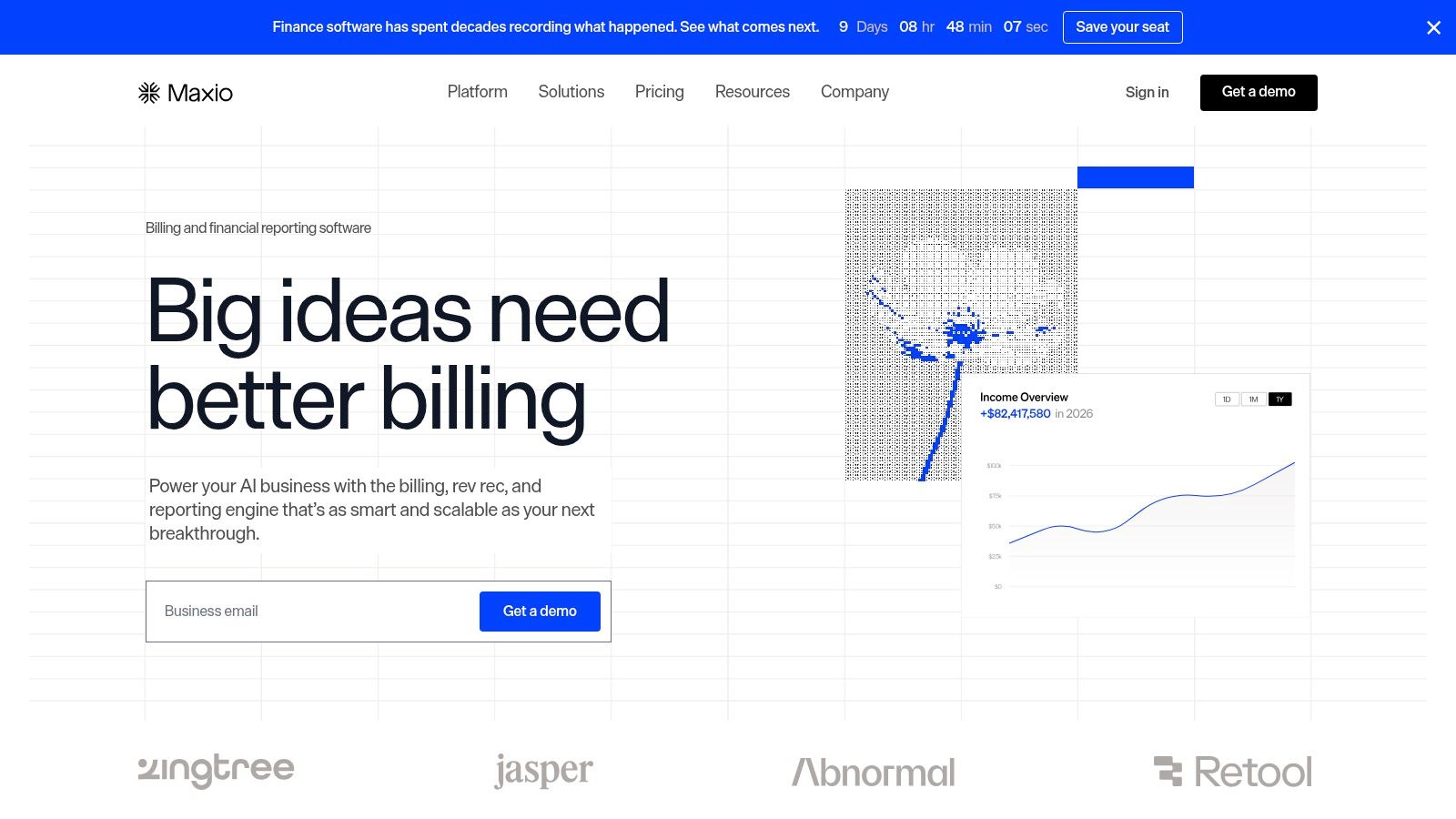
Maxio is designed for B2B SaaS companies where billing and finance need to operate from the same commercial record. The platform combines subscription billing, usage-based pricing, collections, dunning, revenue recognition, SaaS metrics, and contract-oriented workflows.
Its feature set supports quotes to invoices, self-service portals, usage charges, CPQ terms, and multi-entity controls. That makes it useful for sales-led and hybrid go-to-market models where customers may have negotiated pricing, commitments, overages, or different billing schedules.
Finance-first subscription operations
Maxio's appeal is consolidation. Finance teams can manage revenue recognition and reporting in the same broad system that handles billing and collections. Product and revenue teams can support hybrid monetization without forcing every contract exception into spreadsheets or custom scripts.
That finance orientation is also the boundary. Maxio is more than an SMB billing app, so its entry price and implementation effort can exceed what a small company needs. It isn't a merchant of record, which means tax registrations and filings remain the merchant's responsibility.
Maxio fits a business that has reached the point where invoice accuracy, contract terms, collections, and revenue reporting matter as much as checkout conversion. It may be excessive for a creator with a small catalog or a Shopify merchant that mainly needs skip, swap, and pause controls.
6. Zuora
Zuora targets large organizations with complex subscription, usage, and revenue operations. It supports recurring, usage-based, and hybrid pricing, advanced rating and mediation, order management, amendments, renewals, multi-action orders, multi-currency, and multi-entity structures.
The platform is a serious option when subscription changes affect sales, finance, customer success, product access, and ERP workflows at the same time. Its integrations across CPQ, ERP, and revenue recognition systems help large businesses connect commercial events to downstream accounting and operational processes.
Enterprise depth comes with enterprise work
Zuora makes sense when the business has complicated contract lifecycles that a lighter billing platform can't model cleanly. Amendments, renewals, upgrades, usage events, and multi-entity reporting all require precise data structures. A platform with deep order management can prevent those changes from becoming disconnected invoices and manual reconciliation tasks.
The downside is the implementation model. Enterprise deployments take longer, cost more, and require cooperation between finance, engineering, sales operations, IT, and payment teams. Pricing is quote-based and may exceed the needs of smaller organizations.
Don't buy Zuora because the product list is impressive. Buy it when your order, contract, revenue, and entity complexity creates a measurable need for enterprise-grade control.
A smaller SaaS business may get better results from Stripe Billing, Chargebee, Recurly, or Maxio, depending on its developer requirements and finance workload.
7. Zoho Subscriptions
Zoho Subscriptions is a practical option for SMBs and growing SaaS companies that want subscription billing within a broader finance and CRM environment. The platform covers hosted checkout, customer portals, proration, dunning, usage and metered billing, multi-currency, APIs, and gateway integrations.
The strongest case for Zoho is stack alignment. A company already using Zoho Books or Zoho CRM can keep accounting, customer records, and subscription activity closer together. Mobile apps and transparent plan inclusions also help lean teams manage routine subscription work without building a large revenue operations function.
A good fit for lean finance teams
Zoho can handle the core mechanics that cause trouble when managed manually, including recurring charges, renewals, plan changes, payment collection, and customer self-service. Its pricing model is positioned for smaller businesses that need solid basics without immediately adopting an enterprise platform.
The limitations appear when the commercial model becomes unusually complex. Advanced enterprise monetization, complex contract structures, or extensive integrations outside the Zoho ecosystem may require additional work. Migration can also take longer when the target stack doesn't share Zoho's native data model.
Zoho Subscriptions is best for a business that values simplicity and cost control. It isn't the obvious choice for a global enterprise with multiple entities, or for a DTC brand whose main requirement is a Shopify-native retention experience.
8. Recharge
Recharge is built around Shopify and physical-product subscriptions. It suits DTC brands selling replenishment products, bundles, prepaid plans, gifts, or memberships where the subscriber experience matters as much as the recurring charge.
Its portal supports skip, pause, swap, bundles, and kitting. Prepaid and gifting options help merchants build offers around customer commitment, while RechargeSMS supports retention flows through messaging. Enhanced analytics and cohorts give operators more visibility into subscriber behavior.

Where DTC retention gets practical
Recharge's advantage is its ecosystem. Native Shopify Checkout integration, Klaviyo connectivity, Gorgias support workflows, and a broad app environment let brands connect subscription events to merchandising and customer service. A subscriber who wants to delay an order shouldn't need to contact support, and a customer with a failed payment should receive a relevant recovery message rather than a generic campaign.
The platform is mature for high-scale DTC operations, but merchants need to model total cost carefully. Most plans include transaction fees, while advanced features can be gated to higher tiers. Multi-currency, international markets, and API rate limits also deserve attention before a large rollout.
For a fuller view of the recovery layer, compare Recharge with dedicated dunning management software. Recharge is a strong choice when Shopify is the center of the business. It has less value for a SaaS company that needs complex usage rating or a merchant that wants processor-agnostic routing.
9. Skio
Skio is a Shopify-native subscription platform for fast-moving DTC brands that care about customer experience, rapid iteration, and retention journeys. It offers a polished subscriber portal with quick actions, cancellation journeys, automation, analytics, build-a-box, volume discounts, market support, APIs, and webhooks.
Skio was acquired by Recharge in 2026, while continuing to offer distinct pricing and plans. That relationship may give merchants access to broader ecosystem resources, but buyers should still evaluate Skio as its own operating product, especially around roadmap ownership and integration requirements.
A strong choice for rapid DTC iteration
Skio's customer-facing experience is the main differentiator. Quick links from email, SMS, and portal surfaces can make it easier for subscribers to skip an order, change timing, or add products. Build-a-box and volume discounts support merchandising experiments that go beyond simple replenishment.
Operators also get migration tooling and hands-on onboarding. That matters because moving active subscriptions isn't a drag-and-drop exercise. Customer identifiers, payment tokens, renewal dates, product mappings, discounts, and cancellation states all need reconciliation before cutover.
The downside is ecosystem dependence. Skio is primarily useful inside Shopify, and subscription orders carry a per-order transaction fee. Transparent monthly and per-order pricing makes forecasting easier, but merchants still need to compare the fee against retention value and the cost of their current stack.
Skio fits a DTC brand that prioritizes usability and speed. It isn't a general-purpose billing platform for SaaS, enterprise contracts, or multi-PSP payment orchestration.
10. Bold Subscriptions
Bold Subscriptions is a long-standing Shopify option for merchants that need customization around subscriptions, memberships, bundles, and VIP pricing. Its subscriber portal supports prepaid subscriptions and flexible billing intervals, while its ecosystem includes Bold Custom Pricing and Bold Upsell.
That combination is useful when subscriptions are part of a broader merchandising strategy. A brand can offer subscriber-only prices, membership discounts, or bundles without treating recurring billing as an isolated product feature. APIs and headless support also give Shopify Plus teams more room to shape the storefront.
When customization matters more than simplicity
Bold is a good fit for DTC operators who already understand the Shopify ecosystem and want to layer subscription offers onto a complex catalog. White-glove migration services for qualifying brands can reduce the risk of moving active subscribers, particularly when the existing setup uses several merchandising apps.
The trade-off is stack complexity. Transaction fees apply on top of the monthly fee on most tiers, and some advanced capabilities depend on additional Bold applications. That can create more configuration, more support relationships, and more opportunities for data to fall out of sync.
Bold works best when subscriber pricing, memberships, and merchandising rules are central to the offer. A merchant looking mainly for complex global payment routing, high-risk acquiring controls, or enterprise revenue recognition should look beyond a Shopify subscription app.
Top 10 Subscription Management Software Comparison
| Product | Core focus | Key features ✨ | UX/Quality ★ | Value & Price 💰 / USP 🏆 | Target audience 👥 |
|---|---|---|---|---|---|
| Stripe Billing | Flexible subscription engine + payments | ✨ Hosted checkout, metered pricing, dunning, add‑ons | ★★★★☆ Excellent APIs & docs | 💰 Pay-per-use + add‑ons; 🏆 dev ecosystem & control | 👥 SaaS, commerce teams, dev-first merchants |
| Chargebee | Subscription & revenue operations configurability | ✨ Rich product catalog, dunning, CRM connectors, pricing experiments | ★★★★☆ Highly configurable (complex) | 💰 Mid→enterprise tiers; 🏆 catalog complexity & integrations | 👥 SaaS/digital businesses, revenue ops teams |
| Recurly | Revenue recovery & churn reduction | ✨ AI retries, multi-campaign dunning, analytics | ★★★★☆ Best-in-class recovery tooling | 💰 Sales‑priced tiers; 🏆 involuntary churn performance | 👥 Scale subscription businesses focused on retention |
| Paddle | Merchant-of-record global sales & compliance | ✨ MoR tax filing, localized checkout, retention tools | ★★★☆☆ Simplifies global compliance | 💰 Higher per-transaction MoR fee; 🏆 compliance/liability offload | 👥 Teams wanting fast global GTM without tax ops |
| Maxio (Chargify+SaaSOptics) | B2B finance-first monetization | ✨ Usage billing, CPQ, revenue recognition, collections | ★★★★☆ Finance-grade controls | 💰 Higher entry; 🏆 consolidated billing + finance stack | 👥 B2B SaaS, finance-led orgs, multi-entity companies |
| Zuora | Enterprise-scale subscription & monetization | ✨ Advanced rating, order mgmt, multi-currency, revenue product | ★★★☆☆ Extremely powerful, longer implementations | 💰 Quote-based (enterprise); 🏆 depth for global complexity | 👥 Large/global enterprises, complex catalogs |
| Zoho Subscriptions | Cost-effective SMB subscription billing | ✨ Hosted checkout, dunning, APIs, Zoho suite sync | ★★★☆☆ Solid core UX for price | 💰 Very competitive plans; 🏆 tight Zoho integration | 👥 SMBs, growing SaaS using Zoho ecosystem |
| Recharge | Shopify-native DTC subscription & retention | ✨ Subscriber portal, skip/swap, SMS retention, bundles | ★★★★☆ Strong DTC UX & Shopify depth | 💰 Transaction fees on plans; 🏆 Shopify ecosystem maturity | 👥 DTC brands on Shopify focused on subscriptions |
| Skio (Recharge) | Fast, polished Shopify-native subscriptions | ✨ Build-a-box, customer portal, migration tooling | ★★★★☆ Polished shopper & operator UX | 💰 Monthly + per-order fees; 🏆 transparent pricing & usability | 👥 Fast-growing DTC brands (Shopify) |
| Bold Subscriptions | Shopify customization & membership flows | ✨ Flexible billing intervals, VIP pricing, APIs | ★★★☆☆ Customizable but can require add-ons | 💰 Monthly + tx fees; 🏆 customization ecosystem | 👥 DTC brands layering subscriptions & memberships |
Choose for Your Next Growth Constraint
The best subscription management software is the one that removes your next operational constraint without creating a larger one. A platform that solves failed renewals but limits processor control may be right for one business and wrong for another. A merchant-of-record platform may simplify global compliance while reducing flexibility in payment routing. A finance-first system may improve close and reconciliation while adding more implementation work than a lean team can support.
Shopify DTC brands should compare Recharge, Skio, and Bold around retention, self-service, merchandising, bundles, and migration support. Recharge is a natural fit for a broad Shopify subscription ecosystem. Skio deserves attention when portal usability and rapid retention iteration are priorities. Bold is useful when subscriber pricing, memberships, and VIP merchandising require a deeper app ecosystem.
SaaS teams should weigh Stripe Billing, Chargebee, Recurly, Maxio, and Zuora by pricing complexity, finance operations, and developer needs. Stripe Billing suits teams that want API control and ownership of the payment relationship. Chargebee is stronger when catalog configuration and revenue operations are becoming more complex. Recurly puts recovery and churn management at the center. Maxio suits finance-led B2B SaaS with contracts and revenue recognition. Zuora belongs on the shortlist when enterprise order, entity, and lifecycle complexity justify its implementation model.
Global digital businesses should assess Paddle's merchant-of-record trade-off. Offloading tax, payment, fraud, chargeback, and buyer-support responsibilities can accelerate international sales, but it may not suit merchants that need direct processor control or specialized acquiring arrangements.
High-risk and high-volume merchants need to evaluate more than subscription features. Visa's Visa Acquirer Monitoring Program uses a 1.50% ratio in 2026 once a merchant crosses 1,500 combined fraud-and-dispute items per month, while Mastercard's Excessive Chargeback Merchant program starts at 100 chargebacks and a 1.50% ratio, according to current merchant monitoring guidance. Mastercard enforcement can escalate from 100 to 299 monthly chargebacks at a 1.5% to 2.99% ratio to 300 or more chargebacks at a 3.0% ratio, where monitoring, higher fees, or account termination can become risks, as explained in chargeback threshold guidance.
International payment design matters too. Local wallet transactions average 94% to 97% approval, while cross-border card transactions average 72% to 81% approval, according to international ecommerce payment performance data. Local acquiring can improve approval by routing transactions through a bank or processor in the customer's country. Automated retries and dunning can recover 45% to 70% of initially failed payments, while optimized workflows commonly recover 25% to 35% of declined subscription payments, with retry timing often occurring within 24 to 48 hours, according to payment recovery guidance.
Before implementation, use this operating checklist:
- Map plans and entitlements: Document products, billing intervals, trials, add-ons, usage rules, discounts, pauses, upgrades, downgrades, and cancellation states.
- Export customer and payment data: Preserve customer records, payment tokens where transferable, invoice history, renewal dates, and payment-method metadata.
- Preserve subscription identifiers: Keep stable identifiers so support, finance, analytics, and downstream systems can connect old and new records.
- Test webhooks and retries: Verify event ordering, duplicate-event handling, retry behavior, cancellation logic, and failed-payment notifications.
- Validate tax and payment methods: Test regional tax treatment, local methods, currencies, authorization behavior, refunds, and chargeback workflows.
- Run a controlled migration: Move a defined cohort first, monitor renewals and support tickets, then expand the cutover.
- Reconcile invoices and renewals: Compare source and destination records for amounts, dates, discounts, tax, payment status, and entitlements.
- Monitor after launch: Track recovery, churn, authorization, payment-method mix, support contacts, and chargeback metrics. Use relevant churn benchmarks for SaaS as context, not as a substitute for your own cohort data.
Tagada can fit merchants that need subscription billing alongside checkout and payment orchestration. Its stack supports recurring billing, pause and resume flows, failed-payment retries, dunning, multi-PSP routing, local payment methods, A/B testing, native tracking, and chargeback-aware payment operations. The practical question is whether those capabilities belong in the same operating layer as your storefront, checkout, processor routing, and growth messaging.
Tagada connects subscription management with checkout, payment routing, dunning, A/B testing, server-side tracking, and revenue-aware messaging for ecommerce, SaaS, creator, international, and high-risk businesses. Visit Tagada to evaluate whether its orchestration layer fits your payment model and next growth constraint.