
Server-Side Tracking for Fitness Brands
Why fitness brands lose purchase data, when Meta treats a fitness store as health and wellness, and how to send clean purchase events server-side.



Article summary
TL;DR
Server-side tracking sends purchase events from the system that takes payment to Meta, Google and TikTok, so ad blockers, browser limits and broken Shopify scripts don't erase them. An equipment store is rarely seen as "health and wellness" by Meta; sports nutrition and weight loss messaging can be. Server-side tracking makes your data complete; it does not lift Meta's restrictions.
- Meta recommends running the Conversions API alongside the pixel, deduplicated with the same event name and event ID.
- PixelFlow lists "Dietary supplements and weight loss products" among the businesses Meta treats as health and wellness; fitness equipment is not on the list.
- Meta's ad rules put "fitness services and equipments" under general wellbeing, outside its 18+ health rule (change log July 22, 2026).
- Script tags on Shopify's Thank you and Order status pages stopped on August 26, 2026 for non-Plus stores, silently breaking old pixels.
- Never rename events or disguise products to slip past Meta's category: it puts the ad account at risk.
 ChatGPT
 Claude
 Perplexity
 Grok
On this page
This guide is part of our playbook on the best ecommerce platform for fitness brands. The ad rules themselves are in Meta and TikTok ads for fitness brands.
Why browser pixels miss fitness sales
Each lost purchase makes your CAC look higher and teaches the ad platform less about who buys. Fitness brands lose purchases in five places:
- Ad blockers and browser privacy stop part of the pixel events.
- Long equipment decisions: a buyer sees the ad on a phone, compares for a week, then buys a rack on a laptop.
- Upsells, reorders and renewals of sports nutrition happen after the browser moment, or without it.
- Funnels across domains (landing page, checkout, upsell page) lose the session.
- Shopify's script sunset: tracking code left in "Additional scripts" stopped without an error5Shopify.dev, Apps in checkout, read November 2, 2026.
Fig. 1Where a fitness purchase slips past the pixel
- Ad on a phoneThe pixel loads, unless blocked
- A week of comparingAd blockers and browser privacy
- Rack bought on a laptopAnother device, another domain
- UpsellAfter the browser moment
- Protein renewalNo browser at all
The later the step, the less the browser sees.
Is a fitness brand "health and wellness" for Meta?
It depends on what you sell and how you describe it. Meta does not publish its data source categories in one list; PixelFlow, a tracking vendor, names "Medical conditions or specific health statuses", "Dietary supplements and weight loss products", "Prescription drugs and pharmaceuticals" and "Health-related services and remedies"2PixelFlow, What are Meta's health and wellness restrictions and how do they affect tracking, read November 2, 2026 (vendor documentation, undated).
- Home gym equipment, accessoriesUsually outside the category.Meta's ad rules treat fitness services and equipments as general wellbeing.
- Protein powderDepends on how you market it.Supplement positioning can move it closer to dietary supplements.
- Pre-workout and other supplementsAt risk.Dietary supplements are in PixelFlow's list.
- Weight loss offers or messagingAt risk.Weight loss products are in PixelFlow's list; weight loss ads are 18+.
An agency reported in March 2026 that Meta "has signaled expanding" the classification to more "beauty, fitness, and general wellness categories"4Jetfuel Agency, How health and wellness brands can navigate Meta's 2026 ad restrictions, March 24, 2026 (secondary source). Meta has not confirmed it publicly; treat it as a risk to watch, not a rule.
How to check: in Events Manager, open your dataset's settings, then "Manage data source categories"2PixelFlow, What are Meta's health and wellness restrictions and how do they affect tracking, read November 2, 2026 (vendor documentation, undated). A restriction shows there.
PixelFlow describes three tiers, from limits on custom parameters to "No conversion tracking"2PixelFlow, What are Meta's health and wellness restrictions and how do they affect tracking, read November 2, 2026 (vendor documentation, undated). At the middle tier, advertisers "cannot optimize for Purchase, Add to Cart, or other mid- and lower-funnel standard events"2PixelFlow, What are Meta's health and wellness restrictions and how do they affect tracking, read November 2, 2026 (vendor documentation, undated). This is a vendor's summary, not Meta's wording.
Watch out
Some vendors suggest renaming purchase events with coded names so Meta doesn't recognize them. That is a way around Meta's rules, not a setup choice. Send what you are allowed to send, completely and accurately, and ask Meta for a review if you think the category is wrong.
What server-side tracking fixes, and what it doesn't
| Server-side tracking... | Fixes | Doesn't fix |
|---|---|---|
| Sends events from your server | Events lost to ad blockers and browsers | A health and wellness category already applied |
| Sends the purchase from where it is paid | Upsells, reorders, renewals, cross-domain funnels | Ad rejections for weight loss or muscle gain claims3Meta Advertising Standards, Health and wellness, change log entry July 22, 2026, read November 2, 2026 |
| Lets you choose the fields you send | Health words leaking through URLs or product names | Weak offers or creatives |
| Works for Meta, Google and TikTok | Under-reporting on all three | The Shopify script sunset, unless you rebuild the events |
What server-side tracking fixes
- Events lost to ad blockers and browsers
- Upsells, reorders, renewals, cross-domain funnels
- Health words leaking through URLs or product names
- Under-reporting on Meta, Google and TikTok
What it doesn't fix
- A health and wellness category already applied
- Ad rejections for weight loss or muscle gain claims
- Weak offers or creatives
- The Shopify script sunset, unless you rebuild the events
What data to send, and what never to send
| Send | Never send |
|---|---|
| Event name and event ID, shared with the pixel1Meta for Developers, Deduplicate Pixel and server events, read October 26, 2026 | Product names or URLs with weight loss or body terms |
| Order value and currency | Quiz answers about weight, body goals or health |
| Hashed email and phone, where consented | Custom parameters that imply a health status |
| Product IDs or neutral categories ("equipment", "nutrition") | Audience names built on health traits |
Clean data is not a trick: it's what you should send anyway. A URL like /weight-loss-program/ or a product called "fat burner bundle" describes a health goal; Meta can read it2PixelFlow, What are Meta's health and wellness restrictions and how do they affect tracking, read November 2, 2026 (vendor documentation, undated).
Setup
- Keep the pixel on your pages for browser events.
- Add the Conversions API, TikTok's Events API and Google's server-side conversions from the system that takes payment.
- Use the same event name and event ID in the pixel and the server event, so Meta deduplicates them1Meta for Developers, Deduplicate Pixel and server events, read October 26, 2026.
- Send upsells, reorders and renewals as server events too, with the right value.
- On Shopify, move what lived in Additional scripts to web pixels and server events5Shopify.dev, Apps in checkout, read November 2, 2026.
- Map products to neutral categories before sending, and respect consent for the customer data you hash and send.
Fig. 2Two paths, one purchase
Same event name and event ID: Meta keeps one, not two. Upsells and renewals only take the server path.
Check that it works
| Check | How | Healthy sign |
|---|---|---|
| Deduplication | Events Manager, event overview | Browser and server events merged, not doubled |
| Coverage | Ad platform purchases vs. store orders, same days | A small, stable gap |
| Category status | Events Manager, data source categories2PixelFlow, What are Meta's health and wellness restrictions and how do they affect tracking, read November 2, 2026 (vendor documentation, undated) | NoNew limitation |
| Upsells and renewals | Server events by type | Present, with correct value |
| Shopify | Purchases before and after August 26, 2026 | NoDrop on that date |
Then use the cleaner data to judge your channels: ad attribution for fitness brands.
How Tagada helps
Every fitness purchase, sent from the checkout that takes the payment
- Server-side events to Meta, Google and TikTok, sent from the checkout that takes the payment
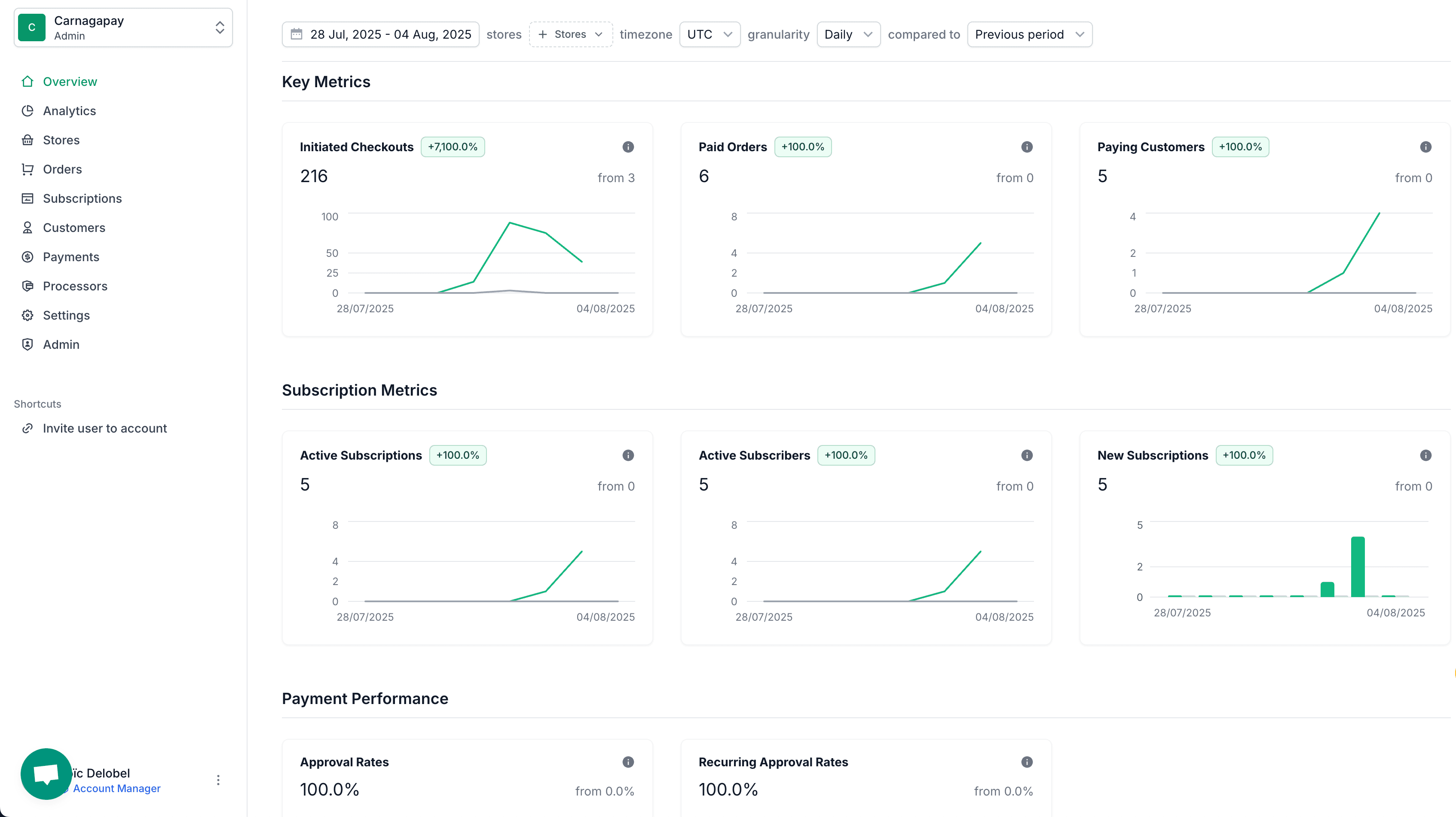
- Automatic server postbacks on each paid order to ClickFlare, Voluum, Binom, RedTrack and ClickMagick, and Hyros by email and phone; "You don't need to install pixels on your checkout or thank-you page" (tracking docs)6Tagada Docs, Tracking overview, read November 2, 2026
- One-click upsells and subscriptions in the same checkout, so post-purchase revenue is sent too
- Modes: standalone, on Shopify, on WooCommerce or headless
On Shopify, the checkout options and their limits are in Shopify checkout for fitness brands. Plans are on the pricing page. To take payments with TagadaPay, apply today: "Most merchants are live under 24 hours," according to TagadaPay.
Frequently asked questions
Why is Meta not tracking purchases on my fitness store?
Is a fitness equipment store restricted by Meta?
Does server-side tracking get around Meta's health and wellness restrictions?
Do I need both the pixel and the Conversions API?
What data should a fitness brand send to Meta?
Sources
Checked November 3, 2026- Meta for Developers, Deduplicate Pixel and server events, read October 26, 2026
- PixelFlow, What are Meta's health and wellness restrictions and how do they affect tracking, read November 2, 2026 (vendor documentation, undated)
- Meta Advertising Standards, Health and wellness, change log entry July 22, 2026, read November 2, 2026
- Jetfuel Agency, How health and wellness brands can navigate Meta's 2026 ad restrictions, March 24, 2026 (secondary source)
- Shopify.dev, Apps in checkout, read November 2, 2026
- Tagada Docs, Tracking overview, read November 2, 2026
Tagada
Send every equipment order and refill, from the place it is paid
Funnels, one-click upsells, subscription billing and payment routing, on one customer record.
- 01Create your free account
- 02Connect your store or build a checkout
- 03Launch funnels, upsells and subscriptions