
Chargeback Fees: What You Pay, Processor by Processor
Chargeback fees at Stripe, PayPal, Braintree, Shopify Payments and Square, what it costs to fight a dispute, and when answering is worth more than accepting.

Article summary
TL;DR
A chargeback fee is what your processor charges each time a customer disputes a payment: $15 at Stripe, Shopify Payments and Braintree in the US, $20 at PayPal for card chargebacks. Stripe adds $15 if you respond, returned if you win. On top of the fee, you lose the order amount until you win.
- Stripe US: $15 when the dispute arrives, not returned; $15 more if you respond, returned if you win.
- Shopify Payments US: $15, returned if you win. Braintree US: $15 per card chargeback.
- PayPal US: $20 per card chargeback; $15 or $30 per dispute on PayPal payments.
- Fighting costs a second fee at some processors, plus your time. Answer only when you can win.
- Network fees come on top when disputes pile up, billed to your acquirer and often passed on.
 ChatGPT
 Claude
 Perplexity
 Grok
GrokOn this page
Every chargeback costs you twice: the order amount goes back to the customer, and your processor charges a fee for handling it. Some processors charge again if you decide to fight, and card networks add their own fees when disputes pile up. Here is what each one charges, who is behind each fee, and how to tell when fighting is worth it.
Chargeback fees by processor
| Processor | Fee when a dispute arrives | Fee to respond | Returned if you win |
|---|---|---|---|
 Stripe Stripe | $15 (US), £20 (UK), €20 (euro area) | $15, £20, €20 | Only the fee to respond |
 Shopify Payments Shopify Payments | $15 (US), £10 (UK), €15 (France, Germany) | None | Yes |
 PayPal PayPal | $20 per card chargeback; $15 or $30 per dispute on PayPal payments (US) | None listed | Not stated |
| Braintree | $15 per card chargeback; $5 per unauthorized ACH dispute (US) | None listed | Not stated |
| Square | None extra, according to Square (2017 article) | None | Not applicable |
Verdict
At Stripe, a dispute you answer and lose costs $30 in fees on top of the order. At Shopify Payments, a dispute you win costs nothing.
Stripe's fee to respond applies to disputes opened after June 17, 2025.1Stripe Support, June 2025 pricing updates for disputes PayPal charges the $30 dispute fee instead of $15 to sellers with high dispute volume.3PayPal, Merchant and business fees (US) Shopify sets its fee by the currency you're paid in, not by where the customer lives.4Shopify Help Center, Overview of the chargeback and inquiry process Braintree lists its fees in the PayPal Braintree rate table.6PayPal Braintree, Fees (US) Square says it never charges an additional fee for a dispute, in an article from 2017: check your current terms.7Square, What is a chargeback (2017)
Who charges what
A chargeback goes through four parties before it reaches you. Each can bill something.
Fig. 1Where each fee comes from
- Card issuerTakes the money back for its cardholder
 Card networkBills fees to the acquirer, more when disputes pile up
- Acquirer and processorCharge you a fee per dispute, and pass on network fees
you pay at the end of the chain
The fee in the table above is your processor's: it's how the processor recovers what the dispute costs it. Network fees, like Visa's monitoring fees, are billed to your acquirer, who can pass them on to you.
Fees that come on top
- Fee to respondStripe: $15, £20 or €20 when you counter a disputeReturned if you win; not charged in Mexico and Japan
- Compliance dispute feeStripe: $500 network fee when you contest a Visa or Mastercard compliance caseReturned if you win. Rare, but check before you contest
- Network monitoring feesWhen your disputes cross Visa's or Mastercard's thresholdsBilled to your acquirer, often passed on
- Original processing feeAt Stripe and Braintree, processing fees aren't returned on refundsA refund isn't free either, but it costs less than a chargeback
Compliance disputes are cases where the issuer says a payment broke network rules rather than the customer's claim. If they can't be settled between the parties, the network decides, for a fee.8Stripe Docs, Respond to disputes
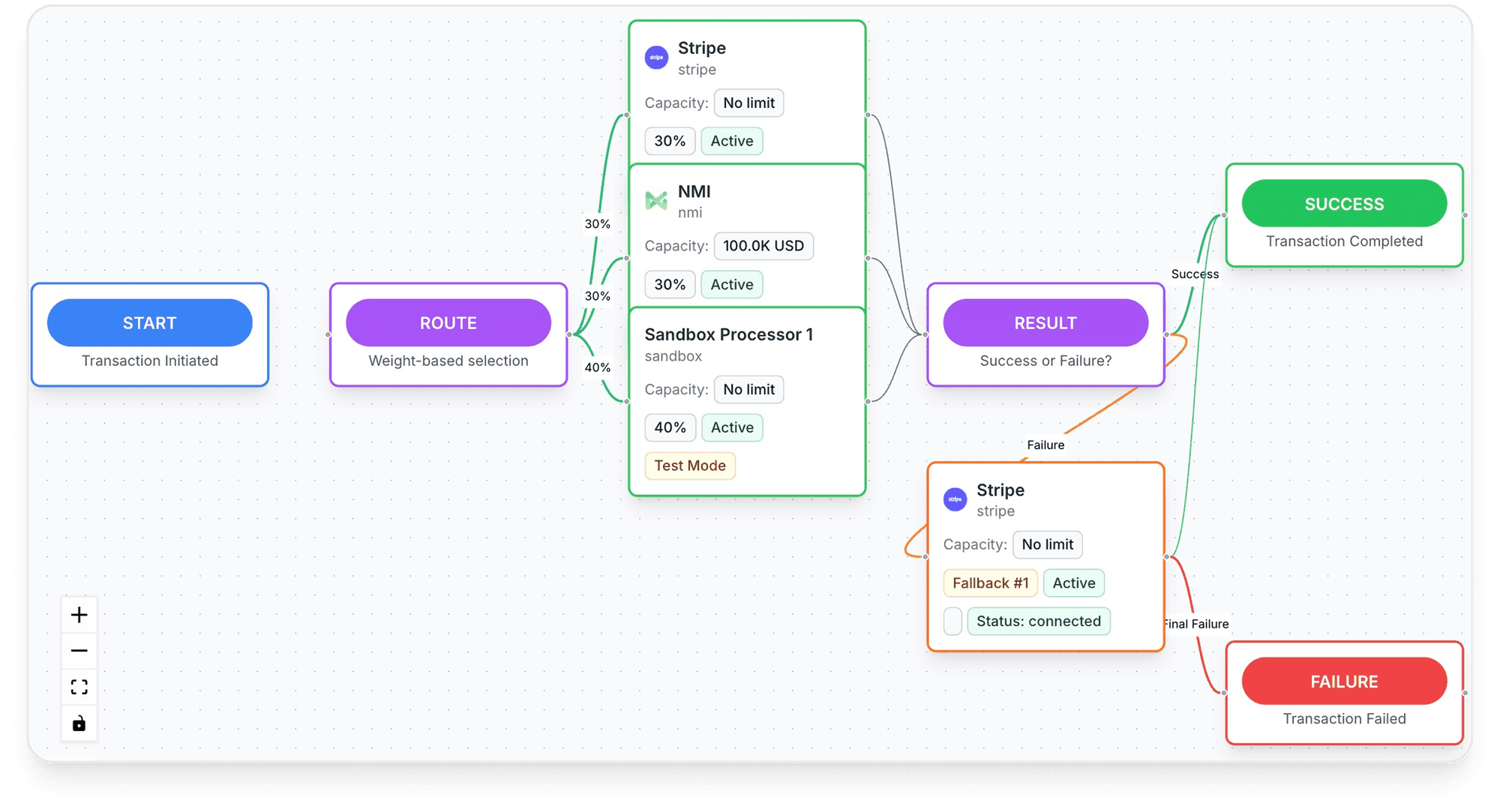
Inside Tagada
See every payment's route, processor by processor
Set the order your processors are tried in, per store, per country or per product.
What a chargeback really costs
The fee is the visible part. The full bill has four lines.
The order
The disputed amount leaves your balance on the day the chargeback is filed. It comes back only if you win.
The fees
The processor's fee, plus the fee to respond at processors like Stripe.
The goods
For physical products, what you shipped rarely comes back, and neither does the shipping cost.
The ratio
Each chargeback raises your dispute rate. Past a point, network fees and account reviews follow.
How much does it cost to fight a chargeback?
Fighting a chargeback, or representment, means sending evidence to the customer's bank. What it costs depends on where you process.
- The fee to respond. $15 at Stripe in the US, returned if you win. Nothing at Shopify Payments.1Stripe Support, June 2025 pricing updates for disputes
- Your time. Finding the order, the tracking, the customer's messages, and writing the response. See our chargeback rebuttal letter template.
- The wait. The amount stays held while the bank decides, usually 2 to 3 months end to end. See how long a chargeback takes.2Stripe Docs, How disputes work
Sources: Stripe Support, June 2025 pricing updates for disputes; Shopify Help Center.
Put your own numbers in. The calculator compares answering with accepting, for one chargeback:
Fight or accept?
Is this chargeback worth answering?
Expected gain from responding
$7.50
Respond: on average, answering brings back more than it costs.
Stripe charges $15 to counter, returned if you win. The $15 received fee is gone either way. The chargeback fee is lost whether you respond or not, so it is left out.
Practical rule
On small orders, answering rarely pays unless you have strong proof: delivery confirmation, signed terms, or earlier orders from the same customer. Above a few hundred dollars, it usually does if the proof is there.
Network fees when disputes pile up
Processor fees are per dispute. Card networks add their own fees when a merchant's disputes cross a threshold, and they bill them to the acquirer, who can pass them on to you.
1.5%
Visa VAMP 'Excessive' merchant ratio in the US, Canada, EU and Asia-Pacific since April 1, 2026
1,500
Fraud reports plus disputes per month before Visa can flag a merchant in those regions
$8
Visa fee per fraud report or dispute at the Excessive level, as reported in May 2025
The thresholds come from Visa's VAMP fact sheet.9Visa, Visa Acquirer Monitoring Program fact sheet, 2025 The $8 fee comes from Visa's May 2025 update, as reported by Chargeback Gurus; Visa doesn't publish it.5Chargeback Gurus, Visa announces even more VAMP changes (May 2025) Ask your acquirer whether it passes network fees on, and at what level.
How to pay fewer chargeback fees
The cheapest chargeback is the one that's never filed.
- Refund customers who ask, quicklyNo dispute, no fee, nothing on your ratioRead chargeback vs refund
- Answer bank inquiriesA full refund at that stage closes the case without a dispute feeCheck your processor's inquiry alerts
- Enroll in Verifi RDR and Ethoca AlertsAn alert fee instead of a dispute fee, and no chargeback on your ratioAsk your processor
- Fight only what you can winNo fee to respond on lost causesUse the calculator above
The full list of fixes is in our guide on how to prevent chargebacks, and what to do at each stage of a payment in chargeback vs refund.
How Tagada helps
Payments that follow the card network rules
Tagada follows Visa and Mastercard rules and the laws that apply to payments. TagadaPay runs native 3DS2, device intelligence and a rules engine, and payments route across Stripe, Adyen and TagadaPay with one logic. See pricing for plans.
Frequently asked questions
How much is a chargeback fee?
Do you get the chargeback fee back if you win?
How much does chargeback representment cost?
Who pays the chargeback fee, the merchant or the customer?
Does Square charge a chargeback fee?
Can a chargeback fee be avoided?
Sources
Checked October 14, 2026- Stripe Support, June 2025 pricing updates for disputes
- Stripe Docs, How disputes work
- PayPal, Merchant and business fees (US)
- Shopify Help Center, Overview of the chargeback and inquiry process
- Chargeback Gurus, Visa announces even more VAMP changes (May 2025)
- PayPal Braintree, Fees (US)
- Square, What is a chargeback (2017)
- Stripe Docs, Respond to disputes
- Visa, Visa Acquirer Monitoring Program fact sheet, 2025
TagadaPay
Lower your dispute rate, not just your fees
Tell us what you sell and how you sell it. Each application is underwritten, and approval is not guaranteed.
- 01Tell us what you sell and how
- 02Underwriting reviews your business
- 03Process through TagadaPay alongside your other processors