
Ad Attribution for Info Product Businesses
How course creators and coaches measure which ads sell: webinar and call funnels, cash collected on payment plans, refunds, affiliates, holdouts.


Article summary
TL;DR
Don't judge a course or coaching funnel on Meta's reported ROAS. The sale often comes days or weeks after the click, through a webinar, a call or emails, and Meta's longest click window is 7 days. Trust checkout orders, count cash collected, subtract refunds, ask buyers where they found you, and test your biggest channel with a holdout.
- Meta's default attribution setting is 7-day click, 1-day engage-through and 1-day view; a 7-day click is the longest window in the ad set (Jon Loomer, March 2026).
- Hyros, an attribution vendor, says coaching offers from $3,000 to $15,000 take "45 to 90 days" to buy, based on its own accounts, not a public benchmark.
- Meta's standard events include "SubmitApplication" for a person who "applies for a product, service, or program".
- Under the FTC's endorsement guides, "an advertiser may be liable for a deceptive endorsement even when the endorser is not liable": affiliate claims count as yours.
- Visa's misrepresentation dispute names "business opportunities" that suggest "an income will be generated"; refunds and disputes belong in your ad math.
 ChatGPT
 Claude
 Perplexity
 Grok
On this page
This guide is part of our playbook on the best ecommerce platform for info product businesses. The general guide: attribution modeling. Getting the event data right comes first: server-side tracking for info product businesses.
Why attribution is harder for info products
Long decisions
A buyer watches a webinar replay, reads emails for two weeks, books a call, then pays. The ad that started it is often outside Meta's 7-day click window1Jon Loomer Digital, How Meta ads attribution works in 2026, March 10, 2026 (secondary source).
Sales happen on calls
No pixel sees a deal closed on Zoom unless you send it back.
Payment plans
A $3,000 program sold in six installments is $500 of cash this month. Contract value makes a launch look better than your bank account does.
Refunds and disputes
A campaign that sells to the wrong people shows up weeks later as refunds.
Affiliates and launch partners
Much demand comes from partners' lists, not from your ads.
The numbers that matter
| Number | Formula | What it tells you |
|---|---|---|
| Checkout orders | From your checkout, by day | The truth everything else is checked against |
| Cash collected | Payments received in the period | What actually funds next month's ads |
| Net revenue | Cash collected minus refunds and disputes | Whether a launch really paid |
| MER | Total revenue ÷ total ad spend | Whether the whole system is efficient4Admetrics, Marketing attribution for DTC e-commerce: the complete buying guide, 2026 |
| New-customer CAC | Total ad spend ÷ new buyers | Whether acquisition pays back |
| Cost per call held | Ad spend ÷ sales calls that happened | For high-ticket coaching funnels |
Fig. 1One program, two numbers
Contract value
- Program sold$3,000 in six installments
- reportsPurchase valueFull $3,000 sent to the ad platform
Platform ROAS looks higher than the cash you collect
Cash collected
- Program sold$3,000 in six installments
- collectsCash this month$500 of cash this monthApproved
What actually funds next month's ads
Contract value flatters the launch. Cash funds the next one.
Watch out
If you send the full contract value of a payment plan as the purchase value, your platform ROAS will look higher than the cash you collect. Pick one rule (first payment or full value), write it down, and compare campaigns only under the same rule.
Webinar and call funnels: track every step
| Step | What to record | Where it comes from |
|---|---|---|
| Ad click | Click ID and UTM tags | Landing page |
| Registration or application | Lead, CompleteRegistration or SubmitApplication3Meta for Developers, Meta Pixel reference, standard events, read November 2, 2026 | Form, server event |
| Attendance | Live or replay viewed | Webinar tool |
| Call booked, held, closed | Status and the original source | Calendar and CRM |
| Payment | First payment and plan | Checkout |
| Refund or dispute | Date and amount | Checkout, processor |
Fig. 2A coaching sale, step by step
- Ad clickClick ID and UTM tags
- Registration or applicationLead, CompleteRegistration or SubmitApplication
- AttendanceLive or replay viewed
- CallBooked, held, closed
- PaymentFirst payment and plan
- Refund or disputeDate and amount
Tie every step to the source of the lead, by email.
Hyros says a call outcome such as "Closed Won" should be posted back to the ad platform with the buyer's identifier2Hyros, High-ticket coaching attribution, read November 2, 2026 (vendor article, undated, figures from its own accounts). Whatever tool you use, the rule is the same: tie each closed deal and each refund to the source of the lead, by email.
Which number for which decision
| Decision | Use |
|---|---|
| Raise or cut the total ad budget | MER and new-customer CAC, on cash collected net of refunds |
| Move budget between platforms | New-customer CAC by platform, checked with surveys and tests |
| Choose campaigns inside Meta | Platform results, within Meta only |
| Choose a webinar or a direct sales page | Net revenue per registrant, over 30 to 60 days |
| Judge a setter or closer team | Cost per call held and close rate by lead source |
| Judge an affiliate or partner | Orders by code or link, minus refunds |
Affiliates and launch partners
Affiliates and joint venture partners drive a large part of many launches. Count them in your checkout, not in your ad platform.
- Give each partner a code and a link, and count orders and refunds by code.
- Expect undercounting. Buyers often search your name later; the survey below catches part of them.
- Their claims are your claims. The FTC's guides say "an advertiser may be liable for a deceptive endorsement even when the endorser is not liable"516 CFR 255.1(d), Guides concerning the use of endorsements and testimonials in advertising. A partner email promising income is a risk for you, with the FTC and with your processor.
- Watch partner refund rates. A partner whose buyers refund or dispute more is costing you, whatever the sales count says. Visa's dispute rule 13.5 covers "business opportunities" that suggest "an income will be generated"8Visa Core Rules and Visa Product and Service Rules, edition of October 24, 2026, table 11-118 (dispute condition 13.5).
Ask buyers, then test
The post-purchase survey. One question on the thank-you page catches what tracking misses: podcasts, YouTube, a partner's list, word of mouth6Fairing, Ecommerce experts' most valuable post-purchase survey questions, read October 26, 2026.
- Ask: "Where did you first hear about us?"
- Offer a short list, including "A webinar", "A podcast or YouTube video" and "Someone recommended you".
- Compare with platform claims every month.
The holdout test. Turn a channel off for part of the audience or a group of regions, then compare new buyers4Admetrics, Marketing attribution for DTC e-commerce: the complete buying guide, 2026.
- Pick one channel with enough spend, often Meta prospecting.
- Hold out a share of the audience or a group of regions.
- Avoid launch weeks, when demand moves on its own.
- Run long enough to cover your sales cycle, including calls and email follow-up.
- Use the result to discount or credit that channel's reported numbers.
Run it outside launch weeks and long enough to cover the sales cycle.
Monthly routine
| Step | What you do |
|---|---|
| 1 | Reconcile checkout orders with each platform's reported purchases |
| 2 | Split revenue into new sales, installments, renewals and upsells |
| 3 | Subtract refunds and disputes, by campaign and by partner |
| 4 | Compute MER and new-customer CAC on net cash |
| 5 | Read survey answers and partner code orders |
| 6 | Plan one holdout test per quarter |
Clean data makes every step easier: send purchases server-side, deduplicated with the browser pixel7Meta for Developers, Deduplicate Pixel and server events, read October 26, 2026.
How Tagada helps
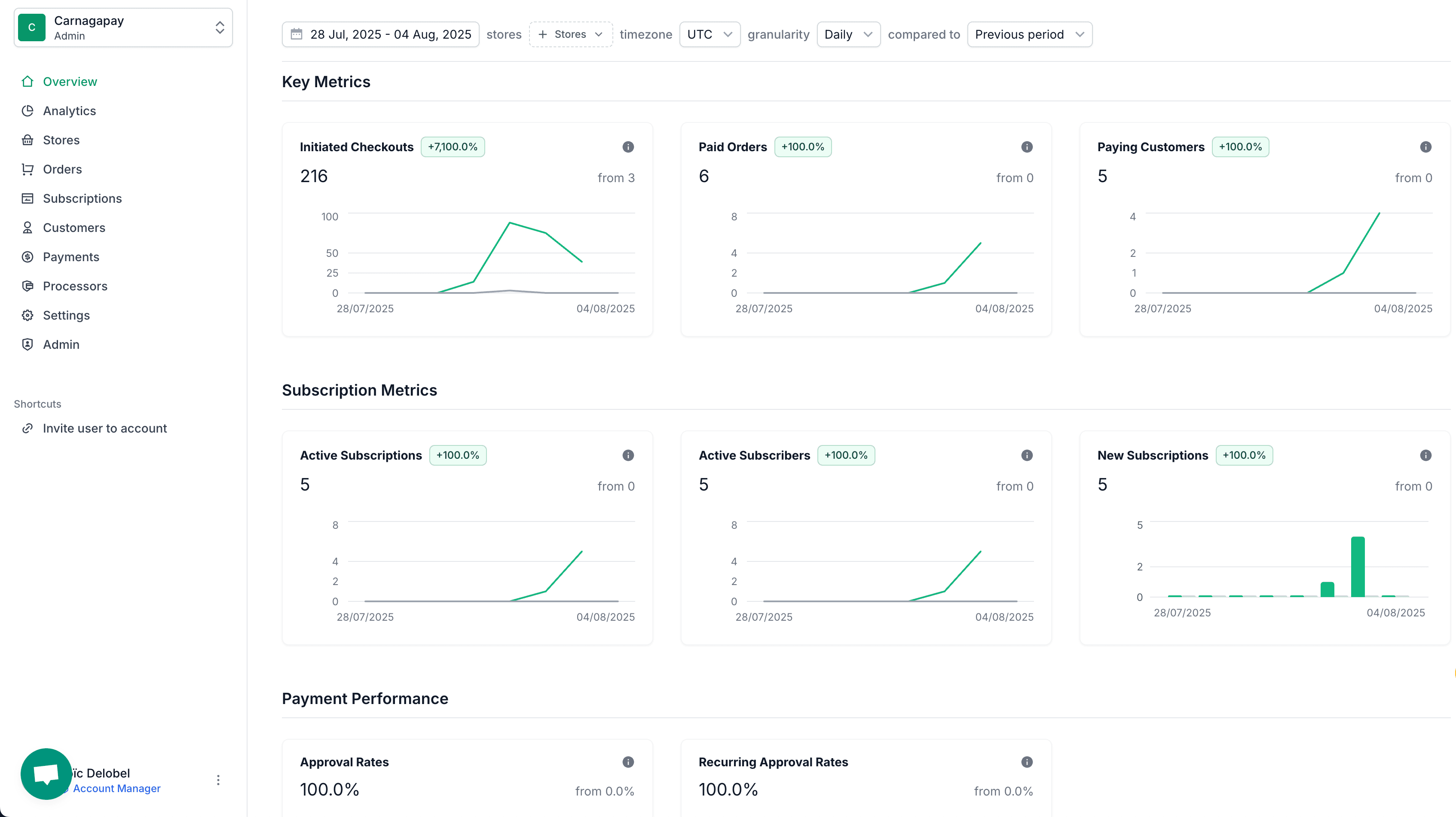
Checkout data your ad numbers can be checked against
"If you sell something real, we will get you paid." TagadaPay lists info products, coaching and online courses among its industries, with "enhanced review for regulated verticals." "Most merchants are live under 24 hours."10TagadaPay, homepage, read November 2, 2026
- Server-side events to Meta, Google and TikTok from the checkout, plus postbacks on each paid order to trackers such as RedTrack, ClickMagick and Hyros (tracking docs)9Tagada Docs, Tracking overview, read November 2, 2026
- Subscriptions and memberships in the same system, so installments and renewals can be told apart from new sales
- One-click upsells and order bumps on the checkout, sent with their own value
- A/B tests on offers and checkout
- Your current tools: "Already on Shopify, WooCommerce, ClickFunnels or BigCommerce? Drop TagadaPay in."10TagadaPay, homepage, read November 2, 2026
Plans are on the pricing page.
Apply today · Go live in under 24 hours
Tagada follows Visa and Mastercard rules and the laws that apply to payments.
Frequently asked questions
What attribution window should I use for high-ticket coaching?
How do I know which ad booked a sales call?
How do I attribute sales from a webinar?
Should I count payment plans at full value in my ROAS?
Do affiliate sales need FTC disclosures?
Sources
Checked November 2, 2026- Jon Loomer Digital, How Meta ads attribution works in 2026, March 10, 2026 (secondary source)
- Hyros, High-ticket coaching attribution, read November 2, 2026 (vendor article, undated, figures from its own accounts)
- Meta for Developers, Meta Pixel reference, standard events, read November 2, 2026
- Admetrics, Marketing attribution for DTC e-commerce: the complete buying guide, 2026
- 16 CFR 255.1(d), Guides concerning the use of endorsements and testimonials in advertising
- Fairing, Ecommerce experts' most valuable post-purchase survey questions, read October 26, 2026
- Meta for Developers, Deduplicate Pixel and server events, read October 26, 2026
- Visa Core Rules and Visa Product and Service Rules, edition of October 24, 2026, table 11-118 (dispute condition 13.5)
- Tagada Docs, Tracking overview, read November 2, 2026
- TagadaPay, homepage, read November 2, 2026
Tagada
Judge your ads on cash collected, not platform ROAS
Funnels, one-click upsells, subscription billing and payment routing, on one customer record.
- 01Create your free account
- 02Connect your store or build a checkout
- 03Launch funnels, upsells and subscriptions