
Ad Attribution for Skincare Brands
How skincare brands measure which ads sell: store data, MER, new-customer CAC, 2026 beauty ROAS benchmarks, creator sales, surveys and holdout tests.



Article summary
TL;DR
Don't run a skincare brand on the ROAS that Meta, Google or TikTok report. Each platform credits itself, refills inflate the numbers, and creators drive sales no pixel sees. Use store orders as the truth, watch MER (revenue ÷ total ad spend) and the cost per new customer, ask buyers where they heard of you, and test big channels with holdouts before scaling.
- MER, total revenue divided by total ad spend, checks the whole system whatever the platforms claim.
- One agency's Q1 2026 data puts beauty first-purchase ROAS at 2.1x against 8.4x for repeat customers (method not published).
- The same report gives beauty new-customer ROAS of 2.4x on Meta, 2.8x on Google and 1.8x on TikTok.
- Median CAC for Beauty & Personal Care Shopify brands: $44.29 (Polar, August 2026).
- A one-question post-purchase survey catches creators and word of mouth.
 ChatGPT
 Claude
 Perplexity
 Grok
On this page
This guide is part of our playbook on the best ecommerce platform for skincare brands. Clean purchase data first: server-side tracking for skincare brands.
Why attribution is harder for skincare
- Refills and renewals land in blended reports, but this month's ads didn't cause most of them.
- Creators and UGC drive sales through links, codes or no trace at all.
- Research before buying: shoppers watch reviews, compare ingredients, then buy days later on another device.
- Retail and Amazon absorb part of the demand your ads create.
The 5 numbers that matter
| Number | Formula | What it tells you |
|---|---|---|
| Store revenue and orders | From your store, by day | The truth everything is checked against |
| MER | Total revenue ÷ total ad spend | Whether the whole system is efficient1Admetrics, Marketing attribution for DTC e-commerce: the complete buying guide, 2026 |
| New-customer CAC | Total ad spend ÷ new customers | Whether acquisition pays back |
| First-order ROAS | First-order revenue ÷ ad spend | Ad efficiency without refills |
| Platform ROAS | As reported by each platform | Relative performance inside one platform |
Fig. 1Every number is checked against store orders
- MERTotal revenue ÷ total ad spend: is the whole system efficient?
- New-customer CACTotal ad spend ÷ new customers: does acquisition pay back?
- First-order ROASFirst-order revenue ÷ ad spend: ad efficiency without refills
- Platform ROASAs each platform reports it: relative performance inside one platform
The further from the store, the less you trust it on its own.
| Beauty benchmark | Blended ROAS | New-customer ROAS |
|---|---|---|
| All platforms | 4.2x | 2.1x (first purchase) |
| Meta | 4.8x | 2.4x |
| 5.2x | 2.8x | |
| TikTok | 3.9x | 1.8x |
ATTN Agency, Beauty & Personal Care, Q1 2026; formula, windows and sample not published2ATTN Agency, 2026 ROAS benchmarks by industry vertical, Q1 2026 data (methodology not published). Use as a rough range.
Fig. 2Beauty ROAS by platform: blended vs. new customers
Blended ROASNew-customer ROAS
- All platforms
- Meta
- TikTok
On every platform, new customers return about half the blended figure.
Watch out
An 8x ROAS that comes from repeat customers says nothing about finding new ones. Split first orders from refills before judging any campaign.
The same report puts beauty first-purchase ROAS at 2.1x against 8.4x for repeat customers2ATTN Agency, 2026 ROAS benchmarks by industry vertical, Q1 2026 data (methodology not published). Polar puts the median CAC for Beauty & Personal Care Shopify brands at $44.293Polar Analytics, Weekly ecommerce benchmarks, Beauty & Personal Care, updated August 25, 2026.
2.1x
Beauty first-purchase ROAS, ATTN Agency, Q1 2026
8.4x
Beauty ROAS on repeat customers, same report
$44.29
Median CAC, Beauty & Personal Care Shopify brands (Polar, August 2026)
Which number for which decision
| Decision | Use |
|---|---|
| Raise or cut the total budget | MER and new-customer CAC against payback |
| Move budget between platforms | New-customer CAC by platform, checked with surveys and tests |
| Choose campaigns inside Meta | Meta's own results, within Meta only |
| Choose creatives | Platform results plus first-order conversion |
| Decide if a channel works at all | A holdout test |
Payback targets: LTV and CAC for skincare brands.
Creators and TikTok
- Give each creator a link and a code, and count orders using either.
- Expect undercounting: viewers often search the brand later instead of clicking.
- Watch branded search and direct traffic around creator posts.
- Judge creators on new customers, not on total revenue that includes regulars using their code.
Link and code
One per creator. Count orders that use either.
Expect undercounting
Viewers often search the brand later instead of clicking.
Watch branded search
And direct traffic, around each creator post.
New customers only
Regulars using a creator's code are not new sales.
Ask buyers: the post-purchase survey
- One question on the thank-you page: "Where did you first hear about us?"5Fairing, Ecommerce experts' most valuable post-purchase survey questions, read October 26, 2026
- A short list of channels, including creators, TikTok, a friend, retail, plus "Other".
- New customers only, so refills don't skew it.
- Compare with platform claims each month.
Incrementality: does the channel cause sales?
- Pick one channel with enough spend, often Meta prospecting or branded search.
- Hold out a share of the audience or a group of regions.
- Run for two to four weeks.
- Compare new customers between the groups.
- Adjust that channel's reported numbers with the result1Admetrics, Marketing attribution for DTC e-commerce: the complete buying guide, 2026.
One holdout test per quarter on the biggest channel is enough to keep platform numbers honest.
Monthly routine
| Step | What you do |
|---|---|
| 1 | Reconcile store orders with each platform's purchases |
| 2 | Split revenue into first orders, refills and renewals |
| 3 | Compute MER and new-customer CAC |
| 4 | Read new customers' survey answers |
| 5 | One holdout test per quarter on the biggest channel |
Send purchases server-side with deduplication to keep the data clean4Meta for Developers, Deduplicate Pixel and server events, read October 26, 2026.
How Tagada helps
Ad data that tells first orders from refills
- Server-side events to Meta, Google and TikTok, sent from the checkout
- Subscriptions in the same system, so renewals are told apart from first orders
- One-click upsells and order bumps, which raise first-order revenue
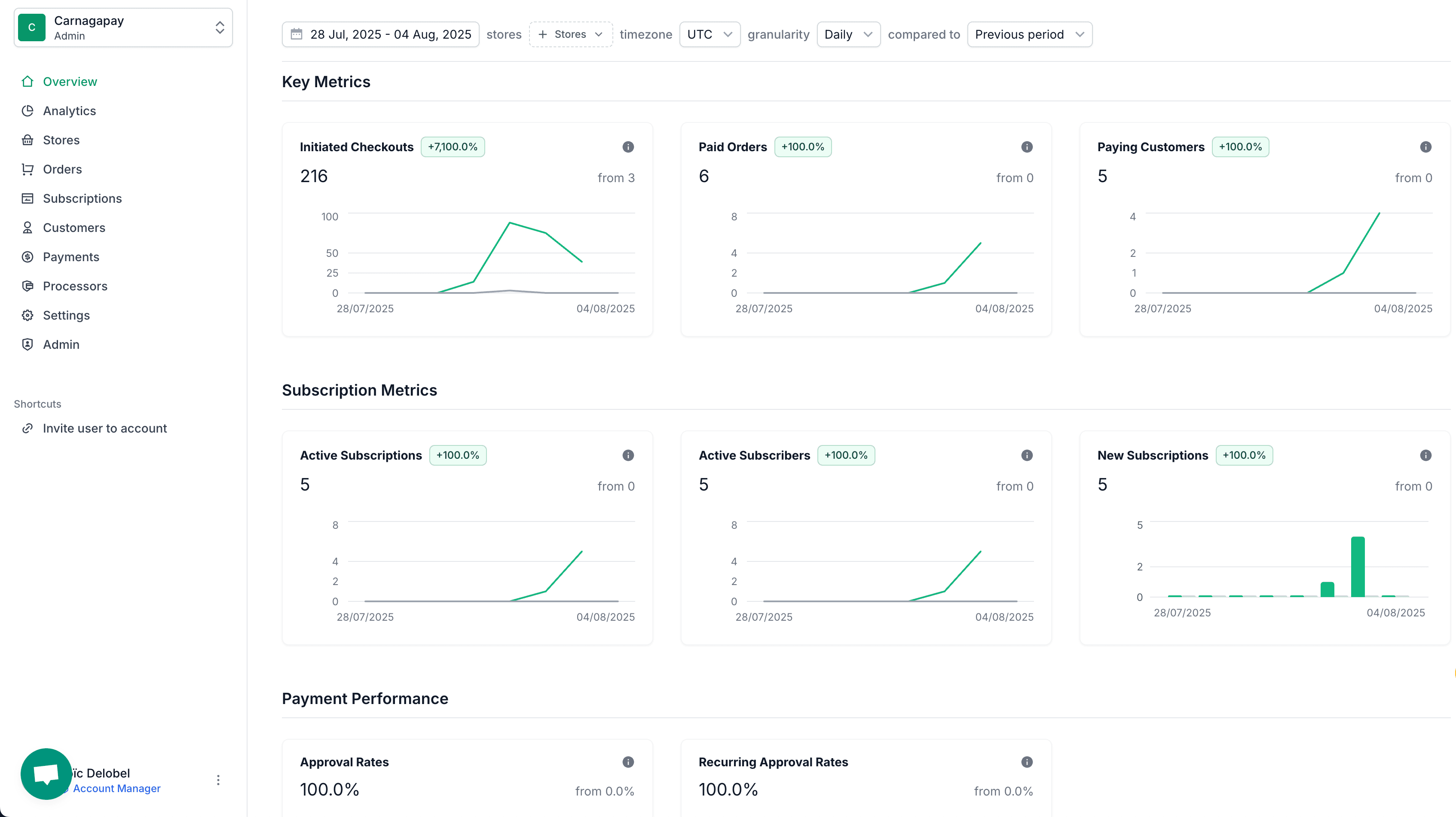
- A/B tests on offers and checkout
Plans are on the pricing page.
Frequently asked questions
What is a good ROAS for a skincare brand?
What is MER?
How do I measure creator and influencer sales?
Why is my Meta ROAS different from my store revenue?
Sources
Checked October 26, 2026- Admetrics, Marketing attribution for DTC e-commerce: the complete buying guide, 2026
- ATTN Agency, 2026 ROAS benchmarks by industry vertical, Q1 2026 data (methodology not published)
- Polar Analytics, Weekly ecommerce benchmarks, Beauty & Personal Care, updated August 25, 2026
- Meta for Developers, Deduplicate Pixel and server events, read October 26, 2026
- Fairing, Ecommerce experts' most valuable post-purchase survey questions, read October 26, 2026
Tagada
Judge skincare ads on new customers, not platform ROAS
Funnels, one-click upsells, subscription billing and payment routing, on one customer record.
- 01Create your free account
- 02Connect your store or build a checkout
- 03Launch funnels, upsells and subscriptions