
LTV and CAC for a Skincare Brand: How to Calculate and Improve Them
How to calculate LTV and CAC for a skincare brand when customers buy routines, the benchmarks to compare with, and what raises the ratio.

Article summary
TL;DR
For a skincare brand, calculate LTV per customer on the gross profit of their whole routine, not of one product, over 12 to 24 months; calculate CAC on all acquisition costs divided by new customers. Compare one-time routine buyers with routine subscribers. The median CAC for Shopify beauty brands is $44.29, so a routine customer needs to bring well over that in gross profit.
- Beauty & Personal Care median CAC: $44.29; median order: $66 (Polar Analytics, August 2026).
- In Recharge's 2021 data, 86% of beauty subscribers were active after 1 month, 54% after 6 and 39% after 12.
- 60% of subscribers reach a 3rd order and 50% a 4th, across categories (Recharge, May 2025).
- 25% of lost subscriptions are lost to failed payments (Stripe, January 2024).
- Use gross profit, not revenue: revenue-based LTV overstates what you can spend to acquire a customer.
 ChatGPT
 Claude
 Perplexity
 Grok
On this page
This guide is part of our playbook on the best ecommerce platform for skincare brands. Benchmarks: skincare brand benchmarks.
The formulas, routine-based
| Metric | Formula | Skincare note |
|---|---|---|
| Gross profit per order | Order revenue − product cost − shipping − payment fees − discounts | Calculate on the routine actually bought |
| LTV, one-time buyers | Gross profit per order × orders per customer over 12 or 24 months | Customers often reorder only part of the routine |
| LTV, subscribers | Gross profit per renewal × renewals over the period | Use your retention curve, not a single churn rate |
| CAC | All acquisition spend ÷ new customers | Ads, creators, agency, quiz tools |
| Payback | CAC ÷ gross profit per customer per month | Shorter is better for cash |
Gross profit per order, on the routine
Revenue minus product cost, shipping, payment fees and discounts, on the routine actually bought. Use gross profit, not revenue: revenue-based LTV overstates what you can spend to acquire a customer6ATTN Agency, LTV calculation guide for DTC, read October 26, 2026.
LTV, one-time buyers
Gross profit per order × orders per customer over 12 or 24 months.
LTV, subscribers
Gross profit per renewal × renewals over the period, from your retention curve.
CAC
All acquisition spend ÷ new customers: ads, creators, agency, quiz tools.
Payback
CAC ÷ gross profit per customer per month. Shorter is better for cash.
Worked example: one-time routine vs. routine subscriber
Illustrative figures. A 3-step routine sells for $96 with $60 of gross profit after product, shipping, payment fees and discounts. A one-time buyer reorders part of the routine once. A subscriber renews every 60 days.
| One-time routine buyer | Routine subscriber | |
|---|---|---|
| First order gross profit | $60 | $54 (10% subscriber price) |
| Reorders in 12 months | 1 partial ($30 gross profit) | Renewals following a retention curve like Recharge's beauty data2Recharge, State of Subscription Commerce, 2022 edition (2021 data) |
| Estimated renewals in 12 months | n/a | about 3.6 (6 possible renewals × average share still active) |
| 12-month gross profit (LTV) | about $90 | about $54 + 3.6 × $54 ≈ $248 |
| LTV:CAC at $44.29 CAC1Polar Analytics, Weekly ecommerce benchmarks, Beauty & Personal Care, updated August 25, 2026 | about 2:1 | about 5.6:1 |
Renewal estimate: six 60-day renewals in a year, multiplied by an average active share near 60%, in line with the 86% / 54% / 39% shape in Recharge's 2021 beauty data2Recharge, State of Subscription Commerce, 2022 edition (2021 data). Your own curve replaces it.
Fig. 1Same routine, two customers, one year
One-time routine buyer
- First order$60 gross profit
- thenOne partial reorder$30 gross profit
About $90 in 12 months, about 2:1 LTV:CAC
Routine subscriber
- First order$54 gross profit
- thenAbout 3.6 renewals$54 each
About $248 in 12 months, about 5.6:1 LTV:CAC
Same CAC, very different returns.
The subscriber earns more than twice as much in a year. That is why skincare brands push the routine, and the routine subscription, from the first order.
Benchmarks with sources
$44.29
Median CAC, Beauty & Personal Care (Polar)
$66
Median order, Beauty & Personal Care (Polar)
39%
Beauty subscribers still active after 12 months (Recharge, 2021 data)
25%
Lost subscriptions lost to failed payments (Stripe)
| Metric | Benchmark | Source |
|---|---|---|
| CAC, Beauty & Personal Care | $44.29 median | Polar, August 20261Polar Analytics, Weekly ecommerce benchmarks, Beauty & Personal Care, updated August 25, 2026 |
| AOV | $66 median | Polar1Polar Analytics, Weekly ecommerce benchmarks, Beauty & Personal Care, updated August 25, 2026 |
| Beauty subscriber retention | 86% at 1 month, 54% at 6, 39% at 12 | Recharge, 2021 data2Recharge, State of Subscription Commerce, 2022 edition (2021 data) |
| Subscribers reaching 3rd / 4th order | 60% / 50% | Recharge, May 20253Recharge, subscriber order and pause data, May 2025 |
| Lost subscriptions due to failed payments | 25% | Stripe4Stripe, data on failed payments and lost subscriptions, January 23, 2024 |
| Post-purchase upsell acceptance | 4.7% average, 28.3% for the top offers | ReConvert, 2023 data5ReConvert, post-purchase upsell acceptance, 2023 data |
Fig. 2Beauty subscribers still active, by month
Active subscribers
The curve your renewal estimate should come from.
What drains skincare LTV
| Drain | Effect | Fix |
|---|---|---|
| Single products, no routine | Low first order, few reasons to return | Skincare routines |
| Wrong refill cycle | Products pile up, customers cancel | Flexible cycles, skip and swap: subscriptions and churn |
| Failed renewals | A quarter of lost subscriptions4Stripe, data on failed payments and lost subscriptions, January 23, 2024 | Failed payment recovery |
| Refunds after reactions | Revenue returned, trust lost | Patch-test guidance, clear ingredient info |
| Discounts every month | Lower gross profit per order | Gifts and kits instead: increase AOV |
Raise LTV
- Sell routines, not single products.
- Offer routine subscriptions with flexible cycles.
- Add one-click upsells for the next routine step5ReConvert, post-purchase upsell acceptance, 2023 data: one-click upsells.
- Recover failed renewals: failed payment recovery.
- Send refill reminders timed on use: email flows.
Five levers, from the first order to the renewals.
Lower CAC
- Send ads to a focused routine page or quiz: the skincare sales funnel.
- Track purchases server-side so platforms optimize on real sales: server-side tracking.
- Measure CAC per channel and cut what never pays back: ad attribution.
How Tagada helps
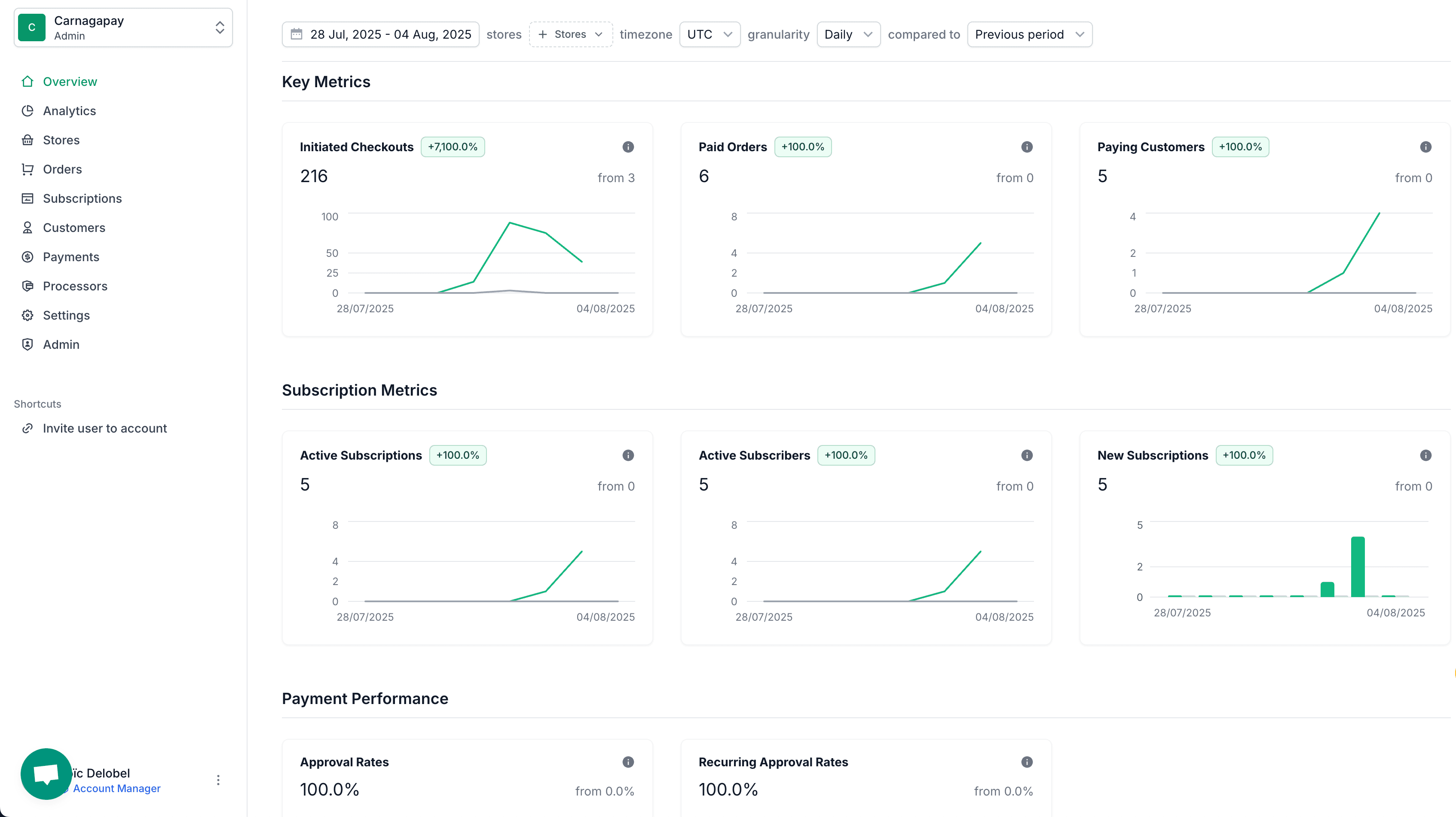
Raise skincare LTV and measure CAC from one checkout
| Side | What Tagada does |
|---|---|
| Raise LTV | Subscriptions with trials, cycles, retries and automatic recovery; order bumps and one-click upsells |
| Protect LTV | Routing across Stripe, Adyen and TagadaPay, cascade on decline |
| Measure CAC | Server-side events to Meta, Google and TikTok |
Plans are on the pricing page.
Frequently asked questions
How do I calculate LTV for a skincare brand?
What is a good LTV to CAC ratio for skincare?
What is the average CAC for a skincare brand?
How long do skincare subscribers stay?
Sources
Checked October 26, 2026- Polar Analytics, Weekly ecommerce benchmarks, Beauty & Personal Care, updated August 25, 2026
- Recharge, State of Subscription Commerce, 2022 edition (2021 data)
- Recharge, subscriber order and pause data, May 2025
- Stripe, data on failed payments and lost subscriptions, January 23, 2024
- ReConvert, post-purchase upsell acceptance, 2023 data
- ATTN Agency, LTV calculation guide for DTC, read October 26, 2026
Tagada
Price acquisition on the routine, not the product
Funnels, one-click upsells, subscription billing and payment routing, on one customer record.
- 01Create your free account
- 02Connect your store or build a checkout
- 03Launch funnels, upsells and subscriptions