
You've built a profitable ecommerce brand. Revenue is growing. Ads are scaling. Then one morning you open your email: "Your merchant account has been terminated effective immediately." No warning. No appeal. Your payment processor just shut you down--and every dollar of revenue stops flowing instantly.
This isn't a horror story. It's a Tuesday for thousands of ecommerce merchants. Shopify Payments, Stripe, PayPal--they all do it. And when it happens, most brands are left scrambling to find a new processor while burning through cash reserves and losing customers by the hour.
Why Processors Ban Merchants
Understanding why shutdowns happen is the first step to preventing them. Payment processors are risk-averse by design--they're liable for chargebacks if you can't cover them. Here are the most common triggers:
Chargeback ratio exceeds thresholds
Visa and Mastercard set maximum chargeback ratios (typically 1% of transactions). Exceed this for 2 months and you enter monitoring programs. Exceed it for 3+ months and processors terminate your account. This is the #1 cause of shutdowns.
Product category risk classification
Supplements, nutraceuticals, weight loss, subscription services, telehealth, and CBD are all flagged as "high-risk" by most processors. Even if your chargebacks are low, the category classification alone can trigger reviews and shutdowns.
Sudden volume spikes
Your Black Friday campaign 5x'd your normal volume? Congratulations--and also, your processor just froze your account pending review. Rapid volume increases trigger automated risk flags, even when the transactions are entirely legitimate.
The Resilient Payment Architecture
Brands that never go dark share a common infrastructure pattern. They don't rely on hope--they build systems that are architecturally incapable of total failure.
Multi-Processor with Automatic Cascading
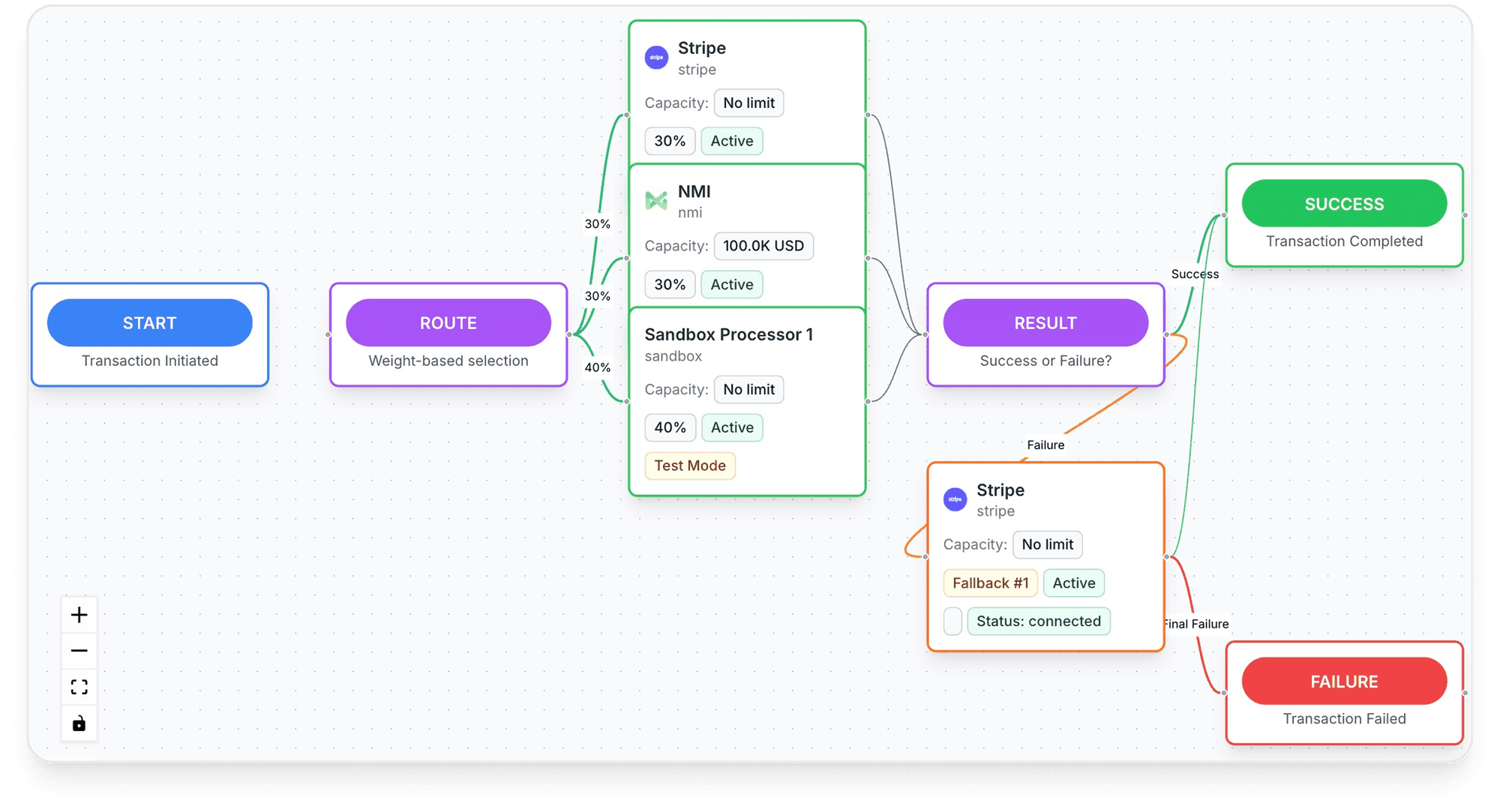
Maintain active accounts with 2-4 processors. Use payment orchestration to distribute volume intelligently. If Processor A goes down or bans you, transactions automatically route to Processors B and C with zero downtime. Your customers never know anything happened.
Chargeback Prevention Stack
The best defense against shutdowns is preventing the chargebacks that cause them. A proper stack includes: Visa RDR (Rapid Dispute Resolution) which auto-refunds disputes before they become chargebacks, Ethoca Alerts which notify you of fraud claims before the chargeback is filed, and pre-auth risk scoring that blocks fraudulent transactions before they process.
Volume Distribution Across MIDs
Don't run $2M/month through a single MID. Distribute across multiple merchant accounts to keep each one within comfortable volume ranges. Smart routing handles this automatically--splitting traffic based on rules you define without any customer-facing impact.
Processor-Agnostic Tokenization
Store card data in a vault that works across all processors. If Processor A terminates your account, you can immediately charge those cards on Processor B--no need to ask customers to re-enter payment details. This is the difference between a minor inconvenience and a catastrophic revenue interruption.
How Tagada Makes This Simple
Building this infrastructure from scratch requires integrating multiple processors, building routing logic, managing token vaults, and maintaining chargeback prevention tools. It's a full engineering project.
Tagada provides all of this out of the box. Our unified platform includes multi-processor routing with automatic cascading, built-in Visa RDR and Ethoca Alert integration, processor-agnostic card vaulting, intelligent volume distribution, and real-time chargeback monitoring. Setup takes hours, not months. And it works with your existing Shopify or WooCommerce storefront.
The Cost of Inaction
We hear the same story weekly: "We thought it wouldn't happen to us." The average processor shutdown costs a merchant 5-14 days of revenue while they scramble to find and integrate a new processor. For a brand doing $30K/day, that's $150K-$420K in lost revenue--plus the customer trust that's much harder to rebuild.
The brands that survive and thrive at scale are the ones that treat payment resilience as infrastructure, not insurance. Build it before you need it, because by the time you need it, it's too late.