
Telemedicine Payment Processing: What Processors Check
Taking card payments as a telehealth business: the MCC for a consult or a prescription, what Stripe and PayPal require, and Visa's rules on renewals.

Article summary
TL;DR
Telehealth businesses can take card payments, but processors review them first. Stripe lists telemedicine as a restricted business, PayPal requires pre-approval, and Visa puts online pharmacy sales in Tier 1 of its high-risk program. Expect to show licenses and your prescribing process, and keep consultations and medication on the right merchant codes.
- Stripe treats telemedicine and online pharmacies as restricted businesses, reviewed case by case. PayPal requires pre-approval for both.
- Visa has no telehealth code. A physician consult fits 8011, other practitioners 8099, dispensed medication 5912.
- Card-absent pharmacy sales (5122, 5912) are Tier 1 in Visa's high-risk program, unless the pharmacy is accredited by NABP or another body Visa recognizes.
- Stripe doesn't require LegitScript certification for telemedicine, but asks for license numbers and how your process works.
- Treatment plans billed every month follow Visa's recurring rules: terms at sign-up, a reminder before a trial ends, cancellation online.
 ChatGPT
 Claude
 Perplexity
 Grok
On this page
A telehealth business is two businesses in one checkout: a medical consultation and, often, a prescription that someone has to dispense and ship. Card networks and processors treat those two very differently. Here is what they check, which merchant code fits each part, and how to bill treatment plans without piling up disputes.
Is telehealth high-risk for payment processing?
Not all of it. Visa's high-risk list covers pharmacies, not doctors. Processors are broader: most of them review any business that diagnoses or treats patients online before they let it take cards.
Medication is Visa Tier 1
Card-absent sales under MCC 5122 and 5912 sit in Tier 1 of Visa's Integrity Risk Program, its highest level. The acquirer needs Visa's approval for that tier and must register the merchant first.3Visa, Visa Integrity Risk Program guide for acquirers, April 6, 2023
Prescribing is licensed
Processors want to know who prescribes, where they're licensed and how a prescription is issued. Stripe asks telemedicine applicants for license numbers and information on their processes.
Treatment plans recur
Most plans renew every month. Visa sets rules for renewals, and a patient who forgot about one can file a dispute that counts against you.
Visa adds one hard line that applies to every acquirer, whatever the code.2Visa Core Rules and Visa Product and Service Rules, April 18, 2026
An Acquirer must ensure that a Merchant [...] does not accept Cards for [...] The purchase of products that claim or imply a similar efficacy as prescription drugs, controlled substances, or recreational/street drugs, irrespective of claims of legality.
In practice, the product pages of a telehealth brand matter as much as its license. A non-prescription product marketed as "works like" a prescription drug can't be sold on Visa at all.
Which processors accept telehealth payments?
The big self-serve processors don't refuse telehealth outright. They put it behind a review.4Stripe, Prohibited and restricted businesses5Stripe Support, Prohibited and restricted businesses list FAQs6PayPal, Acceptable Use Policy, last updated October 29, 2022
| What you sell | Stripe | PayPal |
|---|---|---|
| Telemedicine and telehealth services | RestrictedNeeds review. Prohibited for accounts in Mexico | Pre-approval required ("Telemedicine Services") |
| Prescription medication sold online | RestrictedNeeds review. Pharmacies approved only in the US, Canada, the EU, Australia, the UK and Japan | Pre-approval required ("Prescription Items") |
| Prescription-only medical devices, prescription delivery | RestrictedNeeds review | Pre-approval required for prescription dispensing services |
| Non-prescription products that make unsafe or harmful claims | Prohibited("pseudo-pharmaceuticals or nutraceuticals that are not safe or make harmful claims") | ProhibitedIf they present a risk to consumer safety |
Verdict
Neither Stripe nor PayPal approves telehealth by default. Both decide case by case, and an approval can be changed or revoked later: Stripe says so in its restricted list.
Stripe defines the scope precisely. Telemedicine is "synchronous and asynchronous patient communication that involves diagnosis or treatment conducted over phone, text, email, or video consultations." Education or wellness content isn't telemedicine. And an internet pharmacy is any business that "sells, dispenses, markets, or facilitates the selling, dispensing, or marketing" of a prescription or pharmacy-only medicine ordered online.5Stripe Support, Prohibited and restricted businesses list FAQs A telehealth brand that charges for the medication itself can fall under both definitions.
Which MCC fits a telehealth business?
Visa's merchant code manual has no telehealth or telemedicine code. You use the code of what you actually charge for.1Visa, Merchant Data Standards Manual, April 2026
Fig. 1One brand, up to three codes
- Physician consultation8011, Doctors and Physicians
- Other practitioner8099, therapists, psychologists, mental health practitioners
- Prescription medication5912, Drug Stores and Pharmacies
what you charge for sets the code
| What you charge for | Visa MCC | On Visa's high-risk list (card-absent) |
|---|---|---|
| Consultation with a licensed physician, general or specialized (dermatology, psychiatry…) | 8011 Doctors and Physicians | Not listed |
| Consultation with another health practitioner (therapist, psychologist, fertility clinic…) | 8099 Medical Services and Health Practitioners | Not listed |
| Prescription and proprietary drugs sold to patients | 5912 Drug Stores and Pharmacies | Tier 1. Outside the US, only sales that aren't domestic |
| Wholesale or B2B distribution of drugs | 5122 Drugs, Drug Proprietaries, and Druggist Sundries | Tier 1 |
Visa's rules also define a "Health Care Merchant" in the US: a merchant, other than a pharmacy, whose main business is providing health care services under codes such as 8011 or 8099.2Visa Core Rules and Visa Product and Service Rules, April 18, 2026 The pharmacy is deliberately outside that group.
5122 isn't a patient-facing code
Visa describes 5122 as business-to-business or wholesale distribution of drugs. A brand selling to patients shouldn't sit on it. If your provider gave you 5122 or a generic retail code for medication sales, ask why. See how to find your MCC on each processor.
Pharmacies get one exemption. Visa's rule that acquirers register every high-integrity-risk merchant "does not apply to Merchants assigned MCC 5122 or 5912 if the Merchant is accredited by the National Association of Boards of Pharmacy (NABP) or other regulatory body recognized by Visa."2Visa Core Rules and Visa Product and Service Rules, April 18, 2026 The full tier list is in our guide to high-risk MCC codes.
Consultation and medication: one merchant account or two?
This is the structural question most telehealth brands face. Visa's manual gives two rules that frame it.1Visa, Merchant Data Standards Manual, April 2026
- A merchant with several lines of business can use the code of its biggest line for everything, or one code per line.
- But a line that is high integrity risk, like card-absent pharmacy sales, must have its own code, separate from the others.
Stripe assigns one MCC per account.8Stripe Docs, Setting merchant category codes So a brand that bills both the consult and the medication usually ends up with two accounts or two merchants of record, one per code.
Fig. 2Two common setups
The brand bills everything
- CheckoutConsult plus first month of treatment
- splits intoConsult account8011 or 8099
- andPharmacy account5912, Visa Tier 1
Two codes: 8011 or 8099 for consults, 5912 for medication, each with its own review
Brand bills the consult, pharmacy bills the medication
- CheckoutConsult or membership fee
- chargesBrand account8011 or 8099
- hands off toPartner pharmacyCharges the patient for medication
The brand stays on 8011 or 8099; the pharmacy is merchant of record for the drugs
who dispenses decides
Either way, the patient sees two kinds of charges. Make each billing descriptor recognizable: Visa requires that the name on the statement doesn't create confusion with the merchant's code, and an unfamiliar name is a classic reason for "I don't recognize this charge" disputes.1Visa, Merchant Data Standards Manual, April 2026 If you're new to the concept, read what a merchant of record is responsible for.
What processors ask for
Stripe says telemedicine applicants "typically need to provide items such as license numbers and information on your processes."5Stripe Support, Prohibited and restricted businesses list FAQs Merchant account providers list similar files. Build them before you apply, not after the first review email.
- Licenses. Prescriber license numbers and the states or countries each one covers, plus the pharmacy's license if you dispense. LegitScript's first standard: be "adequately licensed for the services they offer and in the jurisdictions they serve."
- Your clinical flow. Intake, who reviews it, synchronous or asynchronous consult, when a prescription is issued or refused, and what the patient pays if it's refused.
- Who does what. The medical group, the pharmacy, the brand: who is the merchant of record for each charge.
- Product and ad copy. No claim that a non-prescription product works like a prescription drug. Processors read your site the way Visa's rules do.
- Billing terms. Price, renewal frequency, trial terms, how to cancel, refund policy for refused prescriptions.
- History. Processing statements and dispute rates from past accounts, if you have them.
Assembled from Stripe's telemedicine FAQ and LegitScript's healthcare certification standards. Each processor sets its own list.
Do you need LegitScript certification?
Not for Stripe. Its FAQ is explicit.5Stripe Support, Prohibited and restricted businesses list FAQs
Telemedicine businesses don't need certification from LegitScript. However, certain licensing and regulatory items must be provided to Stripe for verification as part of the onboarding process.
Other banks and processors can still ask for it. LegitScript's certification reviews nine standards, from licensure and prior discipline to validity of prescriptions, privacy and advertising. LegitScript says "Visa and Mastercard recognize LegitScript Certification," and that Google, Meta, Microsoft, TikTok and LinkedIn are among the platforms that trust it for healthcare ads.7LegitScript, Healthcare Certification (read October 14, 2026) For many telehealth brands, ads are the reason to get it, and payments benefit on the side.
$975
LegitScript application fee per website, nonrefundable
$2,150
Annual certification fee per website, once approved
$2,500
Optional expedited processing, review starts within 2 business days
Fees as published on LegitScript's healthcare certification page on October 14, 2026.7LegitScript, Healthcare Certification (read October 14, 2026) Check the page before you budget: they change.
Inside Tagada
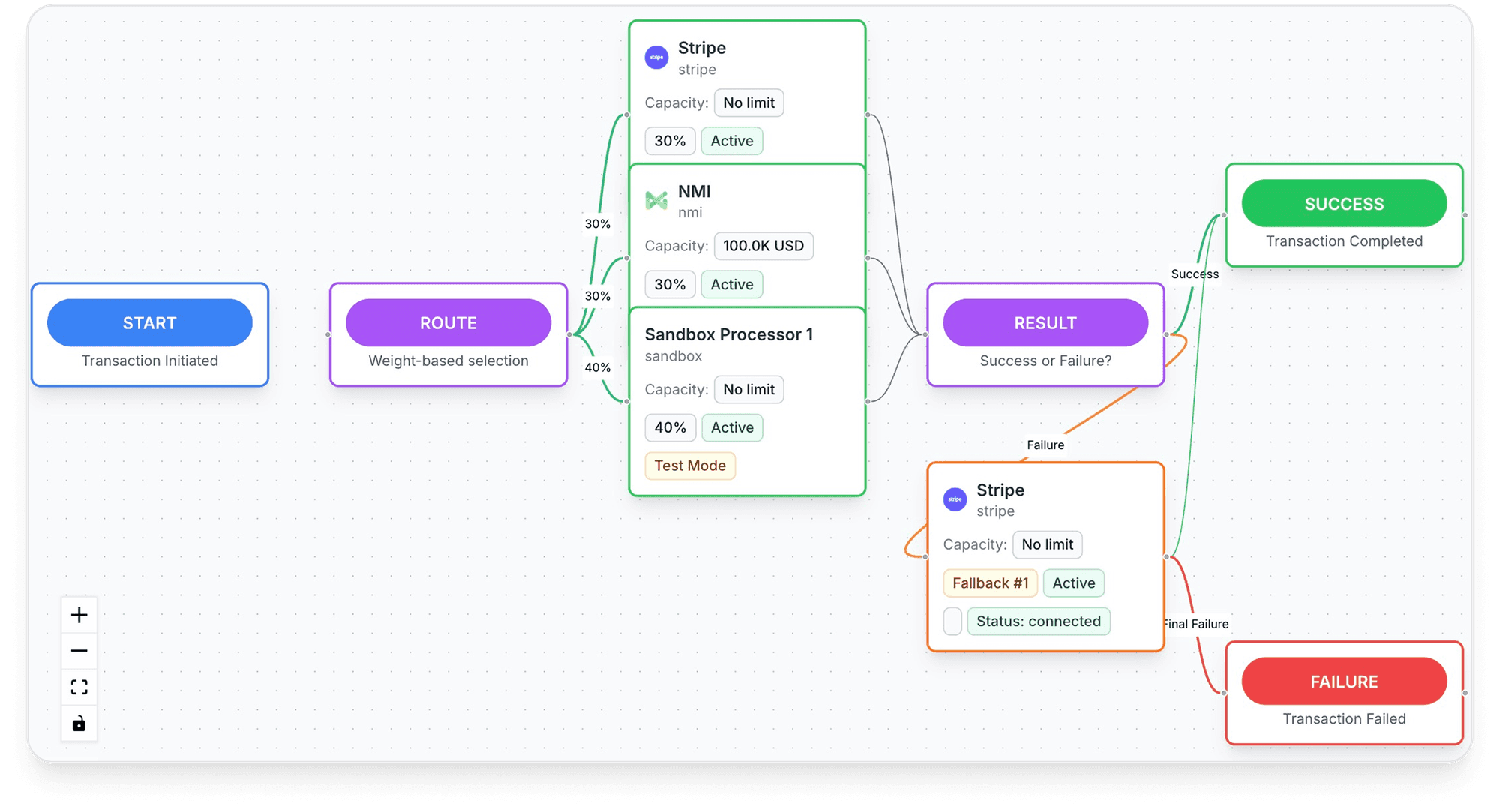
See every payment's route, processor by processor
Set the order your processors are tried in, per store, per country or per product.
Billing treatment plans as subscriptions
Monthly refills, memberships and ongoing care are subscriptions for the card networks. Visa's rules apply whatever your code.2Visa Core Rules and Visa Product and Service Rules, April 18, 2026
Fig. 3A treatment plan Visa is happy with
- Sign-upPrice, frequency and trial terms shown apart from the general terms, patient consents
- ConfirmationIn Europe, within 2 business days
- Trial endingReminder at least 7 days before, with amount, date and a cancel link
- RenewalOn the dates agreed
- Cancel onlineRequired when the plan was sold online
card-absent, any MCC
If you don't honor the terms you showed, Visa's rule is a full refund. In the US, ROSCA and state auto-renewal laws add their own requirements; negative option billing covers them. For how stored cards and merchant-initiated renewals work, see subscription payment processing, and for renewals that fail, subscription payment failures.
A treatment plan has one constraint a coffee subscription doesn't: the next shipment may depend on a prescriber renewing the prescription. Bill on the schedule you disclosed, and if a renewal isn't approved, don't charge for medication you won't ship.
When to charge: before or after the consult
Three patterns are common, and each has a card rule behind it.
- Charge at booking. Simple for cash-pay consults. State plainly what's refunded if the prescriber declines treatment.
- Authorize at booking, capture after the consult. The funds are held, not taken, until you capture. Holds expire, so capture within your processor's window. See pre-authorization holds.
- Charge after insurance pays (US). Visa calls this a Preauthorized Health Care Transaction. The Health Care Merchant needs an order form describing the services, the patient's permission to charge the balance after insurance pays, and a time period of no more than one year. It can't request authorization until the insurer has adjudicated the claim.2Visa Core Rules and Visa Product and Service Rules, April 18, 2026
Only the third pattern is reserved to Health Care Merchants, which excludes pharmacies.
Disputes on recurring treatment plans
Most telehealth disputes aren't fraud. They're patients who didn't expect a charge.
- I didn't know it would renewRenewal terms were buried in the general termsShow price and frequency separately at sign-up, send the 7-day reminder before a trial ends
- I cancelledCancellation took a call or an email that went unansweredOnline cancellation, a confirmation email, no charge after it
- I don't recognize this chargeThe descriptor shows the medical group or pharmacy, not the brandRecognizable descriptor on each account, brand name in the receipt
- I never got my medicationPrescription refused or delayed, charge already takenCapture after approval, refund refused prescriptions as your policy says
Visa's dispute thresholds apply to telehealth like to any card-absent merchant. Since April 1, 2026, the VAMP "Excessive" level for merchants in the US, Canada, the EU and Asia-Pacific is 1.5%: fraud reports plus disputes, divided by settled card-absent transactions.13Visa, Visa Acquirer Monitoring Program fact sheet, 2025 Our guide to chargeback prevention covers the ratio, alerts and how to answer subscription disputes.
HIPAA and your payment processor
Some vendors say any processor handling telehealth payments must sign a business associate agreement. The statute is narrower than that.1042 U.S.C. § 1320d-8, Processing payment transactions by financial institutions
To the extent that an entity is engaged in activities of a financial institution [...], or is engaged in authorizing, processing, clearing, settling, billing, transferring, reconciling, or collecting payments, for a financial institution, this part, and any standard adopted under this part, shall not apply to the entity with respect to such activities.
The exemption covers the payment. It doesn't cover your intake forms, patient messages, CRM or email tool, which may hold health information tied to a name. Keep clinical details out of payment metadata, receipts and descriptors, and ask your counsel which vendors need an agreement.
HSA and FSA cards
Patients often want to pay with a health savings or flexible spending card. HSA funds pay for qualified medical expenses, defined as amounts paid for "medical care" under section 213(d) of the tax code.11IRS, Publication 969 (2025), Health Savings Accounts and Other Tax-Favored Health Plans Prescribed medicines count as medical expenses; drugs that aren't prescribed don't, except insulin.12IRS, Publication 502 (2025), Medical and Dental Expenses
Whether a given charge qualifies is the patient's question with their plan, not a promise to put on your checkout. On the card side, Visa lets FSA and HRA payments be auto-substantiated at checkout only if the merchant is licensed and certified by SIGIS, and its acquirer too.2Visa Core Rules and Visa Product and Service Rules, April 18, 2026
Prescribing rules that shape your checkout (US, as of October 2026)
Controlled substances: a dated rule
Under the DEA and HHS fourth temporary extension, in effect from January 1 to December 31, 2026, a DEA-registered practitioner can prescribe schedule II-V controlled substances via telemedicine without an in-person evaluation, if the conditions in 21 CFR 1307.41 are met.9DEA and HHS, Fourth Temporary Extension of COVID-19 Telemedicine Flexibilities, Federal Register, December 31, 2025 What applies from January 1, 2027 depends on what DEA publishes next. Check the Federal Register before you plan a checkout around it.
Processors ask about this because a model that works under a temporary rule can stop overnight. If part of your catalogue depends on it, say so in your application and plan what happens to running plans if the rule changes.
Before you apply: questions to ask the processor
| Question | Why it matters |
|---|---|
| Do you accept telemedicine, and online pharmacy sales, in my country? | Stripe approves pharmacies in six regions only and prohibits telemedicine in Mexico |
| Which MCC will you assign to each part of my business? | A consult on 8011 and medication on 5912 can't share one Stripe account |
| Is your acquirer approved by Visa for Tier 1? | Required before it can register a pharmacy merchant, unless NABP-accredited |
| Do you require LegitScript or another certification? | Stripe doesn't for telemedicine; others may |
| What triggers a rolling reserve, and for how long? | A reserve holds part of your payouts; the terms differ by processor and account |
| How do you handle renewals of stored cards and card updates? | Treatment plans live on renewals |
How Tagada helps
Running treatment plans on more than one processor
Tagada runs subscriptions with trials, billing cycles, dunning and automatic retries, in the same system as the checkout that takes the first order. Payments route across Stripe, Adyen and Tagada's own processor, TagadaPay, with one set of rules and a cascade on decline. The card vault moves customers between merchant accounts without collecting their cards again, so running plans keep charging if one account is reviewed. 3D Secure 2 is native, with a rules engine. TagadaPay still underwrites each business, with enhanced review on regulated verticals. Pricing is on the pricing page. Tagada follows Visa and Mastercard rules and the laws that apply to payments.
Whichever processor you choose, the order stays the same: map each charge to its code, collect your licenses and process description, put renewal terms and cancellation where patients see them, and keep a second account ready before you need it. Dynamic payment routing explains how that second account takes over.
Frequently asked questions
Is telemedicine considered high-risk for payment processing?
Can Stripe process telemedicine payments?
What MCC code is used for telehealth?
Do I need LegitScript certification to accept telehealth payments?
Does my payment processor need to sign a HIPAA business associate agreement?
Can patients pay for telehealth with an HSA or FSA card?
Sources
Checked October 14, 2026- Visa, Merchant Data Standards Manual, April 2026
- Visa Core Rules and Visa Product and Service Rules, April 18, 2026
- Visa, Visa Integrity Risk Program guide for acquirers, April 6, 2023
- Stripe, Prohibited and restricted businesses
- Stripe Support, Prohibited and restricted businesses list FAQs
- PayPal, Acceptable Use Policy, last updated October 29, 2022
- LegitScript, Healthcare Certification (read October 14, 2026)
- Stripe Docs, Setting merchant category codes
- DEA and HHS, Fourth Temporary Extension of COVID-19 Telemedicine Flexibilities, Federal Register, December 31, 2025
- 42 U.S.C. § 1320d-8, Processing payment transactions by financial institutions
- IRS, Publication 969 (2025), Health Savings Accounts and Other Tax-Favored Health Plans
- IRS, Publication 502 (2025), Medical and Dental Expenses
- Visa, Visa Acquirer Monitoring Program fact sheet, 2025
TagadaPay
Treatment plans on one processor? Keep a second one ready
Tell us what you sell and how you sell it. Each application is underwritten, and approval is not guaranteed.
- 01Tell us what you sell and how
- 02Underwriting reviews your business
- 03Process through TagadaPay alongside your other processors