
Abandoned Cart Recovery for Online Pharmacies
Why online pharmacy shoppers abandon, the recovery sequence, what HIPAA and CAN-SPAM mean for the email, and 2026 abandoned cart benchmarks.

Article summary
TL;DR
About 70% of online carts are abandoned. An online pharmacy recovers part of them with two or three short emails, sent within the hour, the next day and a few days later, that lead back to a prefilled checkout. Remind people of their order, not the medication: no product names in subject lines, plus a postal address and an opt-out.
- The average documented cart abandonment rate is 70.22% (Baymard, 50 studies, September 2025).
- 18% of US shoppers who abandoned did so because the site required an account, and 10% because their card was declined.
- Abandoned cart emails earn $6.77 per recipient on average, $13.70 for the top 10% (Klaviyo, all industries, October 2026).
- Under HIPAA, a message "that encourages recipients […] to purchase or use the product or service" is marketing, with narrow exceptions.
- Each email that breaks CAN-SPAM can cost up to $53,088 (FTC, figure updated January 2024).
 ChatGPT
 Claude
 Perplexity
 Grok
On this page
This guide is part of our playbook on the best ecommerce platform for online pharmacies. The general guide, for any store: how to reduce cart abandonment. Fix the checkout first: checkout optimization for online pharmacies. Prescription brands can also apply to Tagada Rx, which runs storefront, doctors, pharmacy and payments in one stack.
Why online pharmacy shoppers abandon
Baymard's survey of US shoppers covers every kind of store1Baymard Institute, Cart abandonment rate statistics and reasons for abandonment, updated September 22, 2025, read November 2, 2026. Read against a pharmacy checkout, four reasons stand out.
| Reason (Baymard, US shoppers) | Share | Where it shows up in a pharmacy checkout |
|---|---|---|
| Extra costs too high | 40% | Shipping or fees shown late; show the total early |
| Site required an account | 18% | Patient profile demanded before payment |
| Checkout too long or complicated | 17% | Prescription, ID and health questions in one long form |
| Total cost not visible up front | 12% | Price only revealed after the prescription step |
| Card declined | 10% | RestrictedCategory, issuer declines |
| Just browsing | 42% (counted separately) | Comparing pharmacies, checking the price |
Source: Baymard Institute, updated September 22, 20251Baymard Institute, Cart abandonment rate statistics and reasons for abandonment, updated September 22, 2025, read November 2, 2026.
Fig. 1Why US shoppers leave a checkout
Extra costs come first: show the total early.
The prescription step is where a pharmacy differs from other stores. How to place it without losing the order: how to require a prescription before checkout.
Three kinds of abandonment, three messages
Not every unfinished order is a marketing opportunity. Sort them before you write a single email.
| Situation | What happened | Message | Nature |
|---|---|---|---|
| Checkout abandoned before payment | Email entered, no order | Reminder with a link to the prefilled checkout | Commercial: CAN-SPAM rules5FTC, CAN-SPAM Act: A compliance guide for business, read November 2, 2026 |
| Order placed, prescription step incomplete | Paid or authorized, but the pharmacy is missing information | "We need one more thing to process your order" | Transactional: completes an order already agreed to5FTC, CAN-SPAM Act: A compliance guide for business, read November 2, 2026 |
| Card declined at checkout | Payment failed, cart intact | Link back with another payment method | Transactional or commercial, depending on wording |
Fig. 2Sort the unfinished order before you write
- Checkout abandoned before paymentReminder with a link to the prefilled checkout · Commercial: CAN-SPAM rules
- Prescription step incompleteWe need one more thing to process your order · Transactional
- Card declined at checkoutLink back with another payment method · Transactional or commercial, depending on wording
Only the first one is a marketing email.
Declines on prescription orders have their own causes and fixes: reducing payment declines for online pharmacies.
The recovery sequence
Keep it short. A pharmacy shopper usually has a reason to buy and just got interrupted.
| Step | Channel | Timing | Content |
|---|---|---|---|
| 1 | Email (text only if consented) | 30 to 60 minutes | The order total, one link back to the prefilled checkout |
| 2 | About 24 hours | What happens next: pharmacist review, shipping time, how to reach support | |
| 3 | 3 to 5 days | Last reminder; shipping offer if you use one |
Fig. 3Three emails, then stop
- Checkout leftEmail entered, no order
- 30 to 60 minutesOrder total, link to the prefilled checkout
- About 24 hoursPharmacist review, shipping time, support
- 3 to 5 daysLast reminder
- Order placedSequence stops
Stop the moment the order is placed.
- Link to the prefilled checkout, not to the home page or the product page.
- Stop the sequence the moment the order is placed.
- Texts need prior express written consent for this flow, because it is marketing, not a prescription notification647 CFR 64.1200, Delivery restrictions, sections (a)(2) and (f)(9), read November 2, 2026. Details in SMS flows for online pharmacies.
What the email can say
An online pharmacy is usually a HIPAA covered entity: the rule covers providers who transmit health information electronically, and health care includes dispensing a drug "in accordance with a prescription"445 CFR 160.103, Definitions, "Covered entity" and "Health care", read November 2, 2026. What sits in the cart can therefore be protected health information.
Two consequences for the email:
- It may be "marketing" under HIPAA. HIPAA defines marketing as a communication "that encourages recipients of the communication to purchase or use the product or service", with exceptions such as refill reminders for a drug currently prescribed345 CFR 164.501, Definitions, "Marketing", read November 2, 2026. Ask your counsel which exception, if any, your flow fits.
- The content should not reveal health information. Leave out product names, conditions and images of the product.
CAN-SPAM adds its own rules to every commercial email5FTC, CAN-SPAM Act: A compliance guide for business, read November 2, 2026:
- An accurate subject line. "The subject line must accurately reflect the content of the message."
- Your "valid physical postal address".
- A clear way to opt out, honored within 10 business days.
Example
Subject: "You left an order at YourPharmacy." Body: "Your order total is $54.00. Complete it here: [link]. A licensed pharmacist reviews every order before it ships. Questions? Reply to this email." Footer: postal address and unsubscribe link.
Watch out
Many ecommerce guides tell you to put the product name and photo in the subject line. For a pharmacy, that shows a medication in an inbox preview anyone can see. Name the order, not the product.
Incentives: costs before discounts
Show the full cost early
"Extra costs too high" is the top reason, at 40%1Baymard Institute, Cart abandonment rate statistics and reasons for abandonment, updated September 22, 2025, read November 2, 2026.
Free or faster shipping
Answers the first two reasons, costs and slow delivery1Baymard Institute, Cart abandonment rate statistics and reasons for abandonment, updated September 22, 2025, read November 2, 2026.
Keep the message about the service
Pharmacist review, delivery time, support. Not the product.
No discount in the first message
Most of these shoppers were only interrupted.
Benchmarks and measurement
No public benchmark exists for online pharmacies. Klaviyo's all-industry figures give an order of magnitude. They are reference figures, not a tool recommendation: Klaviyo's Acceptable Use Policy (April 9, 2026) excludes "Prescription medications, pharmaceutical products or services, medical therapies, telehealth"9Klaviyo, Acceptable Use Policy, updated April 9, 2026.
| Metric | Klaviyo average | Top 10% |
|---|---|---|
| Email revenue per recipient | $6.77 | $13.70 |
| Email click rate | 6.0% | 11.3% |
| Text revenue per recipient | $4.48 | $8.69 |
| Text click rate | 10.3% | 18.5% |
Source: Klaviyo, more than 110,000 customers, all industries, October 2, 20262Klaviyo, Abandoned cart benchmarks, more than 110,000 customers, October 2, 2026. Not specific to pharmacies.
$6.77
Email revenue per recipient, Klaviyo average, all industries
$13.70
Email revenue per recipient, top 10%
10.3%
Text click rate, Klaviyo average
| Metric | Formula |
|---|---|
| Recovery rate | Recovered orders ÷ abandoned checkouts with an email |
| Revenue per recipient | Recovered revenue ÷ people who received the flow |
| Prescription completion | Recovered orders that pass pharmacist review ÷ recovered orders |
| Unsubscribe rate | Unsubscribes ÷ emails delivered |
How Tagada helps
Reminders that name the order, not the medication
For brands that sell prescription medications online, Tagada Rx runs storefront, doctors, pharmacy and payments in one stack, with LegitScript included8Tagada Rx, tagada.io/rx, read November 2, 2026.
The card is held at checkout and only captured once a doctor approves; if the doctor declines, the hold is released and the patient pays nothing8Tagada Rx, tagada.io/rx, read November 2, 2026. Tagada Rx serves US patients only and is open by application to a selected group of brands.
In the Tagada checkout:
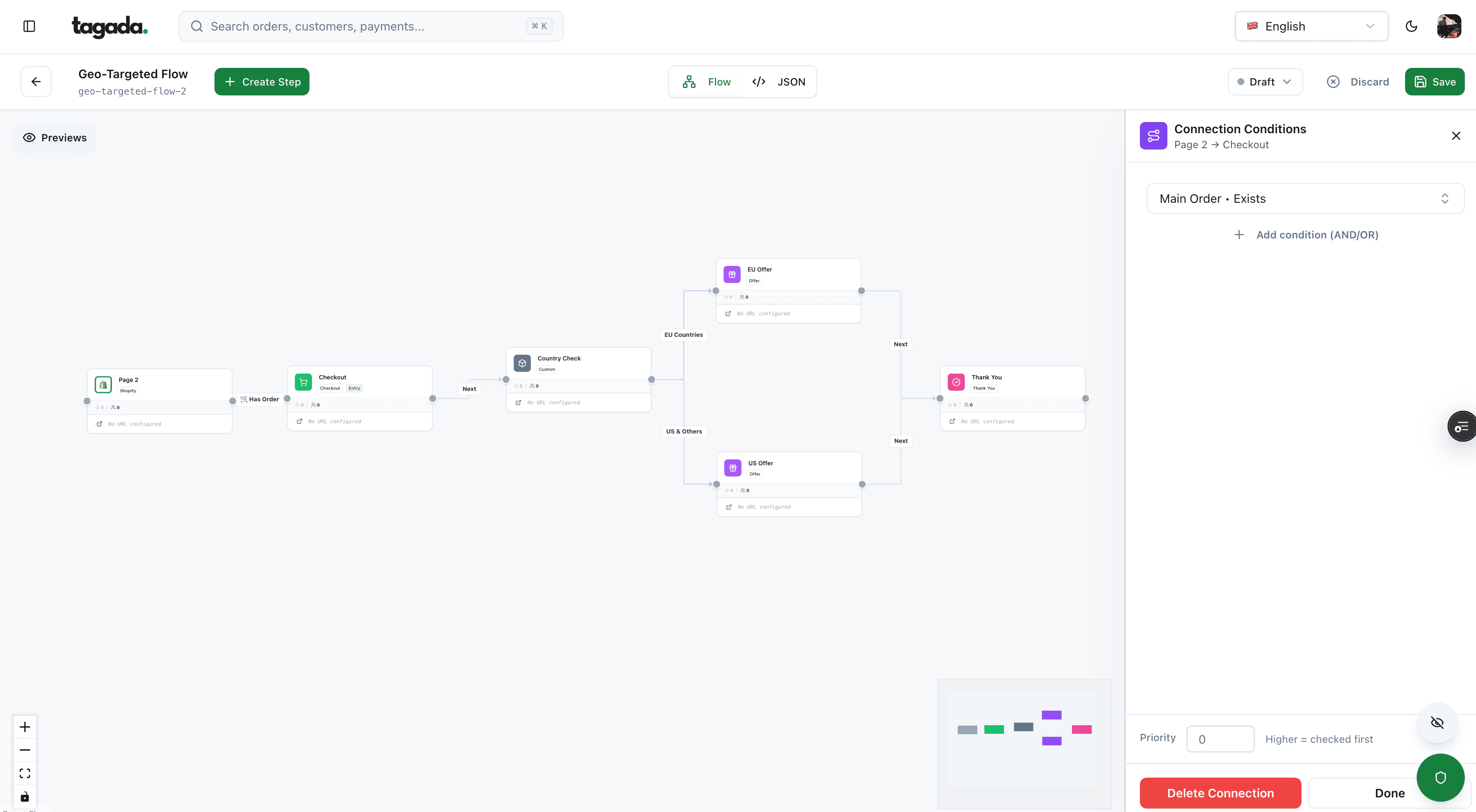
- An abandoned checkout email fires automatically, with a delay you choose from 10 minutes to 48 hours7Tagada docs, Emails, abandoned checkout template, read November 2, 2026.
- Its variables are the cart total and the return-to-checkout link7Tagada docs, Emails, abandoned checkout template, read November 2, 2026: you can write the reminder without naming a product.
- One-page checkout with Apple Pay and Google Pay, so the link lands on a short form.
See how it works and apply on the Tagada Rx page.
Frequently asked questions
Can my abandoned cart emails mention the medication?
When should I send the first abandoned cart email?
Should I offer a discount in abandoned cart emails?
What is a good abandoned cart revenue per recipient?
Do abandoned cart emails need an unsubscribe link?
Sources
Checked November 2, 2026- Baymard Institute, Cart abandonment rate statistics and reasons for abandonment, updated September 22, 2025, read November 2, 2026
- Klaviyo, Abandoned cart benchmarks, more than 110,000 customers, October 2, 2026
- 45 CFR 164.501, Definitions, "Marketing", read November 2, 2026
- 45 CFR 160.103, Definitions, "Covered entity" and "Health care", read November 2, 2026
- FTC, CAN-SPAM Act: A compliance guide for business, read November 2, 2026
- 47 CFR 64.1200, Delivery restrictions, sections (a)(2) and (f)(9), read November 2, 2026
- Tagada docs, Emails, abandoned checkout template, read November 2, 2026
- Tagada Rx, tagada.io/rx, read November 2, 2026
- Klaviyo, Acceptable Use Policy, updated April 9, 2026
Tagada Rx
Bring pharmacy checkouts back without naming the medication
Tagada Rx runs the stack behind your brand. Open by selection: every application is reviewed, and we reply to each one.
- 01Tell us about your brand
- 02We review every application
- 03Go live under your brand after review