
Abandoned Cart Recovery for Telehealth Companies
Where telehealth patients drop off (intake, checkout, after the card hold), the recovery sequence, what messages can say, and where retargeting stops.

Article summary
TL;DR
A telehealth patient can drop off at three points: in the intake quiz, at checkout, and after paying but before the intake or ID is sent. Recover each with a short email or text that links back to the exact step, within the first hour, then at 24 and 48 hours. Never repeat intake answers in a message.
- The average documented cart abandonment rate is 70.22% (Baymard, 50 studies, September 2025).
- 19% of US shoppers abandoned because they didn't trust the site with their card, and 10% because their card was declined.
- Abandoned cart emails earn $6.77 revenue per recipient on average and texts $4.48, across 110,000+ Klaviyo customers in all industries (October 2, 2026).
- In April 2024, Cerebral agreed to an FTC order of more than $7 million; the FTC said it shared data on nearly 3.2 million consumers with third parties through tracking tools.
- Marketing texts, including most cart reminders, need prior express written consent.
 ChatGPT
 Claude
 Perplexity
 Grok
On this page
This guide is part of our playbook on the best ecommerce platform for telehealth companies. The general guide, for any store: how to reduce cart abandonment. Fixing the checkout itself comes first: checkout optimization for telehealth companies.
Where telehealth patients drop off
A store has one abandonment point. A telehealth funnel has three, and each needs its own message.
| Drop-off point | What the patient has done | What you know | What to send |
|---|---|---|---|
| 1. Intake quiz | Started the questions, left before the end | Email if you asked for it first; nothing else you may reuse | A link back to the saved intake |
| 2. Checkout | Finished the intake, saw the price, didn't pay | Email, maybe phone, plan chosen | A link back to the prefilled checkout |
| 3. After the card hold | Paid or authorized, but the intake or a photo ID is missing | Order, contact details | A link to finish the case in the portal |
Fig. 1Three drop-off points, three links back
approved declined or closed routing step
- 1. Intake quizLeft before the end: link back to the saved intakeDeclined
- then2. CheckoutSaw the price, didn't pay: link back to the prefilled checkoutDeclined
- then3. After the card holdIntake or photo ID missing: link to finish the case in the portalDeclined
- thenClinician reviewOnly once the case is completeApproved
Each link goes to the exact step, never the homepage.
The third point is specific to telehealth. Nothing ships and, in a hold-then-capture model, nothing is charged until a clinician has the full case. A patient who stops there is the easiest to recover and the most costly to forget.
The recovery sequence
| Step | Channel | Timing | Content |
|---|---|---|---|
| 1 | Email, plus SMS if the patient opted in | 30 to 60 minutes | One line and the link back to the exact step |
| 2 | About 24 hours | Answer the main doubt: how the review works, who the clinicians are, the price, how to cancel | |
| 3 | Email or SMS | About 48 hours | Last reminder; for step 3 drop-offs, say the case can't move without the missing item |
Fig. 2Three messages in 48 hours
- Drop-offIntake, checkout or case left unfinished
- 30 to 60 minEmail, plus SMS if opted in: one line and the link back
- About 24 hEmail: how the review works, the clinicians, the price, how to cancel
- About 48 hEmail or SMS: last reminder
- Step doneSequence stops; also if declined or out of state
Stop as soon as the step is done.
- Link to the step, not the homepage: the saved intake, the prefilled checkout, or the portal.
- Stop the sequence as soon as the step is done.
- Stop it too if the patient is declined, or turns out to be in a state you don't serve.
Recovery emails sit inside your wider email flows for telehealth companies; texts follow SMS flows for telehealth companies.
What a recovery message can say
Answer the doubt, not the diagnosis. Intake answers stay in the intake.
| Patient's doubt | Message focus | Example line |
|---|---|---|
| "Is this legit?" | Licensed clinicians, where they practice, real support | "A clinician licensed in your state reviews every case." |
| "What will it cost?" | Total, billing cycle, when the card is charged | "You're only charged if a clinician approves your plan." (only if true for you) |
| "Can I stop?" | How to pause or cancel | "Pause or cancel online, anytime." |
| "My card didn't go through" | Other ways to pay | "Pay with Apple Pay or Google Pay in one tap." |
Fig. 3One doubt per message, no diagnosis
What each message answers
- Is this legit? Licensed clinicians, where they practice.
- What will it cost? When the card is charged (only if true for you).
- Can I stop? How to pause or cancel.
- My card didn't go through: other ways to pay.
- Your clinic1 hYour visit is savedA clinician licensed in your state reviews every case.
- Your clinic24 hHow billing worksYou're only charged if a clinician approves your plan.
- Your clinic24 hNo commitmentPause or cancel online, anytime.
- Your clinic48 hLast reminderPay with Apple Pay or Google Pay in one tap.
Service steps, never the treatment.
- No treatment names in subject lines or previews. If HIPAA applies to you, an email that encourages a purchase is "marketing" unless an exception applies, such as a refill of a drug currently prescribed345 CFR 164.501, Definitions, "marketing", current as of October 29, 2026. A patient who never finished checkout has no current prescription.
- No outcomes, no urgency about health. Promise service steps, not results.
- Marketing emails need an opt-out and a postal address (CAN-SPAM)6FTC, CAN-SPAM Act: A compliance guide for business, read November 2, 2026.
Retargeting abandoned visitors: where to stop
Email and SMS to people who gave you their contact and consent are the safe recovery channels547 CFR 64.1200, Delivery restrictions, paragraph (a)(2), current as of October 29, 2026. Ad retargeting is where telehealth brands get into trouble.
- No third-party pixels on intake pages. What a patient answers or clicks there is health information.
- Don't build ad audiences from intake or checkout steps. An audience named after a step of a treatment funnel tells the ad platform what the person was seeking.
- Generic ads only for people who saw general pages: the brand, the service, how it works.
- Server-side events let you choose exactly what reaches the ad platform: see server-side tracking for telehealth companies.
Watch out
In the Cerebral case, the FTC said the company shared data on nearly 3.2 million consumers with third parties through tracking tools; the 2024 order totals more than $7 million4FTC, Proposed order will prohibit Cerebral from using or disclosing sensitive data, press release, April 15, 2024. Health data shared with ad platforms is also at the center of the FTC's pending complaint against Hims & Hers, filed July 29, 2026 (allegations, case pending)11FTC, FTC and states act against Hims & Hers, press release, July 29, 2026 (allegations, case pending).
Discounts: rarely, and never on care
No discount in the first two messages
Many patients were interrupted; a reminder is enough.
Answer the cost doubt with clarity first
Total, cycle, when the card is charged, how to cancel.
If you use an incentive
Keep it for the last message and for first-time patients, and make it about the service (a first-month price), never a reason to rush a medical decision.
Benchmarks and measurement
There is no published abandonment benchmark for telehealth. General ecommerce figures, for scale:
| Metric | Klaviyo average | Top 10% |
|---|---|---|
| Email revenue per recipient | $6.77 | $13.70 |
| Email click rate | 6.0% | 11.3% |
| Text revenue per recipient | $4.48 | $8.69 |
| Text click rate | 10.3% | 18.5% |
Source: Klaviyo, abandoned cart benchmarks, 110,000+ customers across industries, October 2, 20262Klaviyo, Abandoned cart benchmarks, more than 110,000 customers, October 2, 2026.
Fig. 4Texts get clicked more, emails earn more per recipient
Klaviyo averageTop 10%
- Email click rate
- Text click rate
Cross-industry figures, for scale only.
$6.77
Average email revenue per recipient, abandoned cart flows (Klaviyo)
$13.70
Email revenue per recipient for the top 10%
$4.48
Average text revenue per recipient
$8.69
Text revenue per recipient for the top 10%
Klaviyo is quoted for its cross-industry figures only, not as a tool for telehealth: its Acceptable Use Policy (April 9, 2026) says you may not use its services for "Prescription medications, pharmaceutical products or services, medical therapies, telehealth"12Klaviyo, Acceptable Use Policy, updated April 9, 2026.
Track your own, by drop-off point:
| Metric | Formula |
|---|---|
| Intake recovery rate | Intakes completed after a reminder ÷ unfinished intakes with a contact |
| Checkout recovery rate | Recovered orders ÷ abandoned checkouts with a contact |
| Case completion rate | Cases completed after a reminder ÷ paid orders with a missing intake or ID |
| Approval rate of recovered patients | Approved ÷ recovered cases |
The last line matters. A recovered patient who is then declined is not revenue, and a recovery message that pushes the wrong patients forward costs you refunds and disputes.
How Tagada helps
Recovery emails that bring patients back to checkout
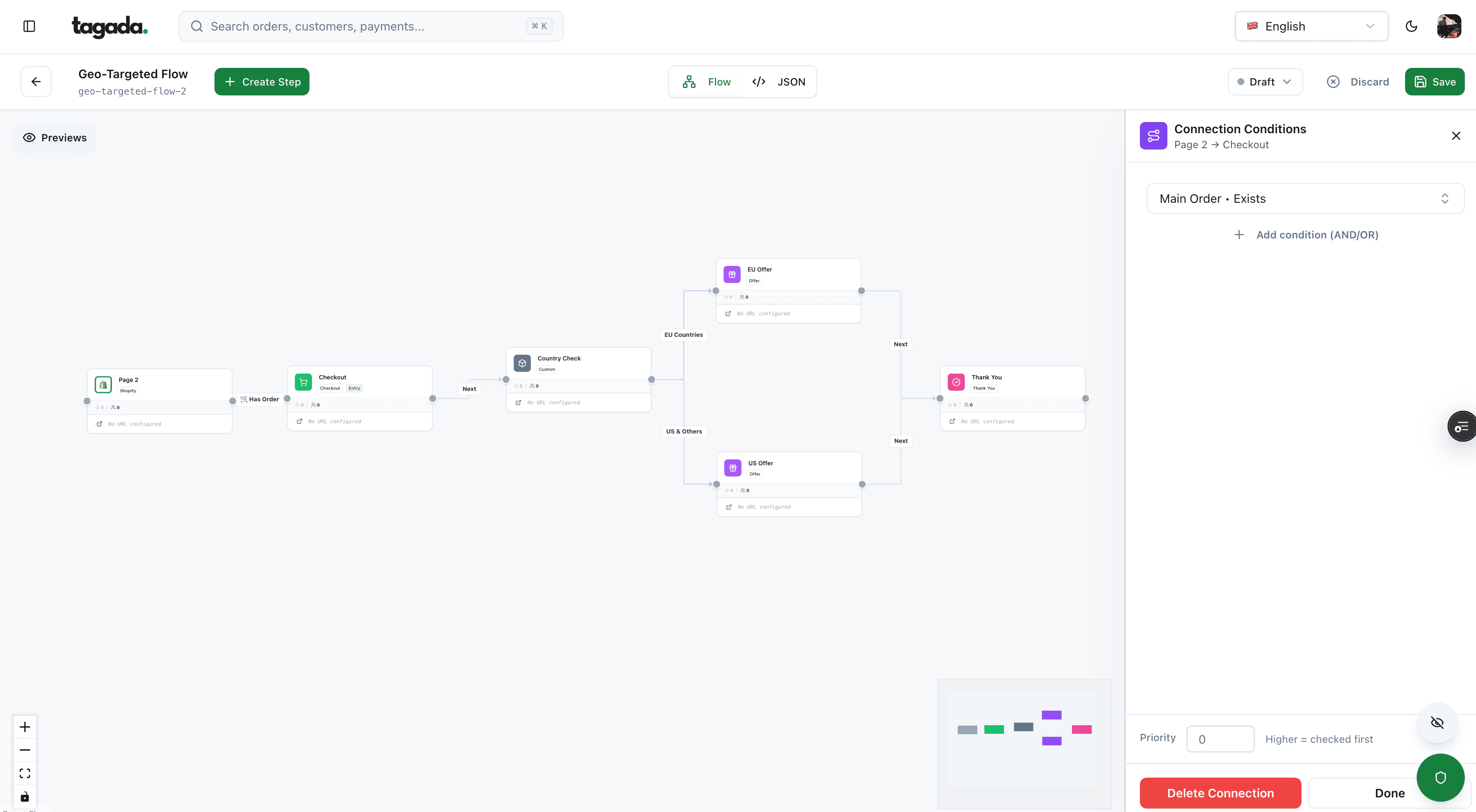
Tagada brings back the patients who stop at checkout, with the payment on TagadaPay and its "enhanced review for regulated verticals"13TagadaPay, homepage, read November 2, 2026.
- Abandoned checkout email with a return-to-cart link and a trigger delay you choose, from 10 minutes to 48 hours10Tagada docs, Emails, read November 2, 2026
- One-page checkout with Apple Pay and Google Pay
- Fraud filters: "Native 3DS2, device intelligence, and rules engine: approve real customers, block the rest"
Building the whole telehealth brand? In Tagada Rx, "The card is only captured once a doctor approves"7Tagada, Tagada Rx, read November 2, 2026; for drop-off point 3, an endpoint resumes an unfinished intake on an existing order8Tagada docs, Tagada Rx API and events reference, read November 2, 2026, and the patient portal takes photo ID uploads behind an email code9Tagada docs, Tagada Rx patient portal, read November 2, 2026. US patients only, by selection.
Frequently asked questions
How do I recover patients who abandon a telehealth intake?
Can abandoned cart emails mention the medication?
Can I retarget people who started my intake?
What is a good abandoned cart recovery rate?
Should I offer a discount to patients who abandon?
Sources
Checked November 2, 2026- Baymard Institute, Cart abandonment rate statistics and reasons for abandonment, updated September 22, 2025
- Klaviyo, Abandoned cart benchmarks, more than 110,000 customers, October 2, 2026
- 45 CFR 164.501, Definitions, "marketing", current as of October 29, 2026
- FTC, Proposed order will prohibit Cerebral from using or disclosing sensitive data, press release, April 15, 2024
- 47 CFR 64.1200, Delivery restrictions, paragraph (a)(2), current as of October 29, 2026
- FTC, CAN-SPAM Act: A compliance guide for business, read November 2, 2026
- Tagada, Tagada Rx, read November 2, 2026
- Tagada docs, Tagada Rx API and events reference, read November 2, 2026
- Tagada docs, Tagada Rx patient portal, read November 2, 2026
- Tagada docs, Emails, read November 2, 2026
- FTC, FTC and states act against Hims & Hers, press release, July 29, 2026 (allegations, case pending)
- Klaviyo, Acceptable Use Policy, updated April 9, 2026
- TagadaPay, homepage, read November 2, 2026
Tagada
Bring patients back to the exact step they left
Funnels, one-click upsells, subscription billing and payment routing, on one customer record.
- 01Create your free account
- 02Connect your store or build a checkout
- 03Launch funnels, upsells and subscriptions