
Server-Side Tracking for Telehealth Companies
What a telehealth brand can send to Meta, Google and TikTok: HIPAA and FTC rules, Meta's health restrictions, page zones and a server-side setup.



Article summary
TL;DR
For a telehealth brand, server-side tracking is how you control what reaches Meta, Google and TikTok, not a way to send more. Send generic commerce events from the checkout (purchase, value, currency), nothing about intake answers, treatments or conditions. Keep third-party pixels off the intake and patient portal. Meta can still restrict a health data source.
- Meta's Business Tools Terms (effective November 3, 2025) ask advertisers not to share data that contains or is based on health information.
- HHS's tracking bulletin (December 1, 2022, revised March 18, 2024) lost its part on unauthenticated pages in court on June 20, 2024; its rules for authenticated pages, such as portals, remain.
- The FTC's first Health Breach Notification Rule case, against GoodRx (February 1, 2023), ended with a $1.5 million civil penalty for sharing health data with ad platforms.
- Meta restricts health and wellness data sources in three levels, and "Conversions API does not bypass the data sharing rules", according to Stape (March 2026).
- Meta recommends the Conversions API alongside the pixel, deduplicated by event name and event ID.
 ChatGPT
 Claude
 Perplexity
 Grok
On this page
This guide is part of our playbook on the best ecommerce platform for telehealth companies. The general guide, for any store: what is server-side tracking?. Ad rules themselves are in Meta and TikTok ads for telehealth companies.
Why tracking is different for a telehealth brand
A supplement store worries about lost purchases. A telehealth brand also worries about what its tracking reveals.
The intake is health data
Every answer, and often the page URL itself, says what the patient is seeking.
Regulators have acted on it
The FTC's cases against GoodRx, BetterHelp and Cerebral all involved health data reaching ad platforms or third parties7FTC, Enforcement action to bar GoodRx from sharing consumers' sensitive health info for advertising, February 1, 20238FTC, FTC to ban BetterHelp from revealing consumers' data, March 2, 20239FTC, Proposed order will prohibit Cerebral from using or disclosing sensitive data, April 15, 2024.
Meta categorizes data sources
A domain read as health-related can lose detailed events, then purchase optimization3Stape, Meta adds data sharing restrictions for health and wellness data sources, March 3, 2026 (secondary source).
Browsers still lose events
Ad blockers and cross-domain funnels (landing page, intake, checkout) drop pixel events, as in any store.
The rules that apply
Which rule applies depends on who you are. HIPAA covers health plans, clearinghouses and providers that transmit health information electronically in standard transactions645 CFR 160.103, Definitions, current as of October 29, 2026. If HIPAA does not cover an entity, the FTC Act and the Health Breach Notification Rule do11FTC, Health Breach Notification Rule, 89 FR 47028, published May 30, 2024, effective July 29, 2024.
| Rule | What it says about tracking | Status |
|---|---|---|
| HHS bulletin on tracking technologies (HIPAA covered entities) | Tracking on authenticated pages needs a business associate agreement with the vendor; the part treating an IP address plus a visit to an unauthenticated health page as protected information was vacated | Bulletin of December 1, 2022, revised March 18, 2024; vacated in part June 20, 2024; HHS withdrew its appeal August 29, 20244Morrison Foerster, Federal judge vacates portions of OCR guidance on online tracking technologies, July 18, 2024 (secondary source on the HHS bulletin and AHA v. Becerra, N.D. Tex., June 20, 2024)5National Law Review, OCR withdraws appeal of district court order, October 7, 2024 (secondary source) |
| FTC Act and Health Breach Notification Rule (not covered by HIPAA) | The FTC has pursued sharing of health data with ad platforms without clear consent; the rule requires notice of breaches | GoodRx, $1.5 million (2023)7FTC, Enforcement action to bar GoodRx from sharing consumers' sensitive health info for advertising, February 1, 2023; BetterHelp, $7.8 million (2023)8FTC, FTC to ban BetterHelp from revealing consumers' data, March 2, 2023; Cerebral, more than $7 million (2024)9FTC, Proposed order will prohibit Cerebral from using or disclosing sensitive data, April 15, 2024 |
| Meta Business Tools Terms | Don't share Business Tool data that contains or is based on health information | Effective November 3, 20252Meta Business Tools Terms, effective November 3, 2025 (health data clause paraphrased) |
| FTC v. Hims & Hers | Alleged sharing of health data "with third-party advertising platforms such as Meta and Snap" | Complaint of July 29, 2026, case pending10FTC, FTC and states act against Hims & Hers, July 29, 2026 (allegations, case pending) |
$1.5 million
GoodRx, FTC action on health data shared for advertising (2023)
$7.8 million
BetterHelp, FTC order on revealing consumers' data (2023)
More than $7 million
Cerebral, FTC proposed order on sensitive data (2024)
This is general information, not legal advice. Ask a health care lawyer which regime applies to each of your entities.
Meta's health and wellness restrictions
Meta categorizes the domains and apps that send it events. When a data source is categorized as health and wellness, Stape describes three levels3Stape, Meta adds data sharing restrictions for health and wellness data sources, March 3, 2026 (secondary source):
| Level | What Meta limits | What still works |
|---|---|---|
| Mild | URL details after the domain (UTM parameters), custom parameters and extra event details | Standard events |
| Moderate | Standard events such as Lead, AddToCart and Purchase | Upper-funnel events |
| Severe | All event sharing from the site or app, in certain regions | Delivery without conversion signals |
Source: Stape, March 20263Stape, Meta adds data sharing restrictions for health and wellness data sources, March 3, 2026 (secondary source). Meta's own help page (article 361948878201809) describes the categories; this table is a practitioner's summary.
The restrictions apply to the pixel and to the Conversions API3Stape, Meta adds data sharing restrictions for health and wellness data sources, March 3, 2026 (secondary source). Server-side tracking makes your data complete and controlled; it does not lift a category.
Watch out
Some vendors suggest renaming purchase events or moving the funnel to a "neutral" domain so Meta won't recognize it. That is a way around Meta's rules and its terms2Meta Business Tools Terms, effective November 3, 2025 (health data clause paraphrased), and it puts the ad account at risk. Send less, send it accurately, and let Meta classify you.
Split your pages into three zones
| Zone | Pages | Browser pixels | Server events |
|---|---|---|---|
| 1. General | Home, how it works, pricing, clinicians, FAQ | AllowedWith consent where required | PageView, Lead (generic) |
| 2. Funnel | Intake quiz, eligibility, checkout | None from third parties | One generic event at payment, from the checkout |
| 3. Authenticated | Patient portal, messages, refills, ID upload | None | None, unless a business associate agreement covers the vendor4Morrison Foerster, Federal judge vacates portions of OCR guidance on online tracking technologies, July 18, 2024 (secondary source on the HHS bulletin and AHA v. Becerra, N.D. Tex., June 20, 2024) |
Fig. 1Three zones, three tracking rules
- 1. General: home, how it works, pricing, clinicians, FAQAllowed, with consent where requiredPageView, Lead (generic)
- 2. Funnel: intake quiz, eligibility, checkoutNone from third partiesOne generic event at payment, from the checkout
- 3. Authenticated: patient portal, messages, refills, ID uploadNoneNone, unless a business associate agreement covers the vendor
The further in, the less leaves the site.
Retargeting follows the same zones: audiences from zone 1 only, never from an intake step. More in abandoned cart recovery for telehealth companies.
What to send, and what never to send
| Send from the server | Never send |
|---|---|
| Event name and event ID, shared with the pixel1Meta for Developers, Deduplicate Pixel and server events, read November 2, 2026 | Intake answers, symptoms, conditions |
| Order value and currency | Treatment or product names that describe a condition |
| Hashed email and phone, where consented | URLs or query strings with health terms |
| Click IDs captured on the landing page (fbclid, gclid, ttclid) | The clinician's decision, case status, refill events |
| A generic product ID or plan tier | Custom parameters that imply a health status |
Two choices matter most for telehealth:
- Name products neutrally in what you send: "Plan A, monthly" rather than a treatment name.
- Don't send clinical milestones (approved, prescribed, shipped) as ad events. A "prescription approved" event tells the platform something medical about a person.
Setup
- Map every page to zone 1, 2 or 3, and remove third-party pixels from zones 2 and 3.
- Rename products and URLs that read like a diagnosis, before you send anything.
- Send the purchase from the system that takes the payment, server-side, to Meta's Conversions API and to Google's and TikTok's equivalents.
- Use the same event name and event ID in any browser event and the server event, so Meta deduplicates them1Meta for Developers, Deduplicate Pixel and server events, read November 2, 2026.
- Hash contact data and send it only where the patient consented.
- Document what you send and why, for your lawyer and for any vendor review.
Decide what leaves the site before you send anything.
Check that it works
| Check | How | Healthy sign |
|---|---|---|
| NoPixel on zones 2 and 3 | Browser network tab, tag audit | NoRequests to ad domains from intake or portal |
| Deduplication | Events Manager, event overview | Browser and server events merged, not doubled |
| Coverage | Ad platform purchases vs. paid orders, same days | A small, stable gap |
| Restriction status | Events Manager, data source settings | NoNew limitation3Stape, Meta adds data sharing restrictions for health and wellness data sources, March 3, 2026 (secondary source) |
| Payload | A test event's fields | NoProduct name, URL or parameter that reveals a condition |
With clean data, attribution becomes possible: ad attribution for telehealth companies.
How Tagada helps
Purchase events sent from the checkout server
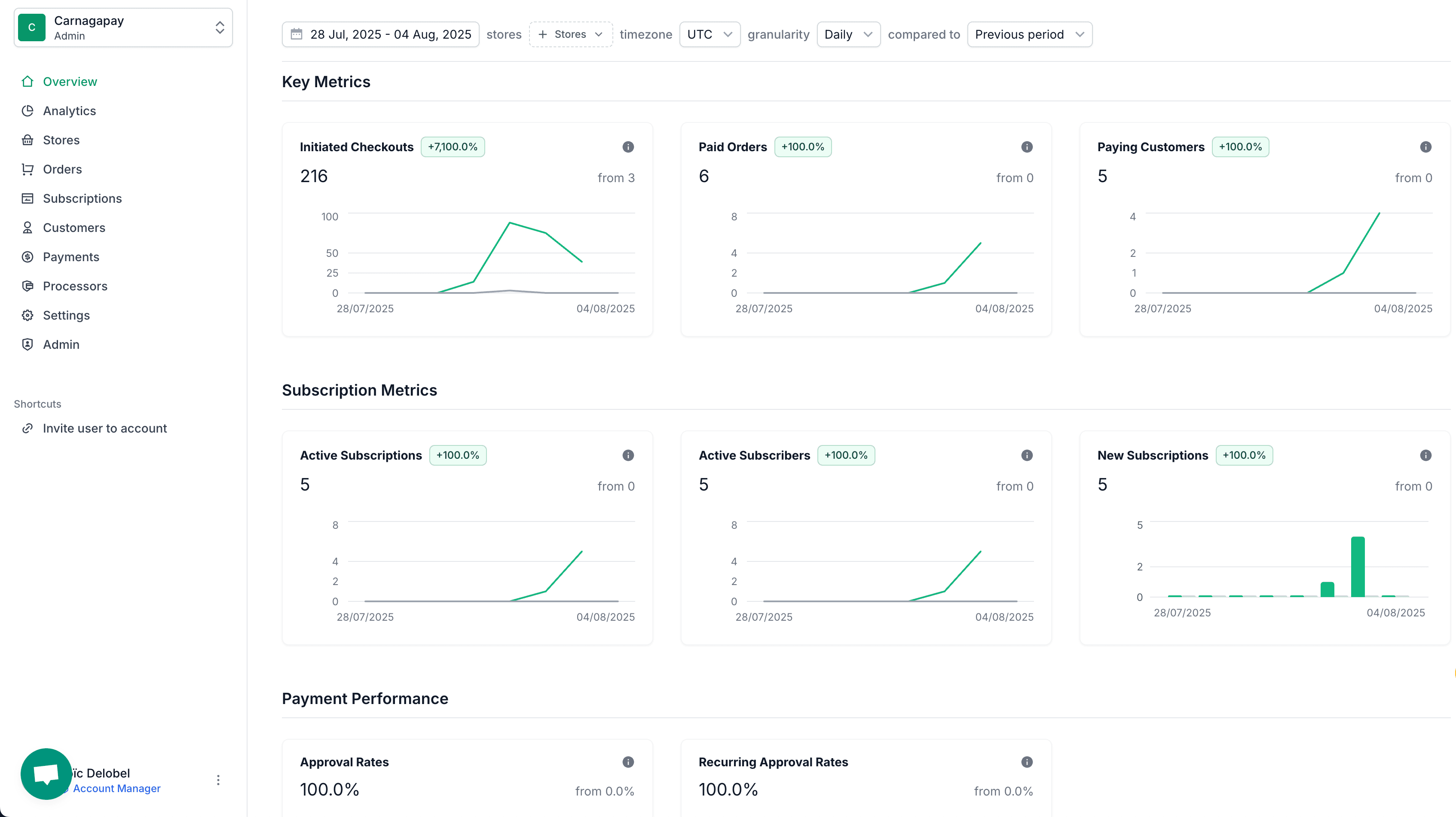
The Tagada checkout sends server-side events to Meta (Conversions API) from the place the payment happens, and TagadaPay drops into the store you run: "Already on Shopify, WooCommerce, ClickFunnels or BigCommerce? Drop TagadaPay in."16TagadaPay, homepage, read November 2, 2026 In the docs12Tagada docs, Tracking and attribution overview, read November 2, 202613Tagada docs, Pixels, read November 2, 2026:
- No pixels needed on checkout or thank-you pages: with Meta configured, the server sends Conversions API events on paid orders.
- Purchase events are deduplicated, with the same event ID as the browser event, so a refresh doesn't count twice.
- Pixels are bound page by page on the funnel canvas, so you decide which pages fire them.
- Click IDs (gclid, fbclid, ttclid and others) are captured at checkout into the customer record.
Building the whole telehealth brand? With Tagada Rx, "Tagada never persists PHI": intake answers pass to the clinical network, Tagada keeps only routing data such as IDs, statuses and timestamps, and notification emails are content-free14Tagada docs, How Tagada Rx works, read November 2, 2026. US patients only, by selection15Tagada, Tagada Rx, read November 2, 2026.
Frequently asked questions
Is the Meta pixel HIPAA compliant?
Does the Conversions API make tracking HIPAA compliant?
Why is Meta restricting my telehealth events?
Can I put tracking pixels on my intake quiz?
What happened to the HHS guidance on tracking technologies?
Sources
Checked November 3, 2026- Meta for Developers, Deduplicate Pixel and server events, read November 2, 2026
- Meta Business Tools Terms, effective November 3, 2025 (health data clause paraphrased)
- Stape, Meta adds data sharing restrictions for health and wellness data sources, March 3, 2026 (secondary source)
- Morrison Foerster, Federal judge vacates portions of OCR guidance on online tracking technologies, July 18, 2024 (secondary source on the HHS bulletin and AHA v. Becerra, N.D. Tex., June 20, 2024)
- National Law Review, OCR withdraws appeal of district court order, October 7, 2024 (secondary source)
- 45 CFR 160.103, Definitions, current as of October 29, 2026
- FTC, Enforcement action to bar GoodRx from sharing consumers' sensitive health info for advertising, February 1, 2023
- FTC, FTC to ban BetterHelp from revealing consumers' data, March 2, 2023
- FTC, Proposed order will prohibit Cerebral from using or disclosing sensitive data, April 15, 2024
- FTC, FTC and states act against Hims & Hers, July 29, 2026 (allegations, case pending)
- FTC, Health Breach Notification Rule, 89 FR 47028, published May 30, 2024, effective July 29, 2024
- Tagada docs, Tracking and attribution overview, read November 2, 2026
- Tagada docs, Pixels, read November 2, 2026
- Tagada docs, How Tagada Rx works, read November 2, 2026
- Tagada, Tagada Rx, read November 2, 2026
- TagadaPay, homepage, read November 2, 2026
Tagada
Send paid orders to ad platforms, never intake answers
Funnels, one-click upsells, subscription billing and payment routing, on one customer record.
- 01Create your free account
- 02Connect your store or build a checkout
- 03Launch funnels, upsells and subscriptions