
Failed Payment Recovery for Telehealth Companies
Why telehealth renewals fail, the recovery sequence, what to do with the next shipment, retry rules and dunning messages with no health data.

Article summary
TL;DR
A failed renewal is a patient you lose without them deciding to leave. Recover it in layers: retry soft declines on a schedule, send a card update link that says nothing medical, hold the next shipment until it's paid, and use a backup processor when yours is down. Never retry the declines card networks forbid.
- Involuntary churn makes up "an estimated 20% - 40% of total churn across subscription businesses" (Recurly, April 30, 2026).
- "90% of recovered transactions occur within the first 10 days of a failed payment".
- Visa allows up to 20 attempts in 30 days on retryable declines and forbids retrying category 1 codes (Visa Core Rules, October 24, 2026).
- Stripe approval for telehealth "may be modified or revoked by Stripe at any time": if it is, every renewal on that account fails at once.
- The FTC's Health Breach Notification Rule covers vendors of personal health records not covered by HIPAA (in force July 29, 2024). Keep dunning messages free of health details.
 ChatGPT
 Claude
 Perplexity
 Grok
On this page
This guide is part of our playbook on the best ecommerce platform for telehealth companies. The general guide, for any business: declined payments. Subscription setup is in subscription billing for telehealth companies.
Why telehealth renewals fail
| Cause | Example | Retry? | What to do |
|---|---|---|---|
| Soft decline | Insufficient funds, issuer temporarily unavailable | YesWithin network limits | Retry on a schedule, message the patient |
| Expired or replaced card | New card number after a reissue | Not on the old card | Card update link |
| Hard decline | Closed account, lost or stolen card, stop payment | NoVisa category 1 codes must never be retried2Payway, Visa excessive reattempts rule and fees (rule effective April 2022), read November 2, 2026 (secondary source) | Ask for a new payment method |
| Processor problem | Outage, account under review or paused | YesOn another processor | Route to a backup |
Fig. 1Where each renewal ends up
- Paid on first tryHealthy card on file
- Recovered by retrySoft declines, within network limits
- Recovered by card updateExpired or replaced card
- Recovered on a backup processorOnly when a processor is down or times out
- LostHard decline and no new payment method
Each layer catches a different failure; a hard decline needs a new card.
The recovery sequence
- Day 0: the renewal fails. Classify the decline: retry it, or ask for a new card.
- Day 0: tell the patient. A short message with the amount, the date and a secure card update link.
- Days 1 to 10: retry soft declines at spaced intervals. 90% of recovered payments come back in this window1Recurly, Failed payment recovery: a data-based strategy, April 30, 2026.
- Cascade to another processor when one is down or times out, where a backup is set up. Never send a bank decline to another processor (Visa forbids changing the acquirer to resubmit it9Visa Core Rules and Visa Product and Service Rules, edition of October 24, 2026, sections 1.7.2.1 and 7.3.6.3, table 7-2), nor a payment your processor's fraud rules blocked.
- Second and third reminders before the final retry, each with the update link.
- Final retry, then stop. Tell the patient their plan is paused, and how to restart it.
Fig. 2From day 0 to the final retry
- Day 0Renewal fails: classify, then send the card update link
- Days 1 to 10Soft declines retried at spaced intervals
- Processor downCascade to another processor, never after a bank decline
- RemindersSecond and third, each with the update link
- Final retryThen stop: plan paused, with how to restart
Most recovered payments come back within 10 days.
Recurly reports one merchant moving from about 53% to about 71% of eligible failed transactions recovered, and calls "the high 60s to low 70s" an achievable target1Recurly, Failed payment recovery: a data-based strategy, April 30, 2026.
90%
Of recovered payments come back in days 1 to 10 (Recurly)
71%
Of eligible failed transactions recovered at one merchant, up from about 53%
20
Visa attempts allowed in 30 days for retryable declines
What happens to the next shipment
Telehealth plans often bill when the pharmacy ships. A failed renewal raises a question ordinary stores don't have: ship or wait?
| Rule | Why |
|---|---|
| Don't ship until the renewal is paid | Shipping unpaid orders turns a failed payment into a bad debt |
| Tell the patient the shipment is waiting | They can fix the card before they run short |
| Give a direct line to the care team | Questions about continuing treatment go to clinicians, not to billing |
| Don't change the plan because of a payment | Billing status and clinical decisions stay separate |
| Restart cleanly | Once paid, ship and reset the next renewal from the new ship date |
Retry rules from the card networks
| Rule | What it says |
|---|---|
| Visa reattempt limit | Up to 20 attempts in 30 days for retryable declines (categories 2, 3 and 4) (Visa Core Rules)9Visa Core Rules and Visa Product and Service Rules, edition of October 24, 2026, sections 1.7.2.1 and 7.3.6.3, table 7-2 |
| Visa never-retry codes | Category 1 codes (closed account, lost or stolen card, stop payment) must not be retried (Payway)2Payway, Visa excessive reattempts rule and fees (rule effective April 2022), read November 2, 2026 (secondary source) |
| Visa excess fee | A fee for each attempt beyond the limit (Payway)2Payway, Visa excessive reattempts rule and fees (rule effective April 2022), read November 2, 2026 (secondary source) |
- Closed account, lost or stolen card, stop paymentVisa category 1: never retry.Ask for a new payment method.
- Soft declineRetryable, up to 20 attempts in 30 days.Retry on a schedule, message the patient.
- Processor outage or timeoutThe processor was down or didn't answer.Route the renewal to a backup processor.
Tagada follows Visa and Mastercard rules and the laws that apply to payments.
Messages that recover, without health data
Dunning emails and texts are often read on a lock screen. They should make sense to anyone who sees them, without revealing why the patient is a customer.
- Say: your brand, the amount, the date, "your payment didn't go through", a secure update link.
- Don't say: the condition, the treatment, the clinician's notes, or anything from the intake.
- Subject line: "Update your payment method", not the name of a treatment plan.
- SMS: brand name and link only.
Example
"Hi Sam, we couldn't process your $X payment for your [Brand] plan on May 3. Update your card here to keep your next shipment on schedule: [link]. Questions about your care? Reply to reach your care team."
Fig. 3A refill on hold, then paid, with nothing medical on the lock screen
What each message does
- Day 0: the amount, the date and a secure update link.
- Day 3: brand name and link only.
- Paid: the shipment goes out, the reminders stop.
- EmailDay 0Update your payment methodYour payment for your plan didn't go through. Update your card to keep your next shipment on schedule.
- SMSDay 3Your brandYour payment is still pending: update your card here.
- EmailDay 4Payment receivedYour next shipment is on its way.
Brand, amount, date and a link: nothing else.
The FTC's Health Breach Notification Rule applies to "vendors of personal health records (PHRs) and related entities that are not covered by" HIPAA4FTC, Health Breach Notification Rule, 89 FR 47028, published May 30, 2024, in force July 29, 2024. Content-free messages limit what a misdirected email or text can expose. More on flows: email flows for telehealth companies.
When the processor itself stops
Stripe restricts "Telemedicine and telehealth services" and says its approval can be modified or revoked3Stripe, Prohibited and restricted businesses, read November 2, 2026. If your account is paused, retries on the same account won't help: every renewal fails.
- Keep cards in a vault you control, so renewals can run elsewhere.
- Keep a second processor reviewed and live with real traffic.
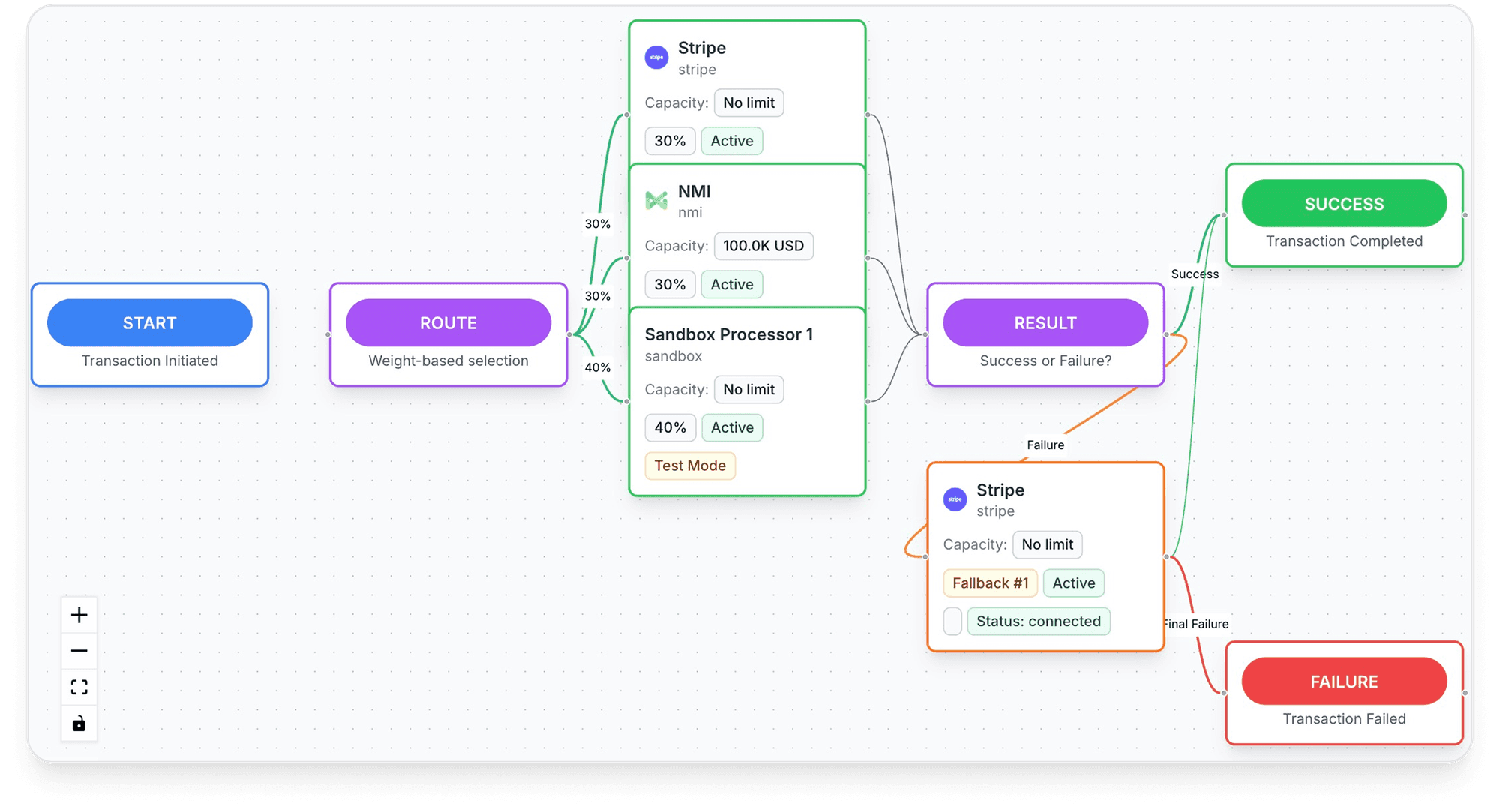
- Set up a cascade to another processor only when one is down or times out.
Fig. 4A processor outage, charged on the backup
approved declined or closed routing step
- RenewalSaved card, billed on ship day
- routes toProcessor ADown / timed outDeclined
- falls throughProcessor BCharges the saved cardApproved
Same saved card, a different processor.
Setup in detail: payment routing and backup processors for telehealth companies. Vendor case studies report results from cascading plus retries, such as 28.6% of declined revenue recovered over six months for one anonymous telehealth company (Sticky.io, vendor-reported)5Sticky.io, From declines to dollars: a telehealth subscription billing success story, vendor case study, undated, read November 2, 2026. The case study doesn't say which declines were cascaded; under Visa rules, only outages and timeouts justify a cascade.
Measure recovery
| Metric | Formula | What it tells you |
|---|---|---|
| First-attempt success | Renewals paid on first try ÷ renewals due | Health of your card base |
| Recovery rate | Recovered ÷ failed renewals | How well dunning works |
| Days to recover | Median days from failure to payment | Are retries well timed? |
| Recovered by method | Retry / card update / backup processor | Which layer earns its keep |
| Involuntary churn | Plans ended by payment failure ÷ active plans | What you still lose |
How Tagada helps
Retries, pause and a backup processor
Tagada subscriptions, documented in the subscriptions guide, handle failed renewals, and TagadaPay keeps the cards portable: "Switch processors without re-onboarding customers."10TagadaPay, homepage, read November 2, 2026
- Automatic retries on declined renewals at 24, 48 and 96 hours, then 168 hours twice, before the subscription is cancelled6Tagada docs, Node SDK: subscriptions, read November 2, 2026
- Pause and resume, including on past-due subscriptions6Tagada docs, Node SDK: subscriptions, read November 2, 2026
- Manual rebill once the patient has fixed their card6Tagada docs, Node SDK: subscriptions, read November 2, 2026
- Routing across TagadaPay and processors such as Stripe, NMI and Airwallex, with one logic, and a cascade to another processor when one is down or times out
Building a telehealth brand from scratch? Tagada Rx includes "Dunning" with "Patient inbox, refills, email and SMS"8Tagada, Tagada Rx, read November 2, 2026: "Recurring treatments rebill the day the pharmacy ships", and "Declined, cancelled, and errored cases never rebill"7Tagada docs, Rx: how it works, read November 2, 2026. US patients only, by selection.
Frequently asked questions
How many times should I retry a failed telehealth renewal?
Should I ship the treatment if the renewal fails?
What should a dunning email say for a telehealth brand?
What is a good failed payment recovery rate?
Sources
Checked November 2, 2026- Recurly, Failed payment recovery: a data-based strategy, April 30, 2026
- Payway, Visa excessive reattempts rule and fees (rule effective April 2022), read November 2, 2026 (secondary source)
- Stripe, Prohibited and restricted businesses, read November 2, 2026
- FTC, Health Breach Notification Rule, 89 FR 47028, published May 30, 2024, in force July 29, 2024
- Sticky.io, From declines to dollars: a telehealth subscription billing success story, vendor case study, undated, read November 2, 2026
- Tagada docs, Node SDK: subscriptions, read November 2, 2026
- Tagada docs, Rx: how it works, read November 2, 2026
- Tagada, Tagada Rx, read November 2, 2026
- Visa Core Rules and Visa Product and Service Rules, edition of October 24, 2026, sections 1.7.2.1 and 7.3.6.3, table 7-2
- TagadaPay, homepage, read November 2, 2026
Tagada
Recover failed refills without exposing health data
Funnels, one-click upsells, subscription billing and payment routing, on one customer record.
- 01Create your free account
- 02Connect your store or build a checkout
- 03Launch funnels, upsells and subscriptions