
Declined Payments: Decline Codes, Retry Rules and What to Do
Visa decline codes by category, what to do for each, how many times Visa lets you retry, and how to tell an issuer decline from your own fraud block.

Article summary
TL;DR
A decline code tells you whether the same card can ever pass. Visa sorts every code into four categories: category 1 (lost, stolen, closed, invalid) must never be retried on that card; the others allow up to 20 attempts in 30 days, after fixing the cause. "Do not honor" (05) is generic: retry sparingly and ask for another card.
- Visa's October 24, 2026 rules put 04, 07, 12, 14, 15, 41, 43, 46, 57, R0, R1 and R3 in category 1: never resubmit for the same card.
- Categories 2, 3 and 4 allow "up to 20 attempts in 30 days"; older guides still quote 15.
- A retry must not change the MCC, merchant country, acquiring identifier or ecommerce indicator of the original request.
- Stripe recommends at most 8 retries per charge and warns that issuers can read extra retries as fraud.
- Not every failed payment reaches the bank: a processor's fraud block never asks the issuer.
 ChatGPT
 Claude
 Perplexity
 Grok
On this page
This guide is the merchant's code book. Hard and soft declines are defined in the hard decline glossary entry; the full method to raise approvals is in payment acceptance rate.
Why payments get declined
A payment fails at one of three points, and only one of them is the bank's decision. Stripe names them issuer declines, blocked payments and invalid API calls2Stripe Docs, Declines, read November 2, 2026.
Fig. 1Three places a card payment can fail
approved declined or closed routing step
- CheckoutInvalid data: wrong number, CVC or expiry
- checked byFraud rulesBlocked: the issuer is never asked
- sent toCard issuerDeclined, with a codeDeclined
find which gate said no before you act
Issuers decide on "spending habits, account balance, and card data (expiration date, address information, and CVC)"2Stripe Docs, Declines, read November 2, 2026. They also flag large purchases and bursts of transactions as possible fraud3Stripe Docs, Card declines, read November 2, 2026. For high-risk merchants, both show up often: big first orders, new customers from ads, renewals on cards that changed.
Credit card decline codes and what to do
Visa's table 7-2 tells you which codes can be retried. The table below uses Visa's own wording and categories1Visa Core Rules and Visa Product and Service Rules, edition of October 24, 2026: section 1.7.2.1 (pp. 131 to 132), section 7.3.6.3 and table 7-2 (pp. 547 to 549).
| Code | Visa meaning | Category | What you do |
|---|---|---|---|
| 04, 07 | Pick up card | 1 | Stop. Ask for another card |
| 12 | Invalid transaction | 1 | Stop. Check what you sent, then ask for another card |
| 14 | Invalid account number | 1 | Stop. Customer checks the number or uses another card |
| 15 | NoSuch issuer | 1 | Stop. The card number is wrong |
| 41, 43 | Lost card, stolen card | 1 | Stop. Show a generic decline message |
| 46 | Closed account | 1 | Stop. Ask for another card |
| 57 | Transaction not permitted to cardholder | 1 | Stop. Offer another payment method |
| R0, R1, R3 | Stop payment orders | 1 | Stop billing. The customer cancelled at the bank |
| 51 | Not sufficient funds | 2 | Retry later, or offer another method |
| 59 | Suspected fraud | 2 | Don't loop. The customer confirms with the bank |
| 61, 65 | Exceeds amount or frequency limit | 2 | Retry later, or another card |
| 62 | RestrictedCard | 2 | Customer contacts the bank |
| 91, 96 | Issuer or switch inoperative, system malfunction | 2 | Retry soon |
| 9G | Blocked by cardholder | 2 | Customer unblocks the card in the bank app |
| 54 | Expired card | 3 | Get the new expiry date first |
| N7 | CVV2 failure | 3 | Customer re-enters the code |
| 1A (Europe, CEMEA) | Additional customer authentication required | 3 | Run 3D Secure, then retry |
| 05 and all others | Generic | 4 | Retry sparingly, suggest another card |
Source: Visa Core Rules, October 24, 2026, section 7.3.6.3, table 7-2, pp. 547 to 5491Visa Core Rules and Visa Product and Service Rules, edition of October 24, 2026: section 1.7.2.1 (pp. 131 to 132), section 7.3.6.3 and table 7-2 (pp. 547 to 549). Visa added 83 (Fraud/Security) to category 2 on July 25, 20261Visa Core Rules and Visa Product and Service Rules, edition of October 24, 2026: section 1.7.2.1 (pp. 131 to 132), section 7.3.6.3 and table 7-2 (pp. 547 to 549).
Fig. 2Visa's four decline categories
1 · Issuer will never approve
Lost, stolen, closed, invalid number, stop payment. Never resubmit for the same card.
2 · Issuer cannot approve at this time
Funds, limits, suspected fraud, issuer down. Up to 20 attempts in 30 days.
3 · Data quality
Expired card, CVV2 failure, authentication required in Europe. Fix the data, then retry.
4 · Generic
Every other code, 05 included. Up to 20 attempts in 30 days.
the category decides if a retry is allowed
Mastercard sends its own guidance with some declines, the Merchant Advice Code (MAC)3Stripe Docs, Card declines, read November 2, 2026. Stripe passes both through as network_decline_code and network_advice_code, and adds its own advice_code: do_not_try_again, try_again_later or confirm_card_data3Stripe Docs, Card declines, read November 2, 2026.
Do not honor and other generic declines
"Do not honor" means the issuer said no without saying why. Stripe's description for do_not_honor is "declined for an unknown reason", and card issuers "categorize most declines as generic"3Stripe Docs, Card declines, read November 2, 20264Stripe Docs, Decline codes, read November 2, 2026.
- Check your own data first. If CVC or address checks failed, ask the customer to confirm both before charging again3Stripe Docs, Card declines, read November 2, 2026.
- Then ask for another card or method. Stripe suggests a buy now, pay later option against insufficient funds3Stripe Docs, Card declines, read November 2, 2026.
- Let the customer call the bank. Issuers discuss the details of a decline only with their cardholder3Stripe Docs, Card declines, read November 2, 2026.
Watch out
Never tell the customer a card was reported lost or stolen. Stripe says to show lost_card, stolen_card and fraudulent "in the same manner as generic_decline"4Stripe Docs, Decline codes, read November 2, 2026. The person at your checkout may not be the cardholder.
How many times you can retry
Visa caps it: never after category 1, up to 20 attempts in 30 days for categories 2 to 41Visa Core Rules and Visa Product and Service Rules, edition of October 24, 2026: section 1.7.2.1 (pp. 131 to 132), section 7.3.6.3 and table 7-2 (pp. 547 to 549). Stripe is stricter and recommends a maximum of 8 retries per charge, because issuers "might see creating additional retries as potential fraud"3Stripe Docs, Card declines, read November 2, 2026.
An Acquirer, a Merchant, a Payment Facilitator, or a VisaNet Processor that reattempts an Authorization Request following a Decline Response [...] must not intentionally manipulate any data elements from the original Authorization Request.
The list includes the acquiring identifier, the acquirer and merchant country, the MCC and the Electronic Commerce Indicator1Visa Core Rules and Visa Product and Service Rules, edition of October 24, 2026: section 1.7.2.1 (pp. 131 to 132), section 7.3.6.3 and table 7-2 (pp. 547 to 549). Since the acquiring identifier is on that list, sending a declined payment to a second processor to get it approved breaks the rule: it stays a decline. Cascading is for outages and timeouts, where the issuer never answered.
Spacing, schedules and billing tools: smart retries. Sending a payment to another processor: cascading payments. Renewals that fail: subscriptions.
When the decline is yours, not the bank's
A blocked payment is a decline you caused. When Stripe blocks a payment, "it doesn't obtain authorization from the card issuer"2Stripe Docs, Declines, read November 2, 2026. A rule that's too strict turns good customers away before any bank sees them. Those are false declines.
- Outcome type "blocked", not sent to networkYour fraud rules or your processorReview the rule; add a known customer to the allow list
- "Unlikely to be authorized"Stripe's Adaptive Acceptance, on IC+ pricingExpected: it avoids network retry costs
- Outcome type "issuer_declined" with a codeThe issuerUse the code table above
- Outcome type "invalid"Your integrationFix the data sent; the payment never ran
On Stripe, "Add to allow list" stops your rules from blocking future payments that match, without retrying the blocked one2Stripe Docs, Declines, read November 2, 2026. Watch your decline rate in the first months too: Visa's new Asia Pacific program, MERP, looks at authorization declines alongside fraud and disputes5Stripe Docs, Dispute and fraud card monitoring programs, read November 2, 2026. Balancing fraud blocks and approvals: fraud and 3D Secure.
What to do after a decline
- Find the failure type: blocked, invalid or issuer declined2Stripe Docs, Declines, read November 2, 2026.
- Read the network code and advice code before anything else3Stripe Docs, Card declines, read November 2, 2026.
- Category 1 or
do_not_try_again: stop and ask for another card1Visa Core Rules and Visa Product and Service Rules, edition of October 24, 2026: section 1.7.2.1 (pp. 131 to 132), section 7.3.6.3 and table 7-2 (pp. 547 to 549)3Stripe Docs, Card declines, read November 2, 2026. - Data or authentication: get the corrected details, or run 3D Secure, then retry1Visa Core Rules and Visa Product and Service Rules, edition of October 24, 2026: section 1.7.2.1 (pp. 131 to 132), section 7.3.6.3 and table 7-2 (pp. 547 to 549).
- Funds, limits, generic: retry later, within Visa's limit, and offer another method.
- Off-session: email or notify the customer to come back and pay3Stripe Docs, Card declines, read November 2, 2026.
- Measure approvals on unique payments, excluding failed retries2Stripe Docs, Declines, read November 2, 2026.
Based on Visa Core Rules, October 24, 2026, and Stripe Docs, read November 2, 2026.
How to read the number: authorization rate. Expired cards on saved subscriptions: card account updater.
By industry
| Industry | What changes | Guide |
|---|---|---|
| Supplements | Big bundles, new customers from ads and renewals on cards that changed trigger more issuer declines | Reducing payment declines for supplement brands |
| Skincare | Beauty checkouts already lose many shoppers; wallets and a clear descriptor matter more | Reducing payment declines for skincare brands |
| Online pharmacy | HSA and FSA cards the store isn't set up for, and authorizations that expire during prescription review | Reducing payment declines for online pharmacies |
| Telehealth | Three failure points: checkout, capture after the clinician's review within the 7-day hold, and the refill charge | Reducing payment declines for telehealth companies |
| Fitness | Big equipment orders that issuers flag as unusual, and protein or pre-workout refills charged to cards that changed | Reducing payment declines for fitness brands |
| Info products | High prices and foreign cards at checkout, then installments and renewals; on a high-ticket decline, offer a payment plan | Reducing payment declines for info product businesses |
How Tagada helps
Each decline treated the right way
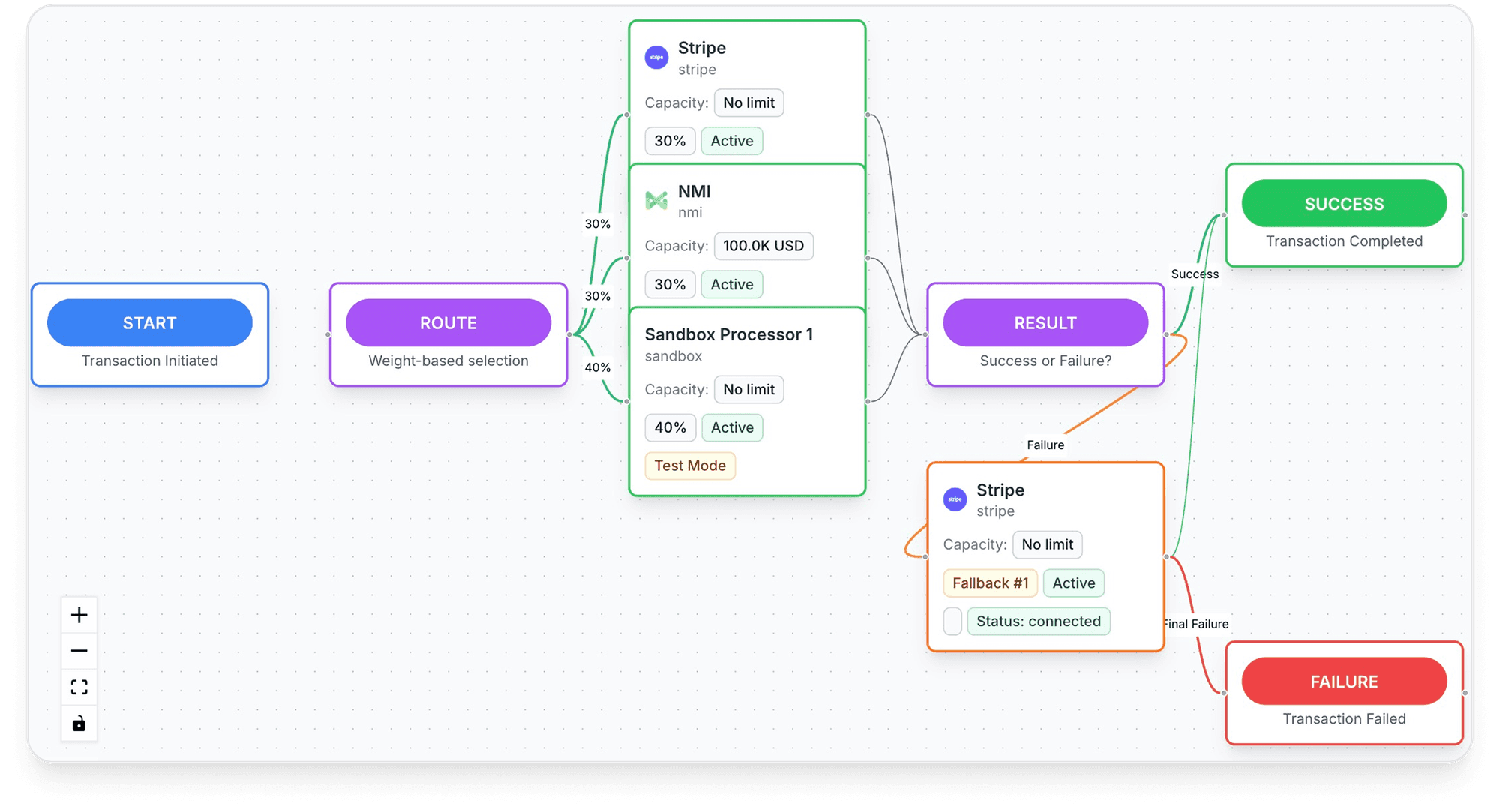
- Routing across TagadaPay and processors such as Stripe, NMI and Airwallex with one logic, cascade to another processor when one is down or times out. Setup and fallback order: Tagada routing docs6Tagada Docs, Multi-processor routing, read November 2, 2026.
- Native 3DS2, device intelligence and a rules engine, so authentication runs when an issuer asks for it.
- Subscriptions with trials, billing cycles, retries and automatic recovery.
- One-page checkout with Apple Pay and Google Pay.
- Routing scored in real time: "Every transaction is scored against your live MID network in real time", then sent to the processor most likely to approve it, with a retry on decline. TagadaPay reports a +18% approval uplift.
- Live in 24h: "One KYC. One signed package." TagadaPay distributes it across its processor network and follows up, and most merchants are live in under 24 hours.
- From 2.9% + $0.29, no setup fees, no monthly minimums. High-risk verticals and edge cases are priced case by case.
Tagada follows Visa and Mastercard rules and the laws that apply to payments.
Frequently asked questions
What does do not honor mean?
What does decline code 51 mean?
How many times can you retry a declined card?
Why are my customers' cards being declined when they have money?
What does card issuer declined mean?
Sources
Checked November 2, 2026- Visa Core Rules and Visa Product and Service Rules, edition of October 24, 2026: section 1.7.2.1 (pp. 131 to 132), section 7.3.6.3 and table 7-2 (pp. 547 to 549)
- Stripe Docs, Declines, read November 2, 2026
- Stripe Docs, Card declines, read November 2, 2026
- Stripe Docs, Decline codes, read November 2, 2026
- Stripe Docs, Dispute and fraud card monitoring programs, read November 2, 2026
- Tagada Docs, Multi-processor routing, read November 2, 2026
TagadaPay
Fewer declines, handled within the rules
Tell us what you sell and how you sell it. Each application is underwritten, and approval is not guaranteed.
- 01Tell us what you sell and how
- 02Underwriting reviews your business
- 03Process through TagadaPay alongside your other processors