
Rolling Reserves: How They Work and How to Get Them Released
How merchant account reserves work at Stripe, PayPal, Shopify and high-risk processors, what they hold back, and how to get a reserve lowered or released.

Article summary
TL;DR
A reserve is a share of your sales that your processor holds for a set period to cover future refunds and chargebacks. It comes back, but not on your schedule. To get it lowered or released, find the review date in the reserve notice, bring months of low disputes and refunds, and appeal through the channel your provider names.
- Stripe calls a reserve "a temporary hold on a portion of a business's funds for a predetermined period of time", and reviews it a few days before it expires.
- Shopify's example: 10% of sales held for 120 days. PayPal's: 10% held on a 90-day rolling period, reviewed "within every 180 days".
- High-risk processors publish reserves of "typically 5 to 10% of your processing volume".
- Reserves exist because cardholders can dispute for months: generally 120 days at Stripe.
- PayPal warns "you might never be able to fully remove a reserve"; Stripe says some reserves are indefinite "in some rare cases".
 ChatGPT
 Claude
 Perplexity
 Grok
On this page
The mechanics of a rolling reserve, with a worked example, are on our rolling reserve page. This guide is for the merchant who has one, or is about to sign for one.
Why processors hold a reserve
Your processor pays out today for sales that can be disputed for months. Cardholders can generally dispute for up to 120 days at Stripe8Stripe Docs, How disputes work, read October 14, 2026. If you can't cover those disputes, the processor and its bank pay.
The US bank regulator lists reserves among the tools for internet merchants with higher fraud or chargeback risk, together with delayed settlement5OCC, Comptroller's Handbook: Merchant Processing, updated March 20, 2025. Stripe sizes a reserve on "industry conditions, payment activity, dispute rate, refund rate, and financial stability"1Stripe Support, Reserves FAQ, read October 27, 2026.
The four forms a reserve takes
| Form | How it works | Example |
|---|---|---|
| Rolling | A share of each day's sales held for a set number of days, then released | PayPal: 10% held for 90 days2PayPal, The why and what of account reserves, read October 27, 2026 |
| Fixed | A set amount held for a set period | Shopify: a specific sum for a defined duration3Shopify Help Center, Reserves on Shopify Payments, read October 27, 2026 |
| Minimum | Sales are held until the reserve reaches a floor | PayPal: 5% of daily volume until $5,000 is reached2PayPal, The why and what of account reserves, read October 27, 2026 |
| Up-front or jumpstart | Funds taken at once from your available balance | PayPal: $10,000 moved to reserve from a $20,000 balance2PayPal, The why and what of account reserves, read October 27, 2026 |
Reserves at Stripe, PayPal, Shopify and high-risk processors
Watch out
Stripe says "in some rare cases, a reserve may be required indefinitely"1Stripe Support, Reserves FAQ, read October 27, 2026, and PayPal that you "might never be able to fully remove a reserve"2PayPal, The why and what of account reserves, read October 27, 2026. Read the terms before you plan cash around the release date.
What a reserve holds back
A reserve isn't a fee, but it's cash you can't spend on stock or ads.
| Monthly card sales | Reserve | Period | Held at any time, once steady |
|---|---|---|---|
| $50,000 | 5% | 90 days | About $7,500 |
| $100,000 | 10% | 90 days | About $30,000 |
| $100,000 | 10% | 120 days | About $40,000 |
| $100,000 | 10% | 180 days | About $60,000 |
Simple arithmetic on the reserve terms. Real releases follow your contract's schedule.
Reserves grow with sales. A big promotion raises the amount held for the next three to six months, so plan it before you launch.
What makes a reserve go up or down
| Goes up | Goes down |
|---|---|
| Disputes or refunds rising | Several months of low disputes and refunds |
| Sudden jump in volume | Volume close to what you declared |
| Long delivery times or pre-orders | Fast, tracked delivery |
| A new product line or offer you didn't declare | Products and offers unchanged since approval |
| Weak cash position | Stronger financial statements |
These follow the factors Stripe names: industry, payment activity, disputes, refunds and financial stability1Stripe Support, Reserves FAQ, read October 27, 2026. Long delivery windows are a common reason for reserves on new files7PaymentProviders.io, How to get approved by a payment provider as a new company, September 7, 2026.
How to get a reserve lowered or released
- Find the terms. The reserve notice gives the percentage or amount and the period1Stripe Support, Reserves FAQ, read October 27, 20263Shopify Help Center, Reserves on Shopify Payments, read October 27, 2026.
- Note the review date. Stripe reviews a few days before expiry1Stripe Support, Reserves FAQ, read October 27, 2026; PayPal within every 180 days2PayPal, The why and what of account reserves, read October 27, 2026; your contract gives the high-risk processor's cycle.
- Bring the numbers down first. Dispute rate, refund rate and delivery times are what the review reads.
- Prepare your file. Recent statements, dispute and refund rates by month, delivery proof, and any change since the reserve started.
- Appeal through the named channel. Stripe: the appeal option on the Balances page1Stripe Support, Reserves FAQ, read October 27, 2026. Shopify: reply to the reserve email in time3Shopify Help Center, Reserves on Shopify Payments, read October 27, 2026.
- Ask for a step, not a removal. A lower percentage or a shorter period is easier to get than a full release.
A reserve is reviewed on evidence. Bring the evidence before the review date, not after.
Watch out
If the notice lists conditions to remove the reserve, Shopify removes it automatically once they're met3Shopify Help Center, Reserves on Shopify Payments, read October 27, 2026. Check whether your notice has them before you appeal.
When you leave a processor
Closing an account usually doesn't release the reserve at once. The processor keeps it until the dispute window on your last sales has passed.
Fig. 1How a reserve comes back after you stop processing
Reserve held on the day you stop
$30,000
- $10,000Held until day 30Paid back day 30
- $10,000Held until day 60Paid back day 60
- $10,000Held until day 90Paid back day 90
The last sales still carry their own dispute window.
If an account is closed with funds held, read merchant account closed and funds held. For a planned move, see how to switch payment processors.
What to negotiate before you sign
- [ ] Form: rolling, fixed, minimum or up-front.
- [ ] Size: percentage or amount, and any cap.
- [ ] Period: how long each day's share is held.
- [ ] Review: the date, and what would lower the reserve.
- [ ] Notice: how changes are announced, and how far ahead.
- [ ] Exit: how long the reserve is held after you leave.
Merchant Maverick notes reserves can't usually be removed entirely before you start, but terms can be negotiated6Merchant Maverick, The complete guide to rolling reserves, read October 27, 2026. Get them in writing.
By industry
| Industry | What changes | Guide |
|---|---|---|
| Supplements | Subscriptions, trials and claims push reserves up | Supplement processing fees and reserves |
| Skincare | Subscriptions and long refill cycles | Skincare processing fees and reserves |
How Tagada helps
More than one processor behind your checkout
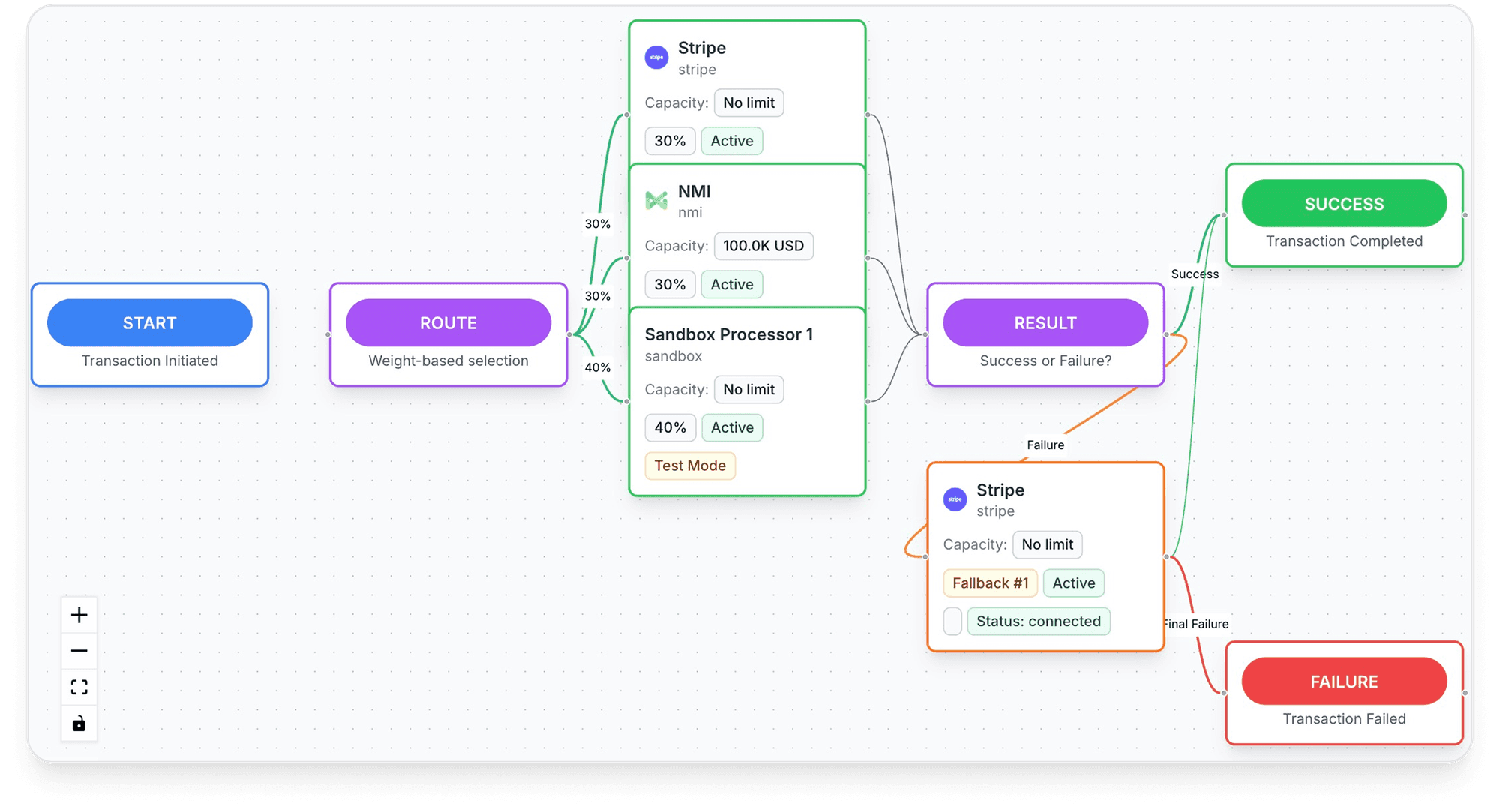
- Routing across Stripe, Adyen and TagadaPay with one logic, so one account's reserve doesn't decide all your cash flow.
- Cascade on decline to another processor.
- Native 3DS2, device intelligence and a rules engine to keep fraud disputes down, the main driver of reserves.
- TagadaPay is reviewed per file: "Each file is still underwritten, with enhanced review on regulated verticals."
Plans are on the pricing page.
Frequently asked questions
How long does a rolling reserve last?
What is a normal reserve percentage?
Can I get my reserve released early?
Why did Stripe put a reserve on my account?
Do I get my reserve back if I close my account?
Sources
Checked October 27, 2026- Stripe Support, Reserves FAQ, read October 27, 2026
- PayPal, The why and what of account reserves, read October 27, 2026
- Shopify Help Center, Reserves on Shopify Payments, read October 27, 2026
- Soar Payments, published nutraceutical merchant account terms, read October 2026
- OCC, Comptroller's Handbook: Merchant Processing, updated March 20, 2025
- Merchant Maverick, The complete guide to rolling reserves, read October 27, 2026
- PaymentProviders.io, How to get approved by a payment provider as a new company, September 7, 2026
- Stripe Docs, How disputes work, read October 14, 2026
TagadaPay
Don't let one reserve hold all your volume
Tell us what you sell and how you sell it. Each application is underwritten, and approval is not guaranteed.
- 01Tell us what you sell and how
- 02Underwriting reviews your business
- 03Process through TagadaPay alongside your other processors