
Refund Fraud: How It Works and How Merchants Stop It
Refund fraud explained for online merchants: common tactics, the refund policy and proof of delivery card networks accept, and when to refund or refuse.

Article summary
TL;DR
Refund fraud is getting a refund you aren't owed: claiming a delivered order never arrived, returning an empty box or another item, or keeping the goods and the money. You stop it with a refund policy customers accept at checkout, proof of delivery with the full address, refunds only to the original card, and inspection before you pay.
- Refund fraud runs through your own refund process. You decide, so your policy and your evidence are the defense.
- NRF found that 9% of all returns are fraudulent, in its 2025 survey of large US retailers.
- Visa lets you set your own refund policy, if an online customer accepts it with a click before checkout.
- Against a Visa "not received" dispute, tracking must show the full delivery address. Partial-address tracking isn't accepted.
- Refund only to the card used for the purchase. Visa and Stripe both require it, which blocks refund-to-another-card schemes.
 ChatGPT
 Claude
 Perplexity
 Grok
On this page
Refund fraud doesn't need a stolen card. The buyer is real, the payment is real, and the fraud happens after the sale: a parcel "never arrived", a return comes back lighter than it left, or a used product shows up as new. It goes through your refund process, which means you decide. That's the good news.
Your policy, your delivery records and your inspection are the whole defense, and card network rules back them more than most merchants think.
What is refund fraud?
Refund fraud is any attempt to get money back that the customer isn't owed, through your refund process. It covers lies about the order (not received, damaged, not as described), tricks on the return (empty box, swapped item, used item) and attempts to be paid twice (a refund plus a chargeback).
The words overlap. Here is how they're usually split:
| Term | What it means | Who pays out |
|---|---|---|
| Refund fraud | Any refund the customer isn't owed, with or without a return | You, through your refund process |
| Return fraud | Refund fraud that involves sending something back: empty box, other item, stolen goods | You, after the return |
| Refund abuse | Legal but bad-faith use of a generous policy: serial returns, wearing then returning | You, under your own policy |
| Chargeback fraud (friendly fraud) | The real cardholder disputes a valid charge with their bank | The customer's bank, then you |
The last line is a different process. It runs through the card networks, and we cover it in chargeback vs refund. The two meet constantly, though: a refused refund often comes back as a dispute.
How common is refund fraud?
The best recent numbers come from the National Retail Federation's 2025 survey of large US retailers (over $500 million in revenue) and 2,006 consumers.4National Retail Federation, Consumers Expected to Return Nearly $850 Billion in Merchandise in 2025, October 15, 2025
9%
of all returns are fraudulent, according to the retailers surveyed
$849.9B
of merchandise US retailers expected back in 2025, 15.8% of sales
19.3%
of online sales expected to be returned in 2025
65%
of retailers tracking it saw more empty box or box of rocks returns
The same survey found that 45% of consumers think "bending the truth" is acceptable when making a return.4National Retail Federation, Consumers Expected to Return Nearly $850 Billion in Merchandise in 2025, October 15, 2025 Most refund fraud isn't organized crime. It's ordinary customers testing how far a policy goes.
Common types of refund fraud
Fig. 1Refund fraud tactics and what stops each one
| Tactic | How it shows up | What stops it |
|---|---|---|
| Item not received | Carrier shows delivered, customer says it never came | Proof of delivery with the full address; signature or photo on high-value orders |
| Empty box or box of rocks | The return parcel arrives with nothing, or something heavy and worthless | Weigh returns; refund after inspection, not at drop-off |
| Item swap | An older, broken or counterfeit unit comes back in the original box | Record serial numbers at shipping; check them on return |
| Wardrobing | The product is used once, then returned as new | Tags or seals that must stay on; a policy that excludes used items |
| Fake damage claim | Stock photos or old photos of a "broken" product | Ask for photos with the order number; compare with what you shipped |
| Double dipping | A refund request and a bank dispute for the same order | Never refund once a dispute is open; answer it with the refund proof |
| Refund to another method | Overpayment, then "please refund the difference by transfer" | Refund only to the original card |
| Refund service | A third party files the claims for the buyer, for a cut | Consistent rules: the same evidence demanded from everyone |
| Insider refunds | Staff issue refunds with no matching return | Two-person approval above a threshold; refunds tied to an order and a login |
most are stopped before the refund, not after
Two rules from Visa close the cash-out schemes. A merchant must refund to the same card used for the purchase "to the extent possible", and must not process a refund without a previous sale to the same cardholder.1Visa Core Rules and Visa Product and Service Rules, October 24, 2026
Stripe applies the first in its product: refunds only go back to the original payment method, and you can't refund more than the original charge.2Stripe Docs, Refund and cancel payments, read November 2, 2026
Refund fraud vs chargeback: what changes for you
| Refund fraud | Chargeback fraud | |
|---|---|---|
| Who decides | You | The customer's bank, under card network rules |
| What you lose | The refund, often the goods, shipping both ways | The amount, a dispute fee, and your time |
| Counts in your dispute ratio | No | YesFrom the day it's filed |
| Your evidence | Anything your policy asks for | Only what the dispute reason accepts, before the deadline |
| Can you say no | YesUnder your disclosed policy | Only by winning the dispute |
Verdict
Refund fraud is the cheaper problem. Refusing a bad refund is free; losing the chargeback that follows isn't. Build every refusal as if you'll have to defend it to a bank.
The two connect in three places. A refused refund can come back as a dispute. A customer can try both at once.
And once a dispute is open, you can't refund outside it: at Stripe, a refund that's still pending when a dispute arrives fails, with the reason charge_for_pending_refund_disputed.2Stripe Docs, Refund and cancel payments, read November 2, 20263Stripe Docs, How disputes work, read November 2, 2026
If you refunded first and the customer disputed anyway, Visa accepts "a credit or Reversal issued by the Merchant was not addressed by the Issuer" as a valid response.1Visa Core Rules and Visa Product and Service Rules, October 24, 2026
Inside Tagada
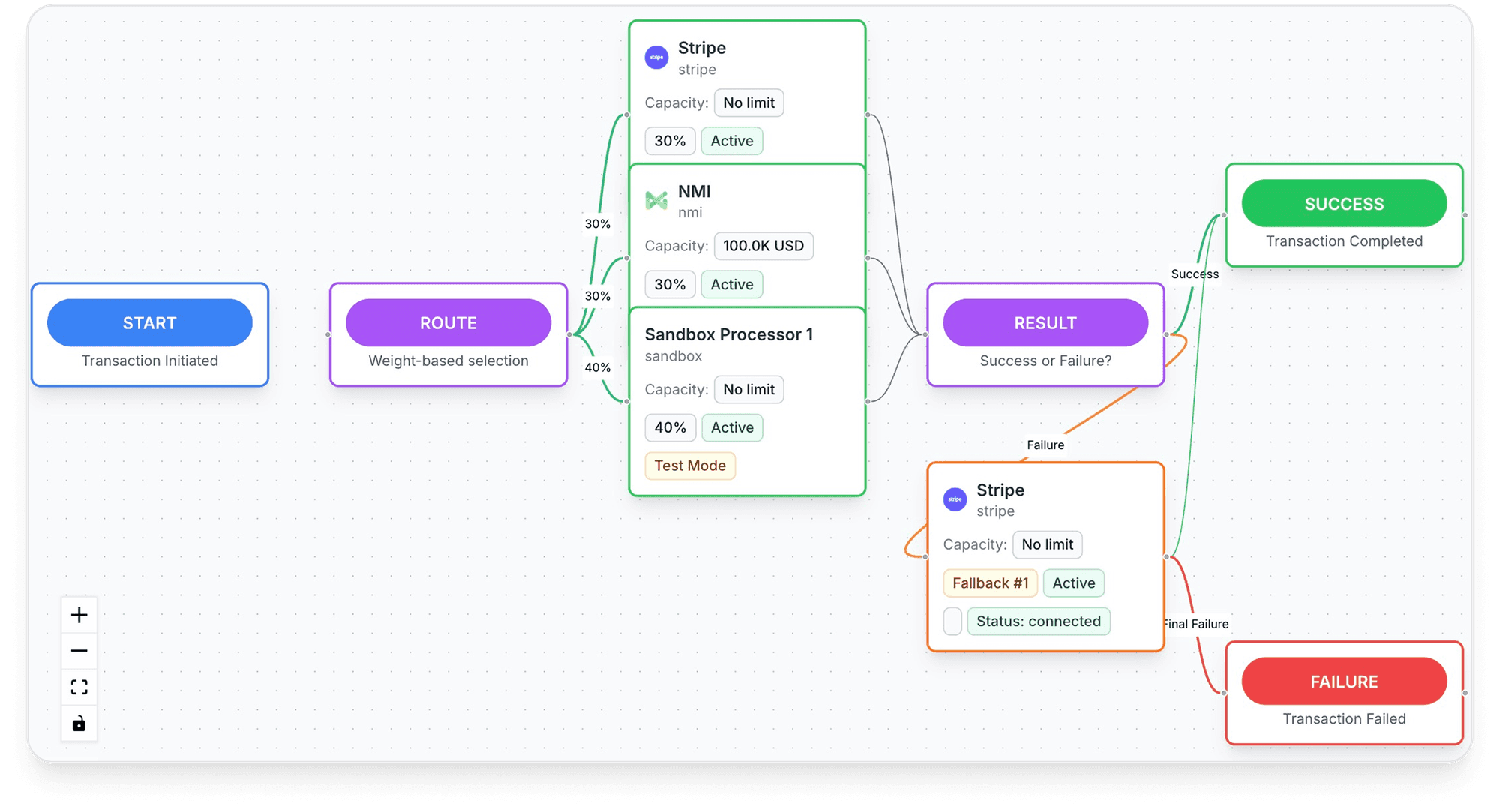
See every payment's route, processor by processor
Set the order your processors are tried in, per store, per country or per product.
Your refund policy is your first defense
Visa lets a merchant "establish its own credit refund policy", with one condition: it must be disclosed the way Visa specifies.1Visa Core Rules and Visa Product and Service Rules, October 24, 2026 For online sales, that means:
For Transactions at an Electronic Commerce Merchant, during the sequence of pages before final checkout, and include a "click to accept" button, checkbox, or other acknowledgement. The disclosure may be a link to a separate page if that link forms part of the "click to accept" acknowledgement.
That click is what makes a strict policy hold. When a customer disputes because you didn't refund a cancelled order (Visa 13.7), your response is the record that you properly disclosed a limited return or cancellation policy and the customer didn't follow it.1Visa Core Rules and Visa Product and Service Rules, October 24, 2026 Without the click, the policy is just a page on your site.
What a policy can't do:
- Override a product problem. For "not as described" or "defective" (Visa 13.3), the customer must return or attempt to return the goods first. But refusing the return, refusing a return label, or giving no clear return instructions all count as an attempt.1Visa Core Rules and Visa Product and Service Rules, October 24, 2026
- Override the EU withdrawal right. Distance sales in the EU carry a 14-day withdrawal right, and Visa's 13.7 rule recognizes it.1Visa Core Rules and Visa Product and Service Rules, October 24, 2026 The directive also gives you two protections: you may withhold the refund until you receive the goods back or proof they were sent, whichever comes first, and the customer is liable for any loss of value caused by handling beyond what's needed to examine the product.5Directive 2011/83/EU on consumer rights, Articles 13 and 14
- Waive the right to dispute. Visa forbids requiring a cardholder to give it up.1Visa Core Rules and Visa Product and Service Rules, October 24, 2026
Practical rule
Write the policy for the fraud you actually see: return window, condition required (tags, seals, unused), who pays return shipping, photos for damage claims, refund after inspection. Then put it behind the checkout checkbox, and send it again in the order confirmation.
Proof of delivery that card networks accept
"Item not received" is the most common refund fraud claim, and the one where your evidence decides everything. Visa's rules for a 13.1 "Merchandise/Services Not Received" dispute set the bar.1Visa Core Rules and Visa Product and Service Rules, October 24, 2026
Full address, not a tracking link
Proof of delivery must contain the full delivery address. Visa states that tracking with a partial address isn't permitted.
Collection counts
For orders picked up, a pickup document with the customer's acknowledgment: signature, PIN or collection code.
Photos and signatures weigh
When you send a delivery photo or a signed proof, the issuer must certify it reviewed it with the cardholder and address it before taking the case to pre-arbitration.
The address they gave you
If the customer says it went to the wrong address, the issuer must back it with the full address agreed at purchase. Keep yours with the order.
For orders above the amount you can afford to lose, pay for signature on delivery. For digital products, the equivalent is a usage record: downloads, logins, the account and the IP address that accessed them.
When the customer goes further and says they never made the purchase (Visa 10.4), Compelling Evidence 3.0 can make the dispute invalid.
You need two earlier undisputed transactions on the same card, processed more than 120 days before the dispute (and no more than 365 days), sharing a device ID or fingerprint, or the IP address plus one more element such as the login ID or the full delivery address, with a description of what was bought.1Visa Core Rules and Visa Product and Service Rules, October 24, 2026
See compelling evidence for the full list.
How to prevent refund fraud
- Get the policy accepted at checkout. A checkbox or click-to-accept tied to your return and refund terms, before payment.
- Ship with evidence. Full-address proof of delivery, serial numbers recorded, weight of the parcel noted, signature above your threshold.
- Refund after the return, not at drop-off. In the EU you may wait for the goods or proof of sending. Weigh the parcel and check serials before paying.
- Ask for proof on damage claims. Photos that show the order number or the packing slip, taken before anything is thrown away.
- Refund only to the original card. Never by transfer, gift card or another card because the customer asks.
- Track refunds per customer, card, address and device. One email per account is easy to change; a delivery address and a card aren't.
- Control who can refund. A second approval above a set amount, and every refund linked to an order and a staff login.
Sources: Visa Core Rules, October 24, 2026; Stripe Docs, Refund and cancel payments; Directive 2011/83/EU.
Refund, investigate or refuse?
Not every suspicious claim is worth a fight. A refund you didn't owe costs the order. A chargeback costs the order, a fee and a point on your ratio. Stripe's own analysis of early fraud warnings says refunding pays off on amounts up to about your dispute fee.3Stripe Docs, How disputes work, read November 2, 2026
- First order, low value, plausible claimProbably a real problem, or not worth the fightRefund, note it on the customer record
- Not received, carrier shows delivered to the full addressPossible item-not-received fraudSend the proof and the policy; keep it for the dispute
- Return weighs less than what you shipped, or wrong serialEmpty box or item swapRefuse with photos and weights; keep the parcel
- Third claim from the same address or cardSerial abuse or a refund serviceRefuse, close the account, block the address and card
- Dispute already open on the orderThe bank is handling itDon't refund; accept or respond with evidence
When you refuse, assume the next step is the customer's bank. Respond to the dispute within the deadline with the same evidence: the policy they accepted, the delivery proof, the inspection notes. The template is in our chargeback rebuttal letter guide.
Refund fraud on subscriptions
Subscriptions add a pattern of their own: use the product for the month, then ask for the money back, or skip the request and dispute the renewal. Visa's rules frame what you owe.
- If you broke your own terms, refund in full. Visa requires a full refund when the merchant didn't adhere to the terms of the sale, such as a renewal charged at a different price or date than agreed.1Visa Core Rules and Visa Product and Service Rules, October 24, 2026
- A cancellation after the charge doesn't make it a cancelled recurring transaction. A 13.2 dispute is invalid when the cardholder cancelled after the transaction date, and the amount is limited to the unused portion.1Visa Core Rules and Visa Product and Service Rules, October 24, 2026
- Easy cancellation is your evidence. Visa requires a simple cancellation procedure, online when the order was taken online, and a notice at least 7 days before a trial or promotional price ends.1Visa Core Rules and Visa Product and Service Rules, October 24, 2026 A customer who could cancel in two clicks and had a reminder has a weak case.
How to set up cancellation and save flows is in subscription retention and cancellation flows, and the trial rules are in free trials and negative option billing. For chargeback ratios and what they trigger, see chargebacks for merchants.
How Tagada helps
Payments that follow the card network rules
Tagada follows Visa and Mastercard rules and the laws that apply to payments. TagadaPay runs "native 3DS2, device intelligence, and rules engine: approve real customers, block the rest," and routes payments across your processors in real time, with retries on decline. Your vault stays yours: "Switch processors without re-onboarding customers." See TagadaPay to apply, or pricing for CRM plans.
Frequently asked questions
What is refund fraud?
What is the difference between refund fraud and chargeback fraud?
How do I prove an order was delivered?
Can I refuse a refund if I suspect fraud?
Can a customer get a refund and a chargeback for the same order?
Should I refund to a different card or by bank transfer?
Sources
Checked November 2, 2026- Visa Core Rules and Visa Product and Service Rules, October 24, 2026
- Stripe Docs, Refund and cancel payments, read November 2, 2026
- Stripe Docs, How disputes work, read November 2, 2026
- National Retail Federation, Consumers Expected to Return Nearly $850 Billion in Merchandise in 2025, October 15, 2025
- Directive 2011/83/EU on consumer rights, Articles 13 and 14
TagadaPay
Refund fraud turning into disputes? Keep a second processor ready
Tell us what you sell and how you sell it. Each application is underwritten, and approval is not guaranteed.
- 01Tell us what you sell and how
- 02Underwriting reviews your business
- 03Process through TagadaPay alongside your other processors