
Subscription Retention and Cancellation Flows
How to keep subscribers: a self-serve portal, a legal cancellation flow with save offers, failed payment recovery, win-back and what to measure.

Article summary
TL;DR
Subscription retention works in four places: a portal where customers skip, pause or swap before they think of cancelling; a short cancellation flow that matches one offer to the reason given, with the cancel button always visible; retries and card updates when a renewal fails; and win-back after they leave. Measure saves that last, not saves on the day.
- Visa requires simple cancellation, online when the order was taken online, and notice at least 7 days before a promotional price ends.
- In California, since July 1, 2025, a save offer shown online must sit next to a visible "click to cancel" button.
- Loop's data from 441,000 cancel attempts: a generic discount saves about 6%, a structured flow about 15%, the best brands 20% or more (July 2026).
- Visa never allows a retry after a Category 1 decline, such as a lost or stolen card, and caps other retries at 20 in 30 days.
- In September 2025, Amazon's FTC settlement required a cancellation method as easy as the sign-up.
 ChatGPT
 Claude
 Perplexity
 Grok
On this page
This page is the method. For how to choose a tool, see churn prevention software. For supplement and skincare brands: subscription churn for supplement brands and subscription churn for skincare brands.
Where subscribers leave, and what keeps each one
Subscribers leave at four moments. Each one has its own lever, and a cancellation flow covers only one of them.
Fig. 1Four moments where a subscription ends
- Before renewalToo much product, wrong date
- Clicks cancelPrice, no use, a break
- Renewal declinedExpired card, no funds
- After cancellingRuns out of product
the cancel button is only one of them
| Moment | What usually happens | Lever |
|---|---|---|
| Before renewal | The customer has stock left, or is away | Self-serve portal: skip, pause, change date or frequency |
| At the cancel button | Price, not using it, wants a change | Cancellation flow: one reason, one matching offer |
| At renewal | The card is declined and nobody fixes it | Retries within network limits, card update, backup processor |
| After cancelling | They run out and buy elsewhere | Win-back, with fresh consent to restart |
Split your ended subscriptions on that line before you build anything: cancelled by the customer, or ended by a failed payment. The formulas are in churn rate calculation.
Keep them before they reach the cancel button
Most cancellations start in the account page. If the only button there is "Cancel", every customer who wants a smaller or later order becomes a cancellation.
Skip or move the date
For "I still have some left". It costs you nothing and the subscription keeps running.
Pause with a resume date
For a break or a trip. Say the resume date, and remind them before it.
Change frequency or quantity
For "too much product". A smaller order beats no order.
Swap the product
For "I don't like this one". Same subscription, a product they want.
Update the card
For a card problem. Not a cancellation: route it to a card update.
Remind before you charge. Visa requires a notice at least 7 days before the next charge when a trial, introductory offer or promotion ends, or when the terms change, with a way to cancel online3Visa Core Rules and Visa Product and Service Rules, edition of April 18, 2026. California adds a yearly reminder of what the customer is paying for and how to cancel1California Business and Professions Code § 17602, for contracts entered into, amended or extended since July 1, 2025.
How to build a cancellation flow
Keep it to two or three screens. Its job is to find the reason and offer the one change that fixes it, then let the customer go if they still want to.
- Show the cancel button on every screen, from the first one.
- Ask one question: why are you leaving? A short list, plus "Other". Keep it optional.
- Offer one fix that matches the reason: skip, pause, frequency, swap, or a discount for price.
- Apply it right away and confirm the new terms in writing.
- If they cancel, cancel. Confirm it in writing and stop the next charge.
- Log every step: reason, offer shown, choice, time.
Built from Visa's cancellation rules, Cal. Bus. & Prof. Code § 17602 and Loop's published flow data.
| Offer | Cost to you | What to tell the customer after |
|---|---|---|
| Skip or move the date | None | The new charge date |
| Pause | None while paused | The resume date, and a reminder before it |
| Lower frequency or quantity | Smaller orders | The new amount and schedule |
| Swap the product | None | The new product and price |
| Discount for a set number of orders | Margin on each discounted order | When the discount ends and the price after it |
Discounts teach customers that clicking cancel lowers the price. Keep them for the "too expensive" reason. Loop's figures, from its own customers, show why matching matters6Loop, Best cancellation flows for Shopify subscription brands, July 21, 2026:
Fig. 2Share of cancel attempts saved
matching the offer to the reason more than doubles it
Loop calls the 90-day retention of saved subscribers "the most important" measure6Loop, Best cancellation flows for Shopify subscription brands, July 21, 2026. A save that cancels at the next renewal only delayed the loss.
Save offers that stay legal
You can offer, you can't obstruct. Every rule points the same way, and California's is the most precise.
California, § 17602(e)(2)
A business can show a save offer online only if it displays, at the same time, a "prominently located and continuously and proximately displayed direct link or button" labeled "click to cancel" or similar words. When it's clicked, the business must "promptly process the cancellation."
That rule applies to contracts entered into, amended or extended since July 1, 20251California Business and Professions Code § 17602, for contracts entered into, amended or extended since July 1, 2025. ROSCA requires a simple way to stop recurring charges for online subscriptions2Restore Online Shoppers' Confidence Act, 15 U.S.C. § 8403, and Visa requires simple cancellation, online when the order was taken online3Visa Core Rules and Visa Product and Service Rules, edition of April 18, 2026. The FTC's click-to-cancel rule was vacated on July 8, 2025, but that changed none of these5FTC, advance notice of proposed rulemaking on the Negative Option Rule, 91 FR 12318, March 13, 2026. And in September 2025, Amazon's settlement with the FTC required a cancellation method as easy as the one used to sign up4FTC, FTC Secures Historic $2.5 Billion Settlement Against Amazon, September 25, 2025.
- Offer screen with the cancel button visibleAllowed in California if the customer can still cancelKeep the button on every screen
- A survey or splash screen before any cancel buttonRisky: the button must show at the same time as the offerShow a way to cancel on the first screen
- Mandatory survey, chat or phone call to cancelNot a simple mechanism under ROSCAMake the survey optional; never require a call for an online sign-up
- Cancel only by email or ticketVisa requires online cancellation for online ordersAdd self-serve cancellation in the account
Watch out
A save discount that ends is a price change. Treat it like a promotion ending: Visa expects notice at least 7 days before the charge3Visa Core Rules and Visa Product and Service Rules, edition of April 18, 2026, and California asks for 7 to 30 days' notice of a price change, with how to cancel1California Business and Professions Code § 17602, for contracts entered into, amended or extended since July 1, 2025.
A customer who can't cancel calls the bank. Visa's dispute reason 13.2, cancelled recurring transaction, is built for that case3Visa Core Rules and Visa Product and Service Rules, edition of April 18, 2026. Tagada follows Visa and Mastercard rules and the laws that apply to payments. Every rule for trials and renewals: free trials and negative option billing.
Failed payments: the churn nobody chose
A renewal declined and never recovered ends a subscription the customer wanted to keep. The fix is retries within the network rules, a card update, and another processor when the first one is down or times out.
- Soft declineInsufficient funds, generic decline: retry later, within limits
- Expired or replaced cardDon't retry the same details: card updater, then a card-update link
- Lost, stolen, closedVisa Category 1: never retry, ask for a new card
- Stop payment orderThe customer stopped you at the bank: treat it as a cancellation
Visa forbids resubmitting after a Category 1 decline and allows up to 20 attempts in 30 days for the others3Visa Core Rules and Visa Product and Service Rules, edition of April 18, 2026. Stripe's recommended default is 8 tries within 2 weeks7Stripe Docs, Automate payment retries, read October 14, 2026. Count attempts per card across every processor you use.
The method in full: dunning and failed payment recovery, why subscription payments fail and the card account updater. The processor side of renewals is in subscription payment processing.
Win back customers who left
Win-back works when it's timed to when they would have run out, and when the restart is clean.
- A restart is a new sign-up. ROSCA requires express informed consent before a recurring charge2Restore Online Shoppers' Confidence Act, 15 U.S.C. § 8403. Show the price, frequency and next charge date, and get a click, even if the card is still on file.
- Use the cancellation reason. A customer who left on price gets a different message from one who left because they had too much.
- Respect their opt-out. Marketing to a cancelled customer follows your email and SMS consent, not the old subscription.
Measure retention that lasts
A flow's dashboard counts saves. What you need is saves that still pay two or three renewals later, and churn split by cause.
| Metric | How to calculate it | What it tells you |
|---|---|---|
| Churn by cause | Ended subscriptions split: cancelled vs failed payment | Where to invest first |
| Reasons given | Share of each reason among cancellations | Which offers to build |
| Save rate | Offers accepted ÷ customers who entered the flow | The headline number |
| Saves still active at 90 days | Saved customers still subscribed 90 days later | Real saves vs delayed cancellations |
| Recovery on failed renewals | Recovered ÷ failed amount, by decline reason | Your retries and card updates |
| Disputes after a save or a retry | Chargebacks on those renewals | When saving costs more than losing |
Compare against a holdout group that never sees the offer. Revenue-based retention: gross vs net retention. Spotting who will leave before they click: churn prediction models.
By industry
| Industry | What changes | Guide |
|---|---|---|
| Supplements | The biggest drop comes in the first cycles; doubt about results and too much product drive cancellations | Subscription churn for supplement brands |
| Skincare | Replenishment of daily products churns less than discovery boxes; long cycles leave cards time to expire | Subscription churn for skincare brands |
| Online pharmacy | Refills run out, the prescriber changes the prescription or supply piles up; a hard-to-cancel plan now draws fines | Subscriptions and churn for online pharmacies |
| Telehealth | Subscription fits ongoing care, not one-off consultations; the FTC has acted against telehealth companies over hard cancellation | Subscriptions and churn for telehealth companies |
| Fitness | Subscribe what customers use up, not equipment; price, too much product at home and lost motivation drive cancellations | Subscriptions and churn for fitness brands |
| Info products | Only what keeps delivering value; on Kajabi, the typical subscription lasts three payments | Subscriptions and churn for info product businesses |
| Supplements, failed payments | Recover in layers: card refresh, smart retries, card-update message, backup processor | Failed payment recovery for supplement brands |
| Skincare, failed payments | 60-day and 3-month cycles raise the risk of an expired card at renewal | Failed payment recovery for skincare brands |
How Tagada helps
A portal, a cancel flow and retries in one place
- A customer portal, hosted on
/accountof your checkout domain or built in your own code, where customers skip a delivery, pause with a resume date, change frequency or quantity, swap products, add an item to the next order and update their card8Tagada Docs, Customer Portal, read November 2, 2026. Customer portal docs. - A cancel flow you configure in the CRM: cancellation reasons, each with its own retention offer (a discount, a skip, a pause, another frequency, a product swap or a yearly plan)8Tagada Docs, Customer Portal, read November 2, 2026.
- Cancellation at the end of the paid period by default, which the customer can undo before the period ends; a cancelled subscription can be reactivated8Tagada Docs, Customer Portal, read November 2, 20269Tagada Docs, Subscriptions and Rebilling, read November 2, 2026.
- Automatic retries on declined renewals: after 24 hours, then 48, 96, 168 and 168 hours, with the subscription past due in between and cancelled after the fifth try, 21 days in. Smart retry is available on request9Tagada Docs, Subscriptions and Rebilling, read November 2, 2026. Subscriptions docs.
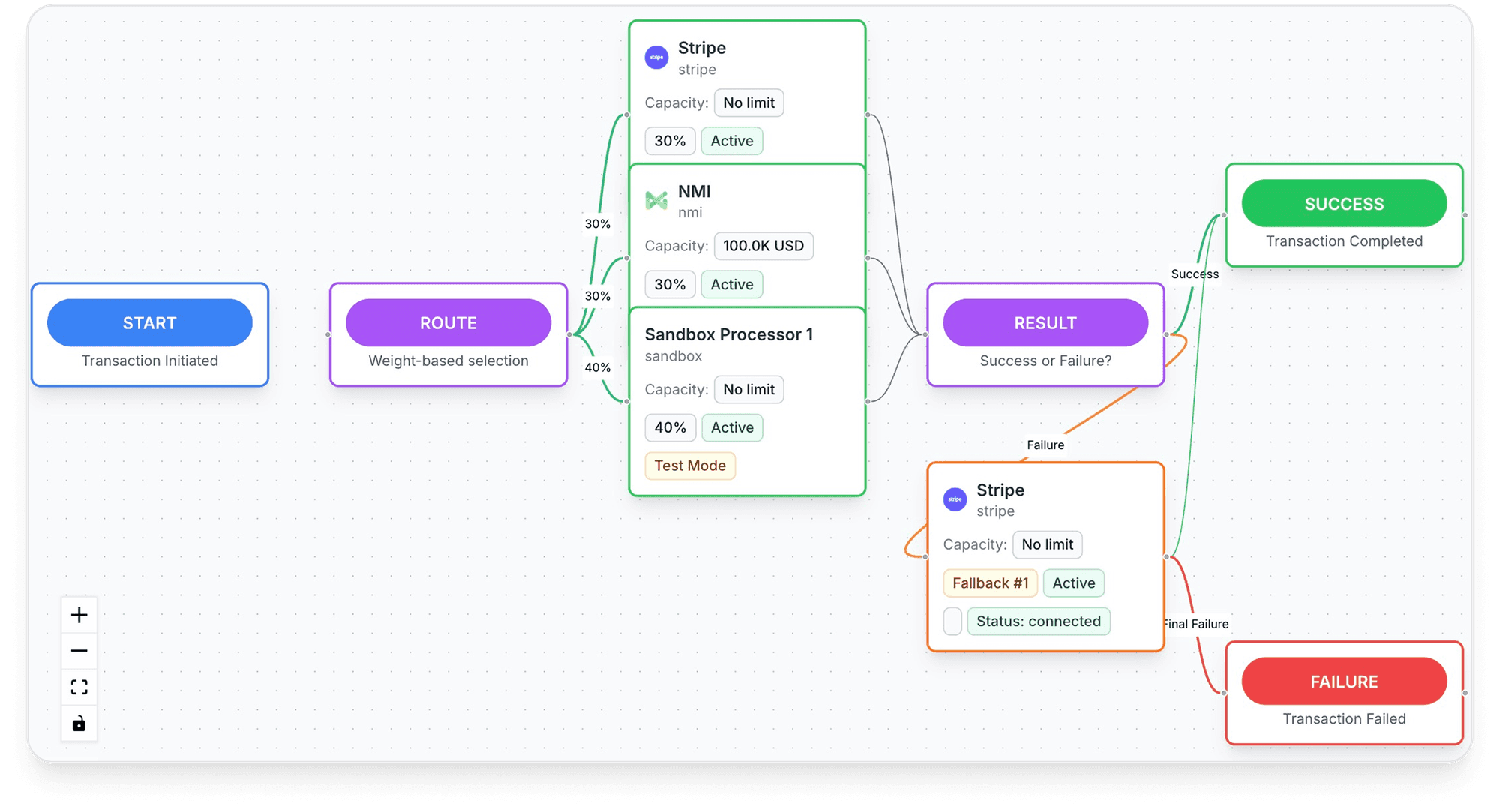
- Routing across TagadaPay and processors such as Stripe, NMI and Airwallex with one logic and a cascade to another processor when one is down or times out.
- A vault you own: your PCI-tokenized cards, customer profiles and subscription data stay portable. Switch processors without re-onboarding customers. No vendor lock-in.
- Routing scored in real time: "Every transaction is scored against your live MID network in real time", then sent to the processor most likely to approve it, with a retry on decline. TagadaPay reports a +18% approval uplift.
- 24/7 human support on Slack Connect: "The person who reviews your application has a name, and so does the one who picks up when something breaks."
It runs standalone, on Shopify, on WooCommerce or headless. Plans are on the pricing page.
Frequently asked questions
How do you reduce subscription churn?
What is a cancellation flow?
What is a save offer?
Should I offer a pause or a discount when someone cancels?
What is a good subscription retention rate?
Sources
Checked November 2, 2026- California Business and Professions Code § 17602, for contracts entered into, amended or extended since July 1, 2025
- Restore Online Shoppers' Confidence Act, 15 U.S.C. § 8403
- Visa Core Rules and Visa Product and Service Rules, edition of April 18, 2026
- FTC, FTC Secures Historic $2.5 Billion Settlement Against Amazon, September 25, 2025
- FTC, advance notice of proposed rulemaking on the Negative Option Rule, 91 FR 12318, March 13, 2026
- Loop, Best cancellation flows for Shopify subscription brands, July 21, 2026
- Stripe Docs, Automate payment retries, read October 14, 2026
- Tagada Docs, Customer Portal, read November 2, 2026
- Tagada Docs, Subscriptions and Rebilling, read November 2, 2026
Tagada
Keep subscribers who want to stay
Funnels, one-click upsells, subscription billing and payment routing, on one customer record.
- 01Create your free account
- 02Connect your store or build a checkout
- 03Launch funnels, upsells and subscriptions