
Payment Plans for Info Product Businesses: How to Offer Them Without Becoming the Lender
How to offer payment plans on courses and coaching: merchant plans vs financing, the Visa and Regulation Z lines, plan terms, what to do on default.

Article summary
TL;DR
You can split a course price two ways: run the plan yourself, or let a financing provider pay you upfront and carry the default. To avoid becoming a lender, charge no interest or plan premium, keep it short, and get written consent to the schedule. When a student stops paying: retry, remind, pause access, then end the plan.
- Visa defines a merchant "Partial Payment" as one with "no charge to the Cardholder, by the Merchant, for interest or imputed interest" (rules of October 2026).
- Under Regulation Z, a higher price on credit than for cash is a finance charge: in the CFPB's example, "The $1,000 difference is a finance charge".
- A seller becomes a "creditor" if it regularly (more than 25 times a year) extends consumer credit with a finance charge or "payable by written agreement in more than four installments".
- Through Stripe, Affirm lists "Educational Services" (MCC 8299) as restricted and consulting (7392) as prohibited (read November 2, 2026).
- On Paperbell, 31% of multi-session coaching packages were bought on a payment plan, 60% paid in full (23,000+ sales, October 2025 to October 2026, vendor data).
 ChatGPT
 Claude
 Perplexity
 Grok
On this page
This guide is part of our playbook on the best ecommerce platform for info product businesses. The general guide, for any business: custom ecommerce checkout.
Two ways to offer a payment plan
The question "who is the lender?" has a simple answer: whoever waits for the money.
| You run the plan | A financing provider | |
|---|---|---|
| When you get paid | Installment by installment | Upfront, minus the provider's fee |
| Who carries the default | You | The provider |
| Who approves the buyer | Nobody: anyone with a card can start | The provider runs its own check |
| Rules that apply to you | Visa installment rules1Visa Core Rules and Visa Product and Service Rules, edition of October 24, 2026, Glossary (Installment Transaction, Partial Payment) and Tables 5-19 to 5-21; Regulation Z if your plan crosses its lines2CFPB, Regulation Z, 12 CFR 1026.2(a)(12), (a)(14) and (a)(17), read November 2, 20263CFPB, Regulation Z, 12 CFR 1026.4 and official interpretation, comments 4(a)-1 and 4(b)(9)-1, read November 2, 2026 | The provider's category rules5Stripe Docs, Affirm payments, read November 2 and 3, 20266Stripe Docs, Afterpay and Clearpay payments, read November 2, 2026 |
| What the student sees | Your checkout, your schedule | The provider's application and terms |
| Good for | Courses and programs from a few hundred dollars, short plans | High-ticket programs, if the provider accepts your category |
Fig. 1Who waits for the money
You run the plan
- Payment 1At checkout
- thenPayment 2Next month
- thenPayment 3Plan ends
Paid installment by installment; you carry the default
A financing provider
- Student appliesThe provider runs its own check
- thenProvider pays youUpfront, minus its fee
- thenProvider collectsFrom the student
Paid upfront, minus the fee; the provider carries the default
Whoever waits for the money is the lender.
What makes you the lender
A merchant plan becomes credit, in the legal sense, through the price and the number of payments. These are the lines to know.
| Line | Rule |
|---|---|
| No interest on card plans | For installments, "the Merchant does not charge any interest, or imputed interest, to the Cardholder" (Visa, Table 5-20)1Visa Core Rules and Visa Product and Service Rules, edition of October 24, 2026, Glossary (Installment Transaction, Partial Payment) and Tables 5-19 to 5-21 |
| Late fee | "If the Merchant applies a late payment fee, it must be a flat fee and must be applied only as a late payment penalty" (Visa)1Visa Core Rules and Visa Product and Service Rules, edition of October 24, 2026, Glossary (Installment Transaction, Partial Payment) and Tables 5-19 to 5-21 |
| Price premium = finance charge | "If the charge in a credit transaction exceeds the charge imposed in a comparable cash transaction," the excess is a finance charge (Regulation Z, comment 4(a)-1)3CFPB, Regulation Z, 12 CFR 1026.4 and official interpretation, comments 4(a)-1 and 4(b)(9)-1, read November 2, 2026 |
| More than 4 installments | A "creditor" includes a person who regularly extends consumer credit "payable by written agreement in more than four installments (not including a down payment)" (12 CFR 1026.2(a)(17))2CFPB, Regulation Z, 12 CFR 1026.2(a)(12), (a)(14) and (a)(17), read November 2, 2026 |
| "Regularly" | More than 25 times in the preceding calendar year (12 CFR 1026.2(a)(17))2CFPB, Regulation Z, 12 CFR 1026.2(a)(12), (a)(14) and (a)(17), read November 2, 2026 |
| Consumer only | "Consumer credit" is credit "primarily for personal, family, or household purposes" (12 CFR 1026.2(a)(12))2CFPB, Regulation Z, 12 CFR 1026.2(a)(12), (a)(14) and (a)(17), read November 2, 2026 |
Fig. 2Three numbers that decide who is the lender
0
Interest or imputed interest on a Visa installment plan
4
Installments, down payment excluded, before the creditor line
25
Credit extensions a year that count as regularly
Our reading, not legal advice: a plan of 4 payments or fewer, at the same total as paying in full, stays outside these definitions.
A plan of 6 or 12 payments sold to more than 25 consumers a year, or any plan priced above pay-in-full, can make you a creditor with disclosure duties. State lending and collection laws come on top. Check your plan with a lawyer before launch.
Watch out
Most course-platform guides recommend charging 5% to 20% more on the plan than on pay-in-full. Under Regulation Z, that difference is the kind of charge the CFPB calls a finance charge3CFPB, Regulation Z, 12 CFR 1026.4 and official interpretation, comments 4(a)-1 and 4(b)(9)-1, read November 2, 2026, and under Visa rules it can read as "imputed interest"1Visa Core Rules and Visa Product and Service Rules, edition of October 24, 2026, Glossary (Installment Transaction, Partial Payment) and Tables 5-19 to 5-21. If you want an incentive, offer a bonus or a lower price for paying in full instead of a surcharge on the plan, and have it reviewed.
The plan terms Visa requires
Before you store the card for a plan, Visa requires the buyer's express consent to an agreement that includes1Visa Core Rules and Visa Product and Service Rules, edition of October 24, 2026, Glossary (Installment Transaction, Partial Payment) and Tables 5-19 to 5-21:
- A description of the course or program, and the total price.
- The amount and currency of each installment, and the schedule and frequency.
- Your cancellation and refund policy.
- Your contact details and the last 4 digits of the card.
The agreement must be shown "separately from the general purchase terms and conditions"1Visa Core Rules and Visa Product and Service Rules, edition of October 24, 2026, Glossary (Installment Transaction, Partial Payment) and Tables 5-19 to 5-21. Flag each charge as an installment ("use the appropriate indicator in the POS environment field"), and if the first authorization fails, "the Merchant must not store the credential"1Visa Core Rules and Visa Product and Service Rules, edition of October 24, 2026, Glossary (Installment Transaction, Partial Payment) and Tables 5-19 to 5-21.
Fig. 3The installment agreement the buyer accepts
- Program and total
- $597 program, $597 total
- Installments
- 3 × $199 USD, monthly
- Cancellation and refunds
- Your policy, in full
- Contact and card
- Your details, card ending 4242
- Express consent
- Ticked, separately from general terms
- Each charge
- Flagged as an installment
Illustrative record.
Shown apart from the general terms.
Add your own terms in the same agreement: what happens to access while a payment is late, when the plan ends on non-payment, and what you refund. If you do not follow your own terms, Visa says "the Merchant must refund the full amount paid"1Visa Core Rules and Visa Product and Service Rules, edition of October 24, 2026, Glossary (Installment Transaction, Partial Payment) and Tables 5-19 to 5-21.
How to set up a fixed plan
- Pick the schedule. 3 or 4 monthly payments stay under the four-installment line and match most course lengths.
- Collect the first payment at checkout and grant access immediately. Several course guides suggest a larger first payment. It works as a down payment, which Regulation Z leaves out of the four-installment count2CFPB, Regulation Z, 12 CFR 1026.2(a)(12), (a)(14) and (a)(17), read November 2, 2026.
- Bill the rest automatically, then stop. In Stripe, an installment plan is a subscription schedule with
iterationsset to the number of payments andend_behaviorset tocancel, so the subscription ends after the last charge4Stripe Docs, Subscription schedules, "Installment plans", read November 2, 2026. - Send a reminder before each installment, with the amount and the date.
- Release the final access level when the plan completes, if your terms say some modules unlock over time.
A fixed plan bills a set number of times, then stops.
Example
A $597 program on 3 payments of $199. Payment 1 at checkout opens modules 1 to 4. Payments 2 and 3 open the rest as they clear. The total is the same as paying in full, and the student never has access to more than they have paid for.
Fixed plans are not open-ended subscriptions. For memberships that renew until cancelled, see subscription billing for info product businesses.
When a student stops paying
Plan defaults are mostly cards that fail, not students who refuse. Handle them in this order.
| Step | What to do | Why |
|---|---|---|
| 1. Retry | Retry the card automatically over the following days | Many declines are temporary |
| 2. Remind | Send a card update link the same day, then a personal follow-up | The student may not know it failed |
| 3. Pause | Suspend access to unpaid content after a set period, as your terms state | Protects what is not yet paid for |
| 4. End | Close the plan, keep what was paid for delivered content, refund anything charged for what was not delivered | Keeps the dispute risk low |
| 5. Record | Keep the agreement, the reminders and the access logs | Your evidence if a dispute arrives |
Fig. 4A missed installment, handled in order
1. Retry
Retry the card automatically over the following days. Many declines are temporary.
2. Remind
Send a card update link the same day, then a personal follow-up. The student may not know it failed.
3. Pause
Suspend access to unpaid content after a set period, as your terms state. Protects what is not yet paid for.
4. End
Close the plan, keep what was paid for delivered content, refund anything charged for what was not delivered. Keeps the dispute risk low.
5. Record
Keep the agreement, the reminders and the access logs. Your evidence if a dispute arrives.
When to pause is a choice, and platforms differ. Kajabi Payments by default retries "up to 4 times over the course of several weeks", then cancels the plan, "which revokes product access"; you can switch to revoking after the first failed payment12Kajabi Help Center, How to manage failed payments with Kajabi Payments, read November 3, 2026.
Ruzuku advises pausing, not revoking, after 10 to 14 days without a response, and warns that "Immediately revoking access feels punitive and almost never recovers the payment"13Ruzuku, Payment Plans vs Pay-in-Full, updated November 2026 (vendor guide). Whatever you pick, write it in the plan terms.
How to automate step 3: how to cut access when a payment fails. Retry and email sequences: failed payment recovery.
Disputes on plans follow two Visa rules. A "not received" dispute can come up to 120 days after "the last date that the Cardholder expected to receive the merchandise or services", so a long program stays exposed longer7Visa Core Rules and Visa Product and Service Rules, edition of October 24, 2026, dispute conditions 13.1 (Table 11-93) and 13.5 (Tables 11-118 and 11-122).
And a misrepresentation dispute applies when the buyer "was not clearly advised of further Transactions"; your defense is proof they "expressly agreed to future Transactions"7Visa Core Rules and Visa Product and Service Rules, edition of October 24, 2026, dispute conditions 13.1 (Table 11-93) and 13.5 (Tables 11-118 and 11-122). The signed schedule is that proof. More on info product chargebacks.
Third-party financing
A financing provider pays you upfront and collects from the student. It removes the default risk, but not every provider accepts education or coaching.
| Option | Status for info products |
|---|---|
| Affirm, through Stripe | MCC 8299 "Educational Services": Restricted; 7392 "Consulting, Public Relations": Prohibited; "Professional services (including legal, consulting, and accounting)" prohibited. Pay in 4 from $50 to $500, monthly plans of 3 to 36 months from $100 to $30,000; recurring payments not supported (Stripe Docs, read November 2 and 3, 2026)5Stripe Docs, Affirm payments, read November 2 and 3, 2026 |
| Klarna, through Stripe | Education not named in Klarna's extra prohibited categories (charities, B2B, gambling, direct marketing…). You "can't impose fees or higher prices for Klarna purchases" (Stripe Docs, read November 3, 2026)14Stripe Docs, Comply with Klarna rules, read November 3, 2026 |
| Afterpay / Clearpay, through Stripe | Lists "Alcohol, Donations, Pre-orders, NFTs, B2B" as extra prohibited categories; education not named (Stripe Docs, read November 2, 2026)6Stripe Docs, Afterpay and Clearpay payments, read November 2, 2026 |
| Other installment providers | Each sets its own categories and price limits (Check before you build the offer) |
Fig. 5Financing providers through Stripe, for courses and coaching
- Affirm8299 Educational Services restricted, 7392 Consulting prohibitedCheck your MCC before you build the offer
- KlarnaEducation not named in its extra prohibited categoriesNo fees or higher prices for Klarna purchases
- Afterpay / ClearpayEducation not named in its extra prohibited categoriesCheck its categories and price limits
Under Visa rules, a third-party installment provider must state that it is not the seller and uses MCC 59991Visa Core Rules and Visa Product and Service Rules, edition of October 24, 2026, Glossary (Installment Transaction, Partial Payment) and Tables 5-19 to 5-21. The student then has a contract with the provider, not with you, for the payments. The payment side, including fees and approval, is covered in info product payment processing.
How Tagada helps
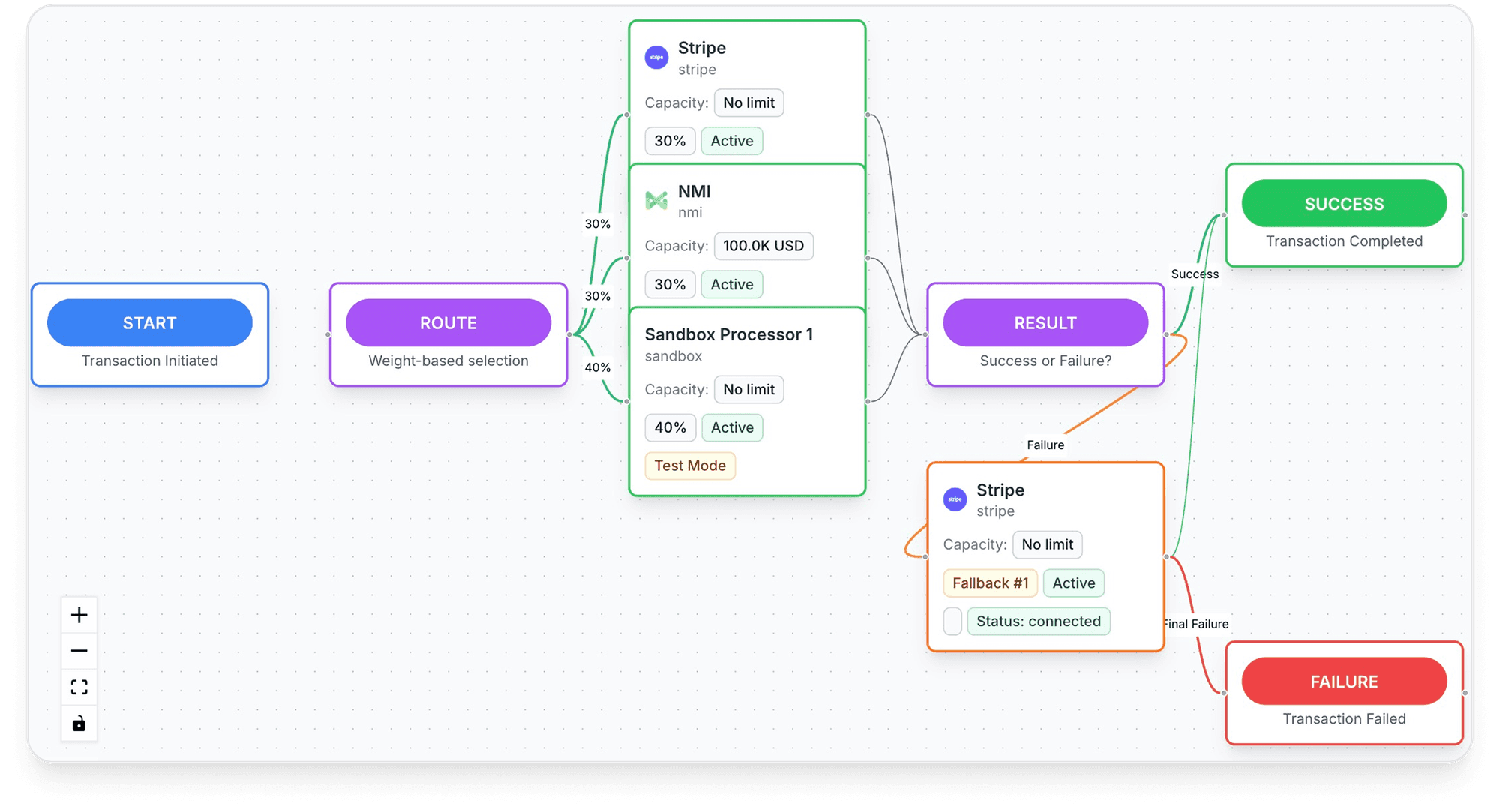
Installments that retry, notify your course tool and stay in your vault
- Recurring billing with automatic retries: 5 attempts at 24h, 48h, 96h, 168h and 168h (21 days), then cancellation8Tagada docs, Subscriptions (Node SDK), read November 2, 2026. A subscription shows
past_duewhile it retries8Tagada docs, Subscriptions (Node SDK), read November 2, 2026. - Events your course tool can act on:
subscription/rebillDeclined,subscription/pastDue,subscription/canceledandsubscription/rebillUpcomingfor advance notice9Tagada docs, Webhooks and events, read November 2, 2026. - A customer portal where the student updates the card and "Charges a past-due subscription again now".
- Routing: "Route to the processor most likely to approve it, retry on decline." TagadaPay reports a "+18% approval uplift"10TagadaPay, homepage, read November 2, 2026. Your cards stay in your vault: "Switch processors without re-onboarding customers."
"If you sell something real, we will get you paid." TagadaPay lists info products, coaching and online courses among its industries, with "enhanced review for regulated verticals"; "Most merchants are live under 24 hours." Pricing starts "From 2.9% + $0.29"; "High-risk verticals and edge cases are priced case by case"10TagadaPay, homepage, read November 2, 2026.
Plans are on the pricing page; payment processing is on TagadaPay.
Apply today · Go live in under 24 hours
Tagada follows Visa and Mastercard rules and the laws that apply to payments.
Frequently asked questions
Should a payment plan cost more than paying in full?
How many payments should a course payment plan have?
Does Stripe offer payment plans for customers?
What happens if a student stops paying a payment plan?
Can I cut course access when a payment plan fails?
Sources
Checked November 3, 2026- Visa Core Rules and Visa Product and Service Rules, edition of October 24, 2026, Glossary (Installment Transaction, Partial Payment) and Tables 5-19 to 5-21
- CFPB, Regulation Z, 12 CFR 1026.2(a)(12), (a)(14) and (a)(17), read November 2, 2026
- CFPB, Regulation Z, 12 CFR 1026.4 and official interpretation, comments 4(a)-1 and 4(b)(9)-1, read November 2, 2026
- Stripe Docs, Subscription schedules, "Installment plans", read November 2, 2026
- Stripe Docs, Affirm payments, read November 2 and 3, 2026
- Stripe Docs, Afterpay and Clearpay payments, read November 2, 2026
- Visa Core Rules and Visa Product and Service Rules, edition of October 24, 2026, dispute conditions 13.1 (Table 11-93) and 13.5 (Tables 11-118 and 11-122)
- Tagada docs, Subscriptions (Node SDK), read November 2, 2026
- Tagada docs, Webhooks and events, read November 2, 2026
- TagadaPay, homepage, read November 2, 2026
- Paperbell, How Much Do Coaches Charge? Real Data From 23,000+ Coaching Sales, October 13, 2026 (vendor data, sales from October 2, 2025 to October 2, 2026)
- Kajabi Help Center, How to manage failed payments with Kajabi Payments, read November 3, 2026
- Ruzuku, Payment Plans vs Pay-in-Full, updated November 2026 (vendor guide)
- Stripe Docs, Comply with Klarna rules, read November 3, 2026
Tagada
Split the course price without becoming the lender
Funnels, one-click upsells, subscription billing and payment routing, on one customer record.
- 01Create your free account
- 02Connect your store or build a checkout
- 03Launch funnels, upsells and subscriptions