
Server-Side Tracking for Supplement Brands
Why supplement brands lose purchase data, how Meta's health and wellness restrictions work, what server-side tracking fixes and what it doesn't.



Article summary
TL;DR
Server-side tracking sends purchase events from your server to Meta, Google and TikTok, so ad blockers and browser limits don't erase them. For supplement brands it matters twice, because Meta can also restrict the events health and wellness businesses send. Server-side tracking makes your data complete and under your control; it does not lift Meta's restrictions, and you should never disguise events to get around them.
- Meta recommends running the Conversions API alongside the pixel, deduplicated with the same event name and event ID.
- Meta treats dietary supplement and weight loss businesses as health and wellness, with restrictions applied in tiers, according to PixelFlow.
- At the middle tier, advertisers "cannot optimize for Purchase, Add to Cart, or other mid- and lower-funnel standard events".
- Store orders are the truth: compare them with Ads Manager to see how much data you lose.
- Never send product names, URLs or parameters that describe a health condition, and never rename events to slip past the restrictions.
 ChatGPT
 Claude
 Perplexity
 Grok
On this page
This guide is part of our playbook on the best ecommerce platform for supplement brands. Ad rules themselves are in Meta and TikTok ads for supplement brands.
Why browser pixels miss supplement sales
- Ad blockers and browser privacy stop part of the pixel events.
- Funnels across domains (pre-sell page, checkout, upsell) lose the session.
- Upsells and renewals happen after the browser moment, or without it.
- Health and wellness restrictions can block lower-funnel events on Meta2PixelFlow, What are Meta's health and wellness restrictions and how do they affect tracking, read October 26, 2026 (vendor documentation)3Stape, on Meta's health and wellness data restrictions, March 3, 2026 (secondary source).
Fig. 1Where a supplement purchase slips past the pixel
- Ad clickThe pixel loads, unless blocked
- Pre-sell pageAd blockers and browser privacy
- CheckoutAnother domain, the session is lost
- UpsellAfter the browser moment
- RenewalNo browser at all
The later the step, the less the browser sees.
Each lost purchase makes your CAC look higher and teaches the ad platform less about who buys.
Meta's health and wellness restrictions
PixelFlow describes three tiers2PixelFlow, What are Meta's health and wellness restrictions and how do they affect tracking, read October 26, 2026 (vendor documentation). Meta does not publish this breakdown in the same form, so treat it as a practitioner's summary.
| Tier | What is limited | What still works |
|---|---|---|
| 1. Core setup | Custom parameters and URL details not shared; advanced matching and custom audiences may shrink | Standard events |
| 2. Certain standard events | NoOptimization for Purchase, Add to Cart and other mid- and lower-funnel events | PageView, ViewContent, Landing Page View |
| 3. Full restrictions | NoConversion-based optimization; broad targeting only; minimal reporting | Upper-funnel delivery |
Source: PixelFlow documentation2PixelFlow, What are Meta's health and wellness restrictions and how do they affect tracking, read October 26, 2026 (vendor documentation); Stape reported the purchase restrictions in March 20263Stape, on Meta's health and wellness data restrictions, March 3, 2026 (secondary source).
How to check your status: in Events Manager, open your dataset's settings, then "Manage data source categories"2PixelFlow, What are Meta's health and wellness restrictions and how do they affect tracking, read October 26, 2026 (vendor documentation).
Watch out
Some vendors suggest renaming purchase events with coded custom names so Meta doesn't recognize them. That is a way around Meta's rules, not a setup choice. It puts the ad account at risk. Send what you are allowed to send, completely and accurately.
What server-side tracking fixes, and what it doesn't
| Server-side tracking... | Fixes | Doesn't fix |
|---|---|---|
| Sends events from your server | Events lost to ad blockers and browsers | Meta's health and wellness category |
| Sends the purchase from the place it is paid | Upsells, renewals and cross-domain funnels | Ad rejections for claims4Meta Advertising Standards, Health and wellness, change log entry July 22, 2026 |
| Lets you choose the fields you send | Leaks of health details in URLs or product names | A restricted tier already applied |
| Works for Meta, Google and TikTok | Under-reporting on all three | Bad offers or weak creatives |
What server-side tracking fixes
- Events lost to ad blockers and browsers
- Upsells, renewals and cross-domain funnels
- Leaks of health details in URLs or product names
- Under-reporting on Meta, Google and TikTok
What it doesn't fix
- Meta's health and wellness category
- Ad rejections for claims
- A restricted tier already applied
- Bad offers or weak creatives
What data to send, and what never to send
| Send | Never send |
|---|---|
| Event name and event ID (shared with the pixel)1Meta for Developers, Deduplicate Pixel and server events, read October 26, 2026 | Product names that describe a condition |
| Order value and currency | URLs or query strings with health terms |
| Hashed email and phone, where consented | Quiz answers about health or symptoms |
| Generic product IDs or categories | Custom parameters that imply a health status |
Clean data is not a trick: it is what you should send anyway. Product names and URLs that read like a diagnosis can push Meta to categorize your data source as health-related2PixelFlow, What are Meta's health and wellness restrictions and how do they affect tracking, read October 26, 2026 (vendor documentation).
Setup
- Keep the pixel on your pages for browser events.
- Add the Conversions API (and TikTok's and Google's server-side equivalents) from the system that takes payment.
- Use the same event name and event ID in the pixel and the server event, so Meta deduplicates them1Meta for Developers, Deduplicate Pixel and server events, read October 26, 2026.
- Send purchases for upsells and renewals from the server too.
- Map product IDs to neutral categories before sending.
- Respect consent for the customer data you hash and send.
Fig. 2Two paths, one purchase
Same event name and event ID: Meta keeps one, not two.
Check that it works
| Check | How | Healthy sign |
|---|---|---|
| Deduplication | Events Manager, event overview | Browser and server events merged, not doubled |
| Coverage | Ads Manager purchases vs. store orders, same days | A small, stable gap |
| Restriction status | Events Manager, data source categories2PixelFlow, What are Meta's health and wellness restrictions and how do they affect tracking, read October 26, 2026 (vendor documentation) | NoNew limitation |
| Upsells and renewals | Server events by event type | Present, with correct value |
Then use the cleaner data for attribution: ad attribution for supplement brands.
How Tagada helps
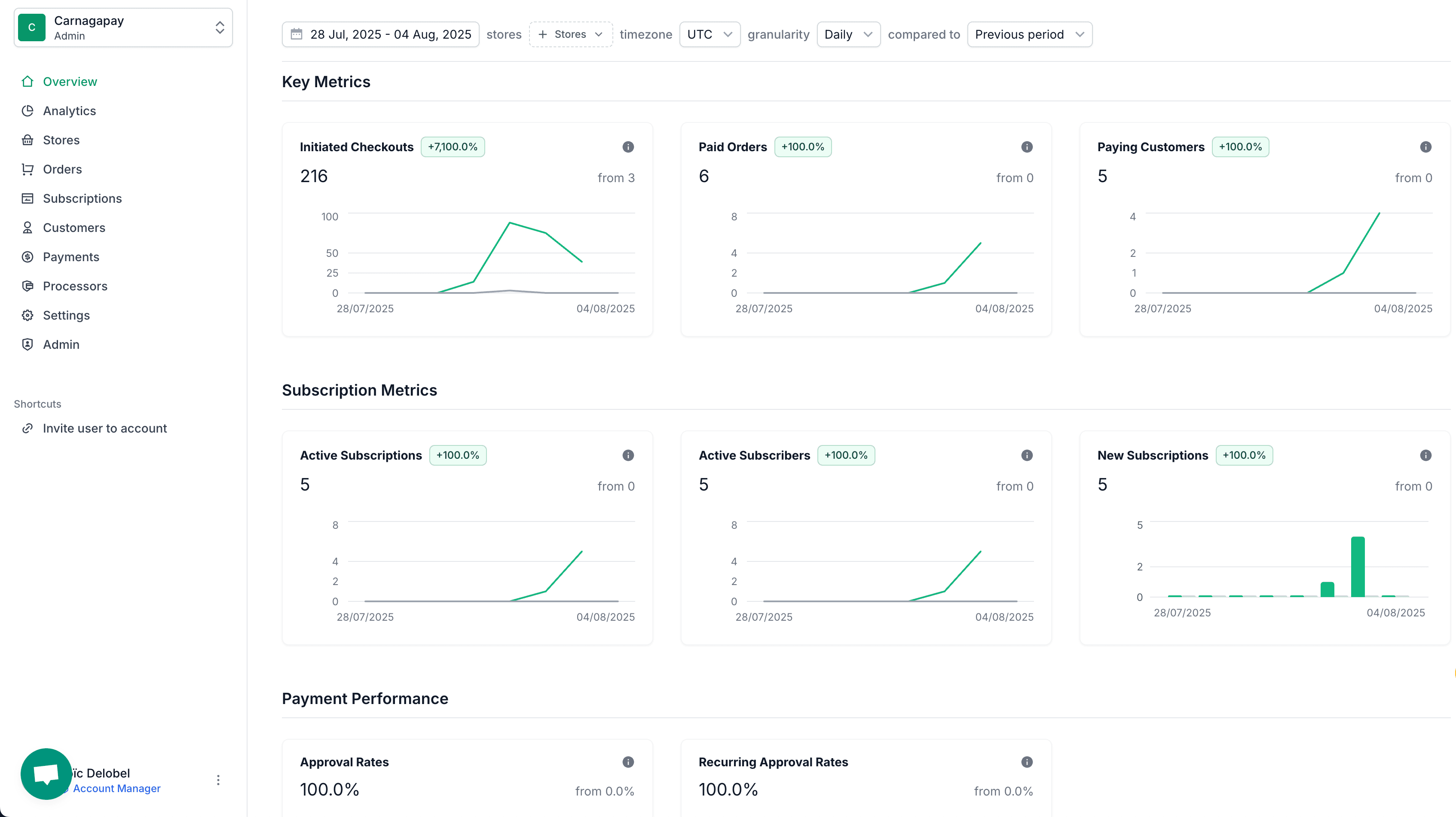
Purchase events sent from the checkout that takes the payment
- Server-side events to Meta, Google and TikTok, sent from the checkout that takes the payment
- One-click upsells and subscriptions in the same checkout
- One-page checkout with Apple Pay and Google Pay
It runs standalone, on Shopify, on WooCommerce or headless. Plans are on the pricing page.
Frequently asked questions
Why is Meta not tracking purchases on my supplement store?
Does server-side tracking fix Meta's health and wellness restrictions?
Do I need both the pixel and the Conversions API?
What data should a supplement brand send to Meta?
Sources
Checked October 26, 2026- Meta for Developers, Deduplicate Pixel and server events, read October 26, 2026
- PixelFlow, What are Meta's health and wellness restrictions and how do they affect tracking, read October 26, 2026 (vendor documentation)
- Stape, on Meta's health and wellness data restrictions, March 3, 2026 (secondary source)
- Meta Advertising Standards, Health and wellness, change log entry July 22, 2026
Tagada
Send every purchase, from the place it is paid
Funnels, one-click upsells, subscription billing and payment routing, on one customer record.
- 01Create your free account
- 02Connect your store or build a checkout
- 03Launch funnels, upsells and subscriptions