
The Supplement Brand Tech Stack: Checkout, Subscriptions, Email and Tracking
The 8 layers of a supplement brand's tech stack: store, checkout, payments, subscriptions, email, reviews, tracking and support, by stage.

Article summary
TL;DR
A supplement brand's tech stack has eight layers: store, checkout and offers, payments, subscriptions, email and SMS, reviews, tracking and support. Most tools are easy to swap later. Three decisions are not: who holds your subscribers' cards, which processors you can use, and how purchase data reaches your ad platforms. Get those three right first.
- Shopify Subscriptions works with a limited list of gateways; Stripe is "available only to select merchants" there.
- Shopify allows one card processor at a time, with a 0.2% to 2% fee if it is not Shopify Payments.
- Saved cards belong to the processor that collected them. Merchants who lost a processor describe tokens they could not move.
- Meta recommends its Conversions API alongside the pixel, deduplicated with a shared event ID.
- Visa requires a reminder at least 7 days before a trial ends, so your email or SMS tool is part of compliance.
 ChatGPT
 Claude
 Perplexity
 Grok
On this page
This guide is part of our playbook on the best ecommerce platform for supplement brands.
The 8 layers of a supplement stack
Each layer has one job. The third column is what makes it different for supplements.
| Layer | Its job | What supplements need | Examples of tools |
|---|---|---|---|
| 1. Store | Catalog, product pages, fulfillment | Supplement Facts, testing proof, FDA statement on pages; a plan for Amazon or your own store | Shopify, WooCommerce, BigCommerce |
| 2. Checkout and offers | Turn visits into orders | Bundles, order bumps, one-click upsells | Native checkout, funnel and checkout tools |
| 3. Payments | Take the money | A processor that accepts supplements, plus a backup | Stripe, Adyen, high-risk processors |
| 4. Subscriptions | Recurring orders and renewals | Retries, card updates, renewals that survive a processor change | Recharge, Skio, Shopify Subscriptions |
| 5. Email and SMS | Reorders, abandoned carts, trial reminders | Reminders timed on supply length; Visa trial reminders6Visa Core Rules and Visa Product and Service Rules, edition of April 18, 2026, tables 5-20 and 5-21 | Klaviyo, Postscript, Omnisend |
| 6. Reviews and UGC | Proof for new buyers | Reviews without disease claims | Review apps |
| 7. Tracking and attribution | Tell ads what sold | Server-side events, given health data limits5Stape, on Meta's health and wellness data restrictions, March 3, 2026 (secondary source) | Server-side tracking, attribution tools |
| 8. Support | Answer customers, handle cancellations | Easy cancel, subscription changes | Helpdesk tools |
Fig. 1Eight layers, three that are hard to change
- 1. Store
- Catalog, product pages, fulfillment
- 2. Checkout and offers
- Bundles, order bumps, one-click upsells
- 3. Payments
- Which processors you can use
- 4. Subscriptions
- Who holds your subscribers' cards
- 5. Email and SMS
- Reorders, abandoned carts, trial reminders
- 6. Reviews and UGC
- Proof for new buyers
- 7. Tracking and attribution
- How purchase data reaches your ad platforms
- 8. Support
- Easy cancel, subscription changes
Most tools swap in an afternoon. Layers 3, 4 and 7 take months.
The 3 decisions that are hard to undo
You can change your review app in an afternoon. These three take months, or cost you customers.
- Who holds your subscribers' cardsTokens stay with the processor that collected them.Can I take my subscribers' payment details with me?
- Which processors you can useShopify allows one card processor at a time.Can orders and renewals fail over to a second processor?
- How purchase data reaches your adsBrowser pixels miss events; Meta can restrict purchase events.Does the layer that takes payment send purchases server-side?
1. Who holds your subscribers' cards
- Card details are stored as tokens by the processor that collected them.
- If that processor closes your account and the tokens cannot be moved, subscribers must enter their card again. Merchants in Shopify's community describe exactly this7Shopify Community, merchant threads on Shopify Payments and supplements.
- Ask before you choose: can I take my subscribers' payment details with me if I change processor?
More in switching payment processor without losing cards.
2. Which processors you can use
- Shopify allows one card processor at a time2Shopify Help Center, Configuring third-party payment providers, read October 26, 2026, and adds 0.2% to 2% per order for a third-party processor3Shopify pricing, third-party payment provider fees, read October 26, 2026.
- Shopify Subscriptions supports only some gateways1Shopify Help Center, Shopify Subscriptions considerations, read October 9, 2026.
- Ask before you choose: can orders and renewals fail over to a second processor?
See payment routing and backup processors for supplement brands.
3. How purchase data reaches your ad platforms
- Meta can restrict purchase events for health and wellness advertisers, as reported by Stape5Stape, on Meta's health and wellness data restrictions, March 3, 2026 (secondary source).
- Browser pixels miss events; Meta recommends the Conversions API alongside the pixel4Meta for Developers, Deduplicate Pixel and server events, read October 26, 2026.
- Ask before you choose: does the layer that takes payment send purchases server-side, with a shared event ID?
See server-side tracking for supplement brands.
How the layers connect
Data should flow one way, from the place where the order is paid.
Fig. 2One source for every order
 StoreOrders for fulfillment
 Ad platformsPurchase events, server-side, deduplicated
 Email and SMSRenewals, failed payments, trial ends
- SupportOrder and subscription history
- AttributionOrders and costs
Each destination receives it once, from the checkout.
| From | To | What flows | Watch for |
|---|---|---|---|
| Checkout | Store | Orders for fulfillment | Orders created twice |
| Checkout | Ad platforms | Purchase events, server-side | Counted twice without deduplication4Meta for Developers, Deduplicate Pixel and server events, read October 26, 2026 |
| Subscriptions | Email and SMS | Renewals, failed payments, trial ends | Reminder sent too late for Visa rules6Visa Core Rules and Visa Product and Service Rules, edition of April 18, 2026, tables 5-20 and 5-21 |
| Store and subscriptions | Support | Order and subscription history | Agents unable to pause or cancel |
| Everything | Attribution | Orders and costs | Two tools reporting different revenue |
Watch out
Two systems that can both bill the same subscriber cause double charges, and double charges become disputes. Give renewals to one system only.
Tagada follows Visa and Mastercard rules and the laws that apply to payments.
The stack by stage
Add tools when the stage needs them, not before.
| Stage | Add | Skip for now |
|---|---|---|
| Launch | Store, a checkout with bumps, one processor that accepts supplements, email for abandoned carts, server-side purchase tracking | Loyalty programs, complex attribution |
| Repeat customers | Subscriptions with retries, reorder flows, SMS, reviews | Separate tools for every channel |
| Scale | A backup processor and routing, upsells and A/B tests, attribution, helpdesk with subscription actions | Anything that duplicates billing or tracking |
Stage details: how to start and scale a supplement brand.
Warning signs your stack is costing you
- Reports disagree: Shopify, Meta and your attribution tool show three revenue numbers.
- Renewals fail quietly: no one sees failed payments until churn jumps. See failed payment recovery.
- Every change needs a developer: a new upsell or bundle takes a week.
- App fees add up: subscription, upsell, reviews and tracking apps each charge monthly, plus Shopify's third-party processor fee3Shopify pricing, third-party payment provider fees, read October 26, 2026.
- One account can stop everything: a single processor holds all sales and all renewals.
Reports disagree
Three tools, three revenue numbers.
Renewals fail quietly
No one sees failed payments until churn jumps.
Every change needs a developer
A new upsell or bundle takes a week.
App fees add up
Each app charges monthly, plus Shopify's third-party processor fee.
One account can stop everything
A single processor holds all sales and all renewals.
How Tagada helps
Checkout, payments, subscriptions and tracking in one layer
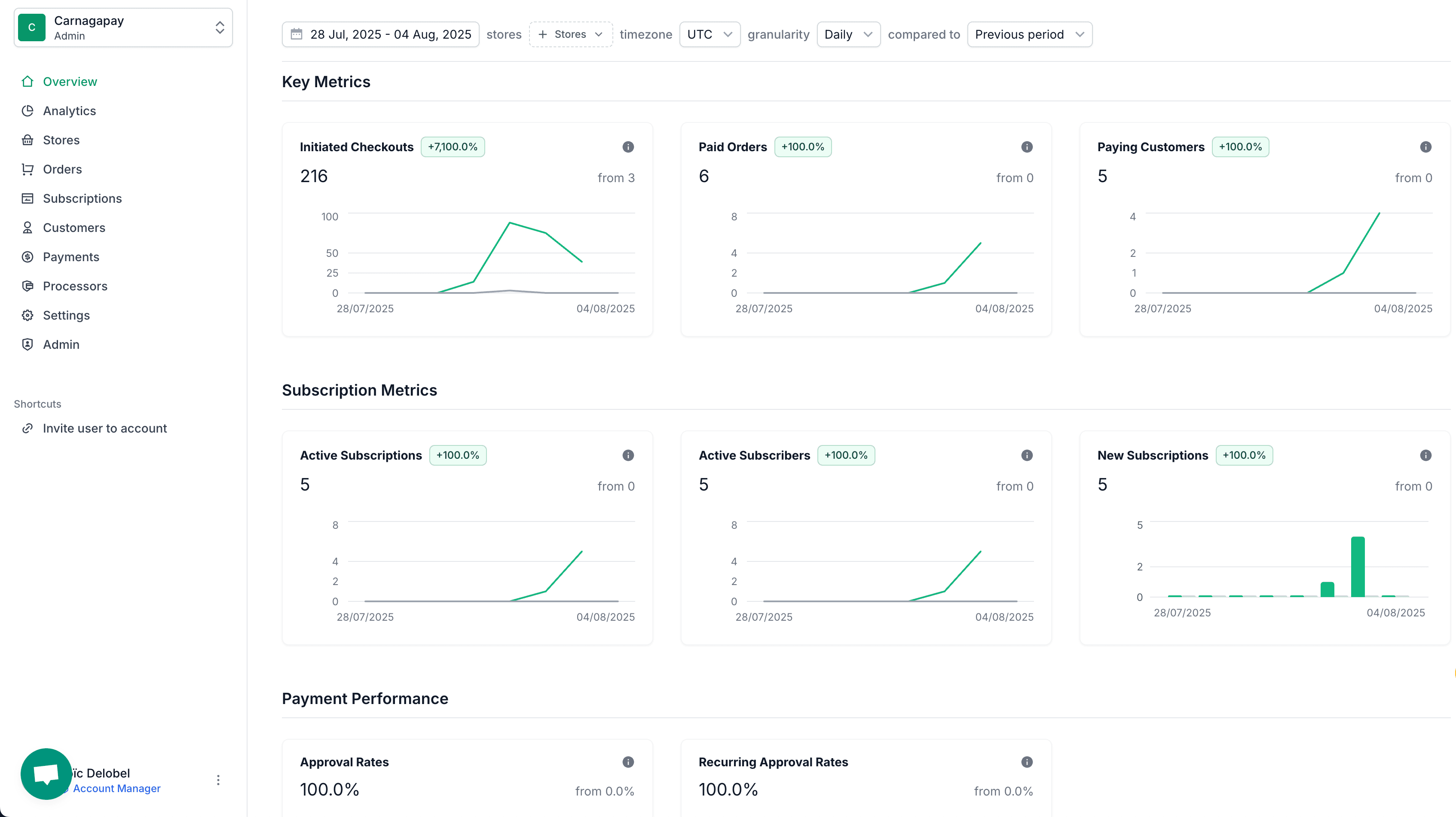
Tagada covers layers 2, 3, 4 and 7 in one system, standalone or on top of Shopify, WooCommerce or headless.
| Layer | What Tagada does |
|---|---|
| Checkout and offers | One-page checkout, order bumps, one-click upsells, A/B tests, Apple Pay and Google Pay |
| Payments | Routing across Stripe, Adyen and TagadaPay with one logic, cascade on decline |
| Subscriptions | Trials, billing cycles, retries and automatic recovery |
| Tracking | Server-side events to Meta, Google and TikTok |
Plans are on the pricing page.
Frequently asked questions
What apps do supplement brands use?
Which subscription app is best for supplements?
Do I need both an email tool and an SMS tool?
How many apps does a supplement store need?
Sources
Checked October 27, 2026- Shopify Help Center, Shopify Subscriptions considerations, read October 9, 2026
- Shopify Help Center, Configuring third-party payment providers, read October 26, 2026
- Shopify pricing, third-party payment provider fees, read October 26, 2026
- Meta for Developers, Deduplicate Pixel and server events, read October 26, 2026
- Stape, on Meta's health and wellness data restrictions, March 3, 2026 (secondary source)
- Visa Core Rules and Visa Product and Service Rules, edition of April 18, 2026, tables 5-20 and 5-21
- Shopify Community, merchant threads on Shopify Payments and supplements
Tagada
Get the three hard-to-undo layers right first
Funnels, one-click upsells, subscription billing and payment routing, on one customer record.
- 01Create your free account
- 02Connect your store or build a checkout
- 03Launch funnels, upsells and subscriptions