
Best Ecommerce Platform for Supplement Brands
How to choose an ecommerce platform for a supplement brand: payment rules, subscriptions, upsells, tracking and a side-by-side comparison.




Article summary
TL;DR
There is no single best platform for a supplement brand. The right one is the platform that keeps you selling when a payment processor changes its mind. Check five things in this order: which processors you can use, built-in subscriptions, post-purchase upsells, a backup processor, and server-side tracking. Features come after payments.
- Stripe bans nutraceuticals that are "not safe or make harmful claims", and Shopify Payments applies its processors' lists, not its own.
- On Shopify, using your own processor costs 2% (Basic) down to 0.2% (Plus) per order on top of the processor's fee, as of October 2026.
- BigCommerce has no built-in recurring billing: you need an app or a gateway that stores cards.
- Card networks have strict trial rules: Visa requires a reminder at least 7 days before a trial ends.
- The costliest mistake is not the platform fee. It is subscribers stuck with a processor that closed your account.
 ChatGPT
 Claude
 Perplexity
 Grok
On this page
This page is the hub of our supplement playbook. Each section links to a detailed guide, and the payment side lives in nutraceutical payment processing.
Why supplement brands choose a platform differently
A clothing brand picks a platform for its themes and apps. A supplement brand has three risks that other stores rarely face.
| Risk | What happens | Where it hits |
|---|---|---|
| Processor rules | Your processor reviews supplements more closely and can pause or close the account | Sales stop overnight |
| Locked subscribers | Card details stay with the processor that collected them | Recurring revenue stops with the account |
| Ad tracking limits | Meta can restrict purchase events for health and wellness advertisers9Stape, on Meta's health and wellness data restrictions, March 3, 2026 (secondary source) | Campaigns lose the data they optimize on |
None of these show up in a feature checklist. All three decide whether the brand is still running in a year.
Watch out
In Shopify's own community, merchants describe Shopify Payments stopping on supplement stores, with subscriber card tokens that could not be moved to a new processor10Shopify Community, merchant threads on Shopify Payments and supplements. Plan the exit before you need it.
The 5 criteria that matter, in order
Rank platforms on these five points before you look at themes, page builders or app counts.
| # | Criterion | Why it matters for supplements | Question to ask the platform |
|---|---|---|---|
| 1 | Processor choice | You need a processor that accepts supplements, and a platform that lets you plug it in | Can I use any processor, and at what extra fee? |
| 2 | Built-in subscriptions | Refills drive lifetime value; app-based billing adds a fee and a failure point | Are subscriptions native, and which gateways do they support? |
| 3 | Post-purchase upsells and order bumps | Bundles and multi-bottle offers raise order value, the main lever on ad costs | Can I add one-click upsells without an extra app? |
| 4 | Backup processor and routing | One closed account should not stop sales or renewals | Can orders and renewals fail over to a second processor? |
| 5 | Server-side tracking | Browser pixels miss events, and health advertisers face extra limits | Does the platform send purchases from the server to Meta, Google and TikTok? |
Fig. 1Five criteria, in the order to apply them
- 1. Processor choiceEntry filter: any processor, at what extra fee?
- 2. Built-in subscriptionsNative, and which gateways?
- 3. Upsells and order bumpsOne-click, without an extra app
- 4. Backup processorOrders and renewals fail over
- 5. Server-side trackingPurchases sent to Meta, Google and TikTok
Processor choice is the entry filter: fail it and nothing else matters.
Criteria 1 and 4 are about payment routing for supplement brands. Criteria 2 and 3 are covered in subscription billing and one-click upsells.
Shopify, WooCommerce, BigCommerce and Tagada compared
Every cell below comes from the platform's own pages, with the date we read them. Where a platform does not publish an answer, we say so.
| Shopify | WooCommerce | BigCommerce | Tagada | |
|---|---|---|---|---|
| Who sets the processor rules | Shopify Payments applies Stripe's and PayPal's lists2Shopify Payments Terms of Service (US), read October 9, 2026 | Your processor | Your processor | Your processors (Stripe, Adyen, TagadaPay) |
| Extra fee if you use your own processor | 2% Basic, 1% Grow, 0.6% Advanced, 0.2% Plus3Shopify pricing, third-party payment provider fees, read October 9, 2026 | None from WooCommerce | Not published on the page we read | See pricing |
| Subscriptions | Shopify Subscriptions, limited to some gateways; Stripe "available only to select merchants"4Shopify Help Center, Shopify Subscriptions considerations, read October 9, 2026 | Paid extension, $279 a year, 25+ gateways5WooCommerce, WooCommerce Subscriptions product page, read October 26, 2026 | App or gateway required6BigCommerce Support, Setting up Recurring Billing, last reviewed October 2, 2026 | Built in: trials, cycles, retries |
| One-click upsells, order bumps | Apps | Plugins | Apps | Built in, with A/B tests |
| Backup processor | One card processor active at a time11Shopify Help Center, Configuring third-party payment providers, read October 26, 2026 | Plugins | Not covered on the pages we read | Routing with cascade on decline |
| Server-side tracking | Apps | Plugins | Apps | Built in: Meta, Google, TikTok |
Shopify
Shopify Payments applies Stripe's and PayPal's lists. Your own processor costs an extra fee, and one card processor is active at a time.
WooCommerce
Your processor, no extra fee from WooCommerce. Subscriptions, upsells, backup and tracking come from paid extensions and plugins.
BigCommerce
Your processor. Subscriptions need an app or a gateway; upsells and tracking come from apps.
Tagada
Your processors, with routing and cascade on decline. Subscriptions, upsells and server-side tracking built in.
Fig. 2Shopify's extra fee when you use your own processor, by plan
On top of the processor's own fee.
Tagada also runs on top of Shopify or WooCommerce, or headless. You can keep your store and change only the checkout, subscriptions and payments layer. If you are weighing the two models, read Shopify or a sales funnel for your supplement brand.
Which setup fits your sales model
The best platform depends less on your size than on how you sell.
| How you sell | What you need most | Setup that fits |
|---|---|---|
| Catalog store, one-time orders | Easy merchandising, marketplaces | Shopify or WooCommerce, with a processor that accepts supplements |
| Refills on subscription | Native billing, failed payment recovery, a way to keep cards if you switch | A platform with built-in subscriptions and a card vault you control |
| Paid ads to a funnel | Fast checkout, upsells, server-side tracking | A funnel and checkout layer (sales funnels for supplement brands) |
| Marketplace first | Approval, lab reports, listings | Amazon or TikTok Shop, plus your own store (Amazon or your own store) |
Example
A brand selling a 30-day supply on subscription, through Meta ads, ranks criteria 2, 3 and 5 first. A brand selling 200 products on Amazon and Shopify ranks marketplaces and catalog tools first.
Subscriptions: the part you cannot move easily
Refills are where supplement brands make their margin. They are also where a platform choice is hardest to undo.
- Card tokens belong to the processor. If the processor closes, you may have to ask every subscriber for their card again.
- Trial rules are strict. Visa asks for express consent, the trial length shown on its own, a reminder at least 7 days before the trial ends, and online cancellation7Visa Core Rules and Visa Product and Service Rules, edition of April 18, 2026, tables 5-20 and 5-21.
- US law adds its own layer. ROSCA requires clear terms before the card is entered, express consent and a simple way to stop8Restore Online Shoppers' Confidence Act, 15 U.S.C. § 8403.
- Stripe bans hidden-price trials. Its list names "reduced price trials with unclear or hidden pricing"1Stripe, Prohibited and restricted businesses, read October 9, 2026.
How to set this up without losing subscribers is detailed in subscriptions and churn and failed payment recovery. Trial rules sit on the payment side, in trial offers for supplement brands.
Tagada follows Visa and Mastercard rules and the laws that apply to payments.
Tracking: why supplement ads need server-side events
Supplement brands live on paid social. That makes tracking a platform question, not only a marketing one.
- Browser pixels miss purchases blocked by browsers and ad blockers.
- Meta can restrict lower-funnel events such as purchases for health and wellness advertisers, as reported by Stape9Stape, on Meta's health and wellness data restrictions, March 3, 2026 (secondary source).
- Sending events from the server keeps your purchase data complete on the events you are allowed to use.
Setup details: server-side tracking for supplement brands and Meta and TikTok ads for supplement brands.
What to check before you commit
Run this list with any platform's sales team. A clear "yes" on each point saves a migration later.
- Processor: which processors can I connect, and what extra fee applies?
- Restricted products: whose prohibited list applies to my store?
- Subscriptions: native or app? Which gateways support renewals?
- Card portability: if I change processor, can my subscribers keep paying without re-entering their card?
- Upsells: can I add one-click upsells and order bumps without an app?
- Tracking: are purchase events sent server-side?
- Exit: can I export customers, orders and subscriptions in a usable format?
A clear yes on each point saves a migration later.
The supplement playbook
Every guide below applies these criteria to one part of the business.
Grow the business
- Supplement brand benchmarks: conversion rate, AOV, CAC and churn
- How to start and scale a supplement brand
- Why your supplement brand gets traffic but no sales
- LTV and CAC for a supplement brand
- The supplement brand tech stack
- Amazon or your own store
Sell more per order
- How to increase AOV for a supplement brand
- Bundles and quantity breaks
- Order bumps and one-click upsells
- The supplement sales funnel: offer and page structure
Checkout and pages
- Sales funnels, landing pages and checkout A/B testing
- Checkout optimization, express checkout and Shopify checkout
- Shopify or a sales funnel?
Keep customers
- Subscription billing, subscriptions and churn and failed payment recovery
- Memberships and VIP clubs
- Email flows, SMS flows and abandoned cart recovery
Ads and tracking
Payments
- Payment routing and backup processors
- Nutraceutical payment processing, does Stripe allow supplements? and can you sell supplements on Shopify?
Fig. 3The playbook around this page
- Grow the businessBenchmarks, scaling, LTV and CAC, tech stack
- Sell more per orderAOV, bundles, bumps, upsells, funnel
- Checkout and pagesFunnels, landing pages, A/B tests, checkout
- Keep customersSubscriptions, churn, dunning, email and SMS
- Ads and trackingMeta and TikTok, server-side, attribution
- PaymentsRouting, backup processors, Stripe, Shopify
Six groups of guides, one platform decision.
How Tagada helps
Checkout, subscriptions and routing in one layer, on any store
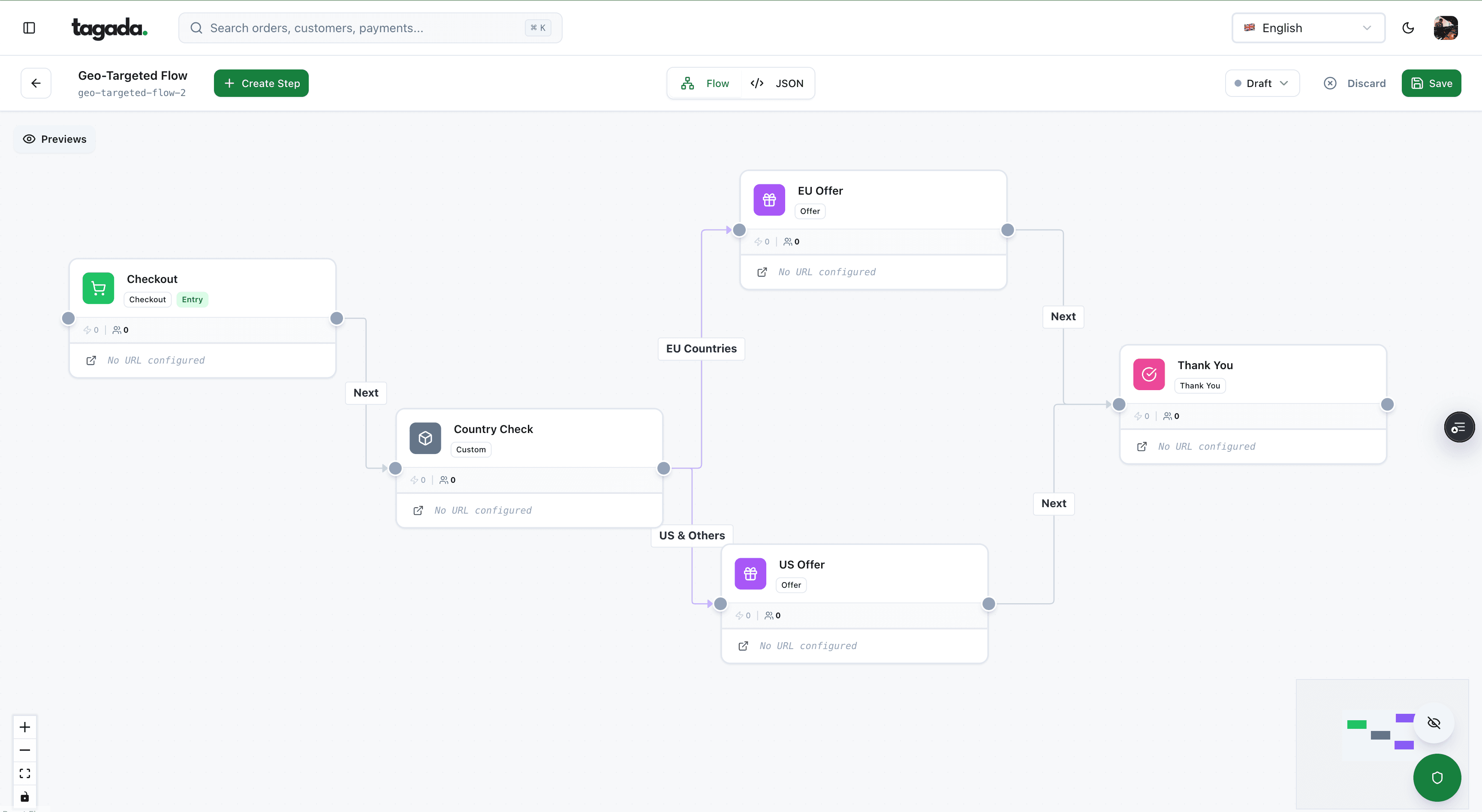
Tagada is an ecommerce OS: checkout, upsells, subscriptions, tracking and payments in one place. It runs standalone, on Shopify, on WooCommerce or headless.
| Need | What Tagada does |
|---|---|
| Processor choice | Routes payments across Stripe, Adyen and TagadaPay with one logic, and cascades on decline |
| Subscriptions | Trials, billing cycles, retries and automatic recovery |
| Order value | One-click upsells, order bumps and A/B tests, with Apple Pay and Google Pay |
| Tracking | Server-side events to Meta, Google and TikTok |
| Fraud | Native 3DS2, device intelligence and a rules engine |
TagadaPay lists supplements in the industries it reviews. Each file is still underwritten, with enhanced review on regulated verticals. Plans are on the pricing page.
Frequently asked questions
Can you sell supplements on Shopify?
Do supplement brands need a high-risk merchant account?
Is WooCommerce better than Shopify for supplements?
What happens to my subscribers if my processor closes my account?
Which ecommerce platforms have built-in subscriptions?
Sources
Checked October 26, 2026- Stripe, Prohibited and restricted businesses, read October 9, 2026
- Shopify Payments Terms of Service (US), read October 9, 2026
- Shopify pricing, third-party payment provider fees, read October 9, 2026
- Shopify Help Center, Shopify Subscriptions considerations, read October 9, 2026
- WooCommerce, WooCommerce Subscriptions product page, read October 26, 2026
- BigCommerce Support, Setting up Recurring Billing, last reviewed October 2, 2026
- Visa Core Rules and Visa Product and Service Rules, edition of April 18, 2026, tables 5-20 and 5-21
- Restore Online Shoppers' Confidence Act, 15 U.S.C. § 8403
- Stape, on Meta's health and wellness data restrictions, March 3, 2026 (secondary source)
- Shopify Community, merchant threads on Shopify Payments and supplements
- Shopify Help Center, Configuring third-party payment providers, read October 26, 2026
Tagada
Pick the platform that keeps selling when a processor says no
Funnels, one-click upsells, subscription billing and payment routing, on one customer record.
- 01Create your free account
- 02Connect your store or build a checkout
- 03Launch funnels, upsells and subscriptions