
LTV and CAC for a Supplement Brand: How to Calculate and Improve Them
How to calculate LTV and CAC for a supplement brand, the ratio and payback to aim for, a worked example, and the levers that improve both.

Article summary
TL;DR
LTV is the gross profit a customer brings over their life with you; CAC is everything you spend to win a new customer, divided by new customers. For supplements, measure them separately for one-time buyers and subscribers, because a subscriber can be worth 3 to 4 times more. Aim for LTV at least 3 times CAC and a payback under 6 months.
- Calculate LTV on gross profit, not revenue, and CAC on all acquisition costs, not ad spend alone.
- Eightx puts supplement subscriber lifetime at 12.5 to 20 months and the subscriber LTV multiple at 3 to 4 times a one-time buyer (June 2026).
- Blended supplement CAC runs $80 to $130, with a 3 to 6 month payback for healthy brands.
- The common target is LTV:CAC of 3:1, 4:1 at maturity: a rule of thumb, not a measured benchmark.
- Failed renewals, refunds and chargebacks quietly cut LTV. Count them.
 ChatGPT
 Claude
 Perplexity
 Grok
On this page
This guide is part of our playbook on the best ecommerce platform for supplement brands. For the industry numbers behind it, see supplement brand benchmarks.
The formulas
Use these five, the same way every month.
| Metric | Formula | Notes |
|---|---|---|
| LTV, one-time buyers | AOV × orders per customer × gross margin | Use orders over 12 or 24 months, from your cohorts |
| LTV, subscribers | Monthly revenue per subscriber × gross margin ÷ monthly churn | 1 ÷ churn is the average lifetime in months |
| CAC | (Ad spend + agency, creative and tools for acquisition) ÷ new customers | New customers only, not returning ones |
| Payback (months) | CAC ÷ gross profit per customer per month | Shorter payback means less cash tied up |
| LTV:CAC | LTV ÷ CAC | Read it with payback, never alone |
LTV, one-time buyers
AOV × orders per customer × gross margin. Needs: orders over 12 or 24 months, from your cohorts.
LTV, subscribers
Monthly revenue per subscriber × gross margin ÷ monthly churn. Needs: churn by month.
CAC
Ad spend plus agency, creative and tools, ÷ new customers. Needs: new customers only.
Payback
CAC ÷ gross profit per customer per month. Needs: monthly gross profit.
LTV:CAC
LTV ÷ CAC. Needs: both above, read with payback.
Watch out
"gross margin" here means after product cost, shipping, payment fees and discounts. Using revenue instead of gross profit can make LTV look 2 or 3 times bigger than it is.
Worked example: one-time buyer vs. subscriber
Illustrative figures. A brand sells a 30-day supply at $45, with a 55% gross margin after product, shipping, payment fees and discounts.
| One-time buyer | Subscriber | |
|---|---|---|
| Orders | 1.4 on average | Monthly renewal |
| Monthly churn | n/a | 6% |
| Average lifetime | n/a | about 17 months (1 ÷ 0.06) |
| Gross profit per order | $24.75 | $24.75 |
| LTV (gross profit) | about $35 | about $412 |
| CAC ceiling at 3:1 | about $12 | about $137 |
Fig. 1Same product, same price, two customers
One-time buyer
- First order$45, 55% gross margin
- thenRepeat orders1.4 orders on average
LTV about $35, CAC ceiling about $12 at 3:1
Subscriber
- First order$45, 55% gross margin
- renewsMonthly renewal6% churn, about 17 monthsApproved
LTV about $412, CAC ceiling about $137 at 3:1
Same $45 order, a very different ceiling on CAC.
The same CAC that loses money on a one-time buyer can pay back several times on a subscriber. That is why supplement brands push the first order toward a subscription or a multi-month bundle.
Eightx runs a similar example at 15.6 months and lands on a subscriber LTV of about $386 and a CAC ceiling of about $1291Eightx, Subscriber lifetime and LTV multiple by category, June 29, 2026.
Supplement benchmarks, with their sources
| Metric | Benchmark | Source |
|---|---|---|
| Subscriber monthly churn | 5 to 8% | Eightx, June 20261Eightx, Subscriber lifetime and LTV multiple by category, June 29, 2026 |
| Subscriber lifetime | 12.5 to 20 months | Eightx, derived as 1 ÷ churn1Eightx, Subscriber lifetime and LTV multiple by category, June 29, 2026 |
| Subscriber LTV vs. one-time buyer | 3 to 4 times | Eightx operator benchmarks1Eightx, Subscriber lifetime and LTV multiple by category, June 29, 2026 |
| Blended CAC | $80 to $130 | Eightx, June 20262Eightx, Supplement CAC and payback benchmarks 2026, June 7, 2026 |
| Payback | 3 to 6 months blended, 1 to 3 on subscription | Eightx2Eightx, Supplement CAC and payback benchmarks 2026, June 7, 2026 |
| Repeat purchase | 37.67% within about 3 months | Decile, Q1 2024 cohort3Commerce Catalyst, Supplement benchmarks, citing Decile, Q1 2024 cohort (June 2024) |
12.5 to 20
Months of subscriber lifetime (Eightx, June 2026)
3 to 4x
Subscriber LTV vs. a one-time buyer (Eightx)
$80 to $130
Blended supplement CAC (Eightx, June 2026)
3 to 6
Months of payback, blended (Eightx)
These come mostly from one consultancy's client data; treat them as ranges. Your cohorts are the real benchmark.
Mistakes that inflate LTV or hide CAC
| Mistake | Effect | Fix |
|---|---|---|
| LTV on revenue | LTV 2 to 3 times too high | Use gross profit |
| Lifetime from best cohorts only | Overstates every customer | Weight by cohort size |
| Ignoring failed renewals | Subscribers counted who no longer pay | Track involuntary churn |
| Ignoring refunds and chargebacks | Revenue counted that came back | Subtract them; Stripe charges a dispute fee on top4Stripe Docs, Disputes and fees, read October 14, 2026 |
| CAC from ad spend only | CAC looks lower | Add creative, agency, tools |
| Counting returning buyers as new | CAC looks lower | New customers only |
| Trusting ad platform conversions | Meta may undercount health purchases5Stape, on Meta's health and wellness data restrictions, March 3, 2026 (secondary source) | Use store orders |
How to raise LTV
- Push the first order to a bundle or subscription. See how to increase AOV.
- Recover failed renewals with retries and card updates: failed payment recovery.
- Time reorder reminders on the supply length: email flows.
- Give subscribers pause, skip and swap instead of cancel: subscriptions and churn.
- Reward loyal buyers with member pricing or a VIP tier: memberships and VIP clubs.
- Add one-click upsells after the first order: one-click upsells.
- Keep renewals running if a processor stops: payment routing.
Each lever adds orders or keeps renewals running.
How to lower CAC
- Raise conversion before raising spend: traffic but no sales.
- Fix tracking so ad platforms optimize on real purchases: server-side tracking.
- Send ad traffic to a focused offer: the supplement sales funnel.
- Measure CAC by channel, and cut the channels that never pay back: ad attribution.
How Tagada helps
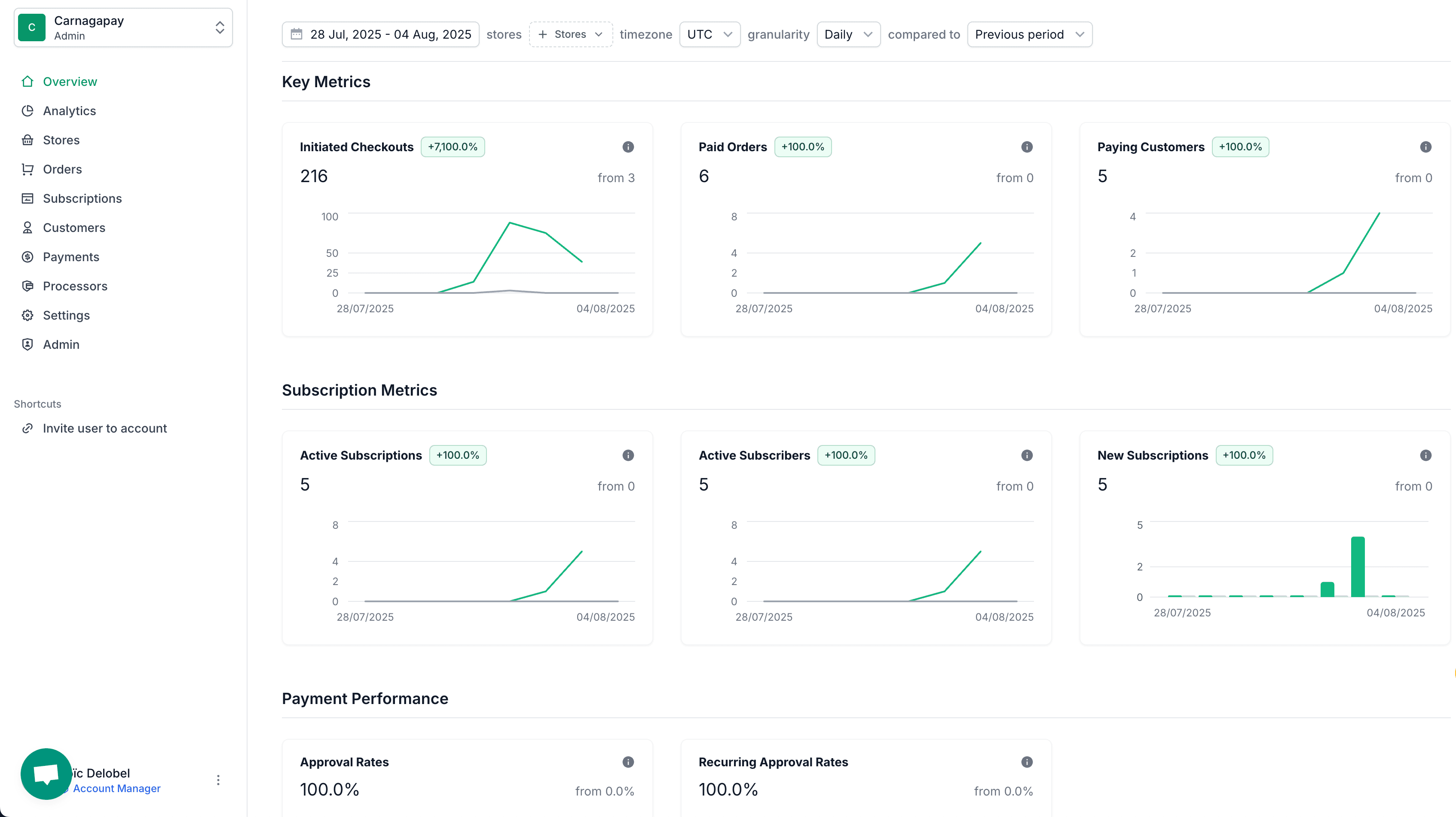
Raise LTV, protect renewals and measure CAC
| Side | What Tagada does |
|---|---|
| Raise LTV | Subscriptions with trials, cycles, retries and automatic recovery; one-click upsells and order bumps |
| Protect LTV | Routing across Stripe, Adyen and TagadaPay, with cascade on decline |
| Measure CAC | Server-side events to Meta, Google and TikTok |
| Lower CAC | A/B tests on offers and checkout; Apple Pay and Google Pay |
Plans are on the pricing page.
Frequently asked questions
How do you calculate LTV for a supplement brand?
What is a good LTV to CAC ratio for supplements?
What is the average LTV of a supplement customer?
How long should CAC payback be?
Sources
Checked October 26, 2026- Eightx, Subscriber lifetime and LTV multiple by category, June 29, 2026
- Eightx, Supplement CAC and payback benchmarks 2026, June 7, 2026
- Commerce Catalyst, Supplement benchmarks, citing Decile, Q1 2024 cohort (June 2024)
- Stripe Docs, Disputes and fees, read October 14, 2026
- Stape, on Meta's health and wellness data restrictions, March 3, 2026 (secondary source)
Tagada
Know what a subscriber is worth before you buy the next one
Funnels, one-click upsells, subscription billing and payment routing, on one customer record.
- 01Create your free account
- 02Connect your store or build a checkout
- 03Launch funnels, upsells and subscriptions