
Telehealth Merchant Account Compliance: The Rules to Follow
The rules a telehealth brand must follow to keep its merchant account: MCCs, card network programs, Stripe, DEA, subscription law and health data.



Article summary
TL;DR
A telehealth brand keeps its merchant account by following four sets of rules at once: the card networks' (merchant code, dispute thresholds, subscription rules), its processor's policy, federal law (prescribing, subscriptions, health data) and state law (clinician licensing, auto-renewal). Telemedicine itself is not a card network risk category; selling the medication is.
- Neither Visa's risk program nor Mastercard's registration list names telemedicine; both target pharmacies under MCC 5122 and 5912.
- Stripe lists "Telemedicine and telehealth services" as restricted, and says telemedicine businesses "don't need certification from LegitScript".
- As of November 2, 2026, the DEA's temporary telemedicine flexibilities run through December 31, 2026.
- Visa flags US merchants at 1.5% fraud plus disputes since April 1, 2026.
- On July 29, 2026, the FTC sued a telehealth company over subscription consent and cancellation; these are allegations, not a ruling.
 ChatGPT
 Claude
 Perplexity
 Grok
On this page
This guide is part of our hub on telehealth payment processing. The general guide, for any business: how to get and keep a high-risk merchant account. General information, not legal advice.
The rules, by who sets them
| Who | What they set | Where it bites |
|---|---|---|
| Visa and Mastercard | Merchant category code, registration, dispute thresholds, subscription rules | Monitoring programs, fines, termination |
| Your processor | Its restricted list, the documents it asks for, contract limits | Approval, reserves, closure |
| Federal law | Remote prescribing of controlled substances, subscription law, health data outside HIPAA | DEA and FTC enforcement |
| State law | Clinician licensing, corporate ownership, auto-renewal | Medical boards, attorneys general |
| Ad platforms | Certification and authorization to advertise | Ad account bans; see advertising |
Tagada follows Visa and Mastercard rules and the laws that apply to payments.
Card network rules: telemedicine isn't a named category
Your acquirer assigns a merchant category code (MCC). For a consultation or a care plan, the closest codes are medical ones; for the medication itself, it's the pharmacy code1Visa Merchant Data Standards Manual, October 2026.
| MCC | Visa's description1Visa Merchant Data Standards Manual, October 2026 | When it fits |
|---|---|---|
| 8011 | Doctors and Physicians (Not Elsewhere Classified) | Practice of medicine by licensed physicians |
| 8099 | Medical Services and Health Practitioners (Not Elsewhere Classified) | Medical services with no more specific code |
| 5912 | Drug Stores and Pharmacies: "sell prescription and proprietary drugs" | You sell and ship the medication |
The acquirer decides, not you. Visa's October 2026 manual doesn't contain the words "telemedicine" or "telehealth"1Visa Merchant Data Standards Manual, October 2026.
What changes when you sell the medication
| Network | Telemedicine (consult, care plan) | Pharmacy (MCC 5122, 5912) |
|---|---|---|
| Visa Integrity Risk Program | Not in any tier2Visa Integrity Risk Program, acquirer guide, April 6, 2023, section 1.1 and note 4 (copy hosted on visa.cl) | Tier 1: registration with Visa before processing2Visa Integrity Risk Program, acquirer guide, April 6, 2023, section 1.1 and note 4 (copy hosted on visa.cl) |
| Mastercard | Not a registration category3Mastercard Security Rules and Procedures, Merchant Edition, August 4, 2026, section 9.4 | "Non–face-to-face pharmaceutical Merchants" must be registered; the acquirer verifies legality at least every 12 months3Mastercard Security Rules and Procedures, Merchant Edition, August 4, 2026, section 9.4 |
Visa waives pharmacy registration for merchants accredited by NABP or certified under LegitScript's Healthcare Merchant Certification program2Visa Integrity Risk Program, acquirer guide, April 6, 2023, section 1.1 and note 4 (copy hosted on visa.cl). That waiver applies to MCC 5122 and 5912, not to telemedicine. Who sells the medication, and on which account: charging the consultation and the medication separately, and the pharmacy side in online pharmacy payment processing.
Dispute thresholds
| Program | Threshold |
|---|---|
| Visa VAMP (US merchants) | 1.5% (fraud plus disputes ÷ settled transactions), at least 1,500 cases a month, since April 1, 2026 (Visa)4Visa, Acquirer Monitoring Program fact sheet, 2025 |
| Mastercard ECM | 1.5% and at least 100 chargebacks a month (Chargeback Gurus)5Chargeback Gurus, Understanding the Mastercard Excessive Chargeback Program, October 21, 2025 (secondary source) |
1.5%
Visa VAMP threshold for US merchants since April 1, 2026
1,500
Visa cases a month before the ratio applies
100
Mastercard ECM chargebacks a month, with the 1.5% ratio
Keeping disputes under these lines: chargebacks for telehealth companies.
What your processor checks
Stripe lists "Telemedicine and telehealth services" in its restricted businesses6Stripe, Restricted and prohibited businesses, read November 2, 2026. Restricted means "additional due diligence", with "proof of relevant licences or more details about your business model", and an approval that "may be modified or revoked by Stripe at any time"6Stripe, Restricted and prohibited businesses, read November 2, 2026.
Licensing
"Telemedicine businesses applying for a Stripe account typically need to provide items such as license numbers and information on your processes"7Stripe Support, Prohibited and Restricted Business List FAQs, read November 2, 2026.
LegitScript
Not required by Stripe for telemedicine7Stripe Support, Prohibited and Restricted Business List FAQs, read November 2, 2026. Google Ads and Meta do require it for ads, which is a separate question: LegitScript for ads and payments.
Scope
Stripe defines telemedicine as patient communication "that involves diagnosis or treatment"; education or wellness resources "aren't categorized as telemedicine"7Stripe Support, Prohibited and Restricted Business List FAQs, read November 2, 2026.
Country
Stripe prohibits telemedicine in Mexico6Stripe, Restricted and prohibited businesses, read November 2, 2026.
Other underwriters ask for the same core file: entity documents, clinician licenses by state, your prescribing process, the checkout and its terms, refund policy and expected dispute rate. The full list: how to get a telehealth merchant account approved.
Clinician licensing and prescribing
The clinician must be licensed where the patient is. The Interstate Medical Licensure Compact speeds up state licenses for physicians; it covers 44 states, the District of Columbia and Guam8Interstate Medical Licensure Compact Commission, A faster pathway to physician licensure, read November 3, 2026. It is not a national license.
For checkout, that means you must know the patient's state and sell only where your clinicians are licensed. State by state: is telehealth legal in my state?.
Watch out
Under the Ryan Haight Act, a controlled substance can't be dispensed online without a valid prescription, which requires "at least 1 in-person medical evaluation"921 U.S.C. § 829(e). The DEA's temporary flexibilities waive that in-person visit. As of November 2, 2026, they run through December 31, 202610DEA and HHS, Fourth Temporary Extension of COVID-19 Telemedicine Flexibilities for Prescription of Controlled Medications, 90 FR 61301, December 31, 2025. No later rule had been published that day.
Fig. 1Remote prescribing of controlled substances, and its deadline
- Ryan Haight ActAt least 1 in-person medical evaluation
- DEA flexibilitiesIn-person visit waived, temporarily
- November 2, 2026No later rule published
- December 31, 2026Flexibilities run through this date
Check the date again before each new offer.
Subscriptions and cancellation
Most telehealth brands bill a care plan or membership on a cycle. That is negative option billing, with federal, state and card rules.
| Rule | Requirement |
|---|---|
| ROSCA | Material terms before billing details, express informed consent, "simple mechanisms" to stop charges (15 U.S.C. § 8403)11Restore Online Shoppers' Confidence Act, 15 U.S.C. § 8403 |
| Visa | Trial or introductory terms shown separately, a reminder at least 7 days before a trial ends, online cancellation for online sign-ups (Visa Rules)12Visa Core Rules and Visa Product and Service Rules, edition of April 18, 2026, table 5-21 |
| California | Express consent, acknowledgment, online cancellation for online sign-ups, annual reminder (Cal. Bus. & Prof. Code § 17602)13California Business and Professions Code § 17602 |
What the FTC has targeted in telehealth
| Date | Case | What the FTC says |
|---|---|---|
| July 29, 2026 | FTC, Utah and California v. Hims & Hers (pending) | The FTC alleges consumers were enrolled in recurring plans "shortly after receiving consumers' intake forms", and that cancellation was made difficult "by hiding the cancellation button"14FTC, press release on Hims & Hers, July 29, 2026 (allegations; case pending) |
| April 15, 2024 | FTC v. Cerebral (proposed order) | More than $7 million over data shared for advertising and cancellation promises not honored15FTC, press release on Cerebral, April 15, 2024 |
Checkout wording and billing steps: how to sell telehealth services on subscription. State rules on cancellation: cancellation compliance.
Health data and your payment stack
Keep clinical data out of your processor. Stripe's agreement says the user "must not provide Protected Health Information to Stripe" and is liable for any disclosure16Stripe Services Agreement, modified September 28, 2026, section 4.
- HIPAA section 1179 exempts payment processing activities, including card payments for health care1742 U.S.C. § 1320d-8 (HIPAA section 1179). A processor that does more than process payments can fall outside that exemption.
- No treatment in product names, descriptors or metadata sent to the processor.
- Outside HIPAA, the FTC's Health Breach Notification Rule covers vendors of personal health records not covered by HIPAA, since July 29, 202418FTC, Health Breach Notification Rule, 89 FR 47028, May 30, 2024.
- Ad pixels: both FTC cases above involve health data shared with advertising platforms14FTC, press release on Hims & Hers, July 29, 2026 (allegations; case pending)15FTC, press release on Cerebral, April 15, 2024. See server-side tracking for telehealth companies.
Details: do I need a HIPAA BAA with my payment processor?.
Monthly compliance check
- [ ] Visa and Mastercard dispute ratios, by offer, against 1.5%
- [ ] Top 5 refund and dispute reasons
- [ ] States served match the states where clinicians are licensed
- [ ] Checkout terms, consent box and confirmation email match the live offer
- [ ] Online cancellation path tested end to end
- [ ] No clinical data in descriptors, product names, metadata or ad pixels
- [ ] Prescribing rules re-checked against the DEA's current date
- [ ] New offers declared to the processor before launch
Fig. 2One month's check, filled in
- Visa and Mastercard ratios
- Under the 1.5% line
- Top 5 refund and dispute reasons
- Reviewed
- States served
- Match clinician licenses
- Checkout terms and confirmation email
- Match the live offer
- Online cancellation
- Tested end to end
- Clinical data
- Medication name found in a descriptor
- Prescribing rules
- Re-checked against the DEA date
- New offers
- Declared before launch
Illustrative record, not real data.
The ratios are read against the 1.5% line; your processor acts well before.
How Tagada helps
Payments built around the rules above
TagadaPay runs "enhanced review for regulated verticals"19TagadaPay, homepage, read November 2, 2026, with "native 3DS2, device intelligence, and rules engine: approve real customers, block the rest".
- Subscriptions with retries and automatic recovery
- Your vault, portable: "Switch processors without re-onboarding customers"
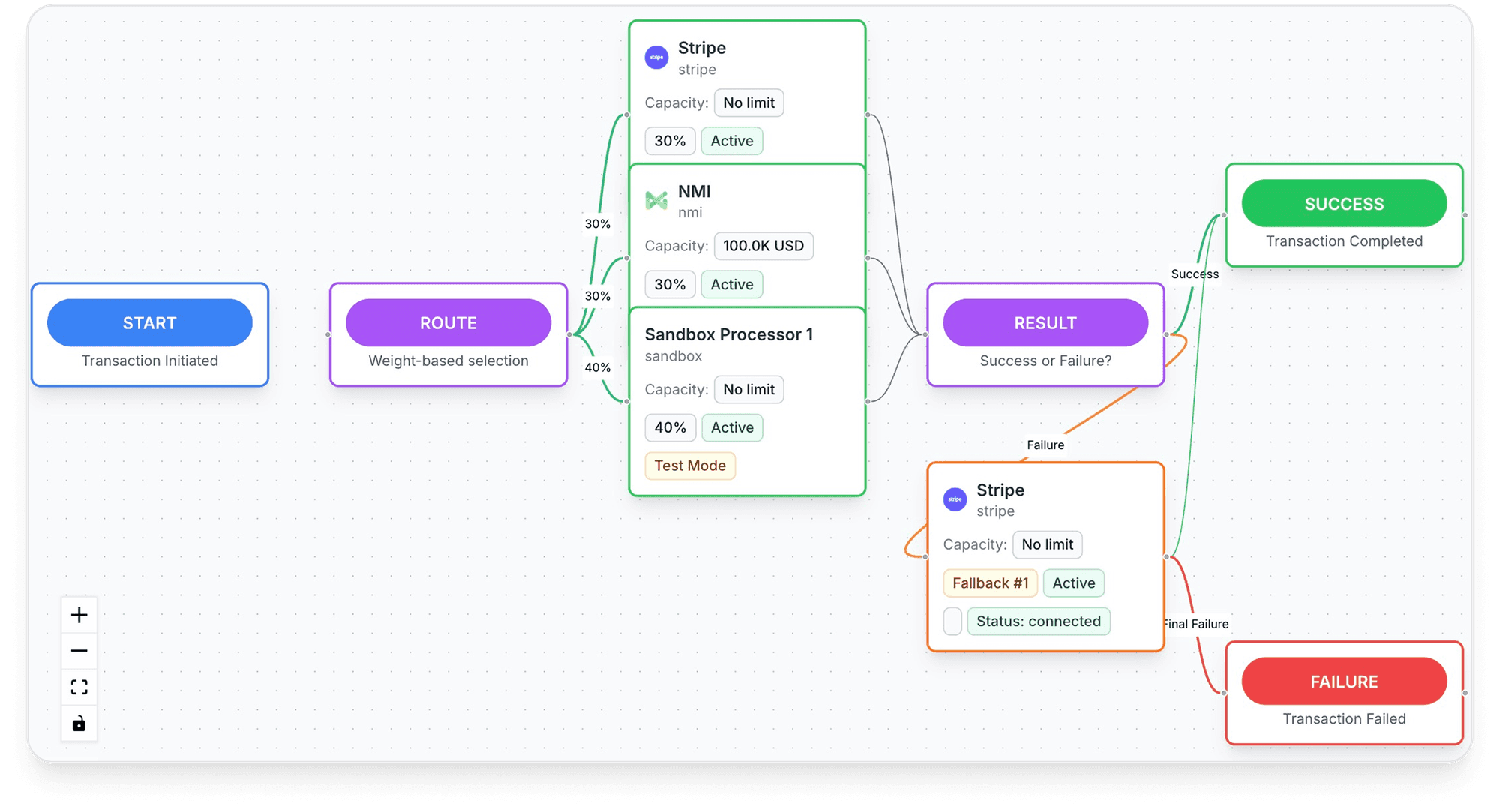
- Routing across TagadaPay and processors such as Stripe, NMI and Airwallex, with a cascade to another processor when one is down or times out
- Security: PCI DSS Level 1, SOC 2, ISO 27001, GDPR
Building the whole telehealth brand? Tagada Rx adds "US-licensed clinicians in the patient's state, e-prescribing, pharmacy routing", and "the card is only captured once a doctor approves". Per Tagada's docs, "Tagada never persists PHI", and the store runs on tgdcare.com, which is LegitScript certified. US patients only, by selection.
Frequently asked questions
What MCC does a telehealth company use?
Do Visa and Mastercard require LegitScript for telehealth?
Does Stripe accept telehealth companies?
Can a telehealth company prescribe controlled substances online?
Do I need a BAA with my payment processor?
Sources
Checked November 2, 2026- Visa Merchant Data Standards Manual, October 2026
- Visa Integrity Risk Program, acquirer guide, April 6, 2023, section 1.1 and note 4 (copy hosted on visa.cl)
- Mastercard Security Rules and Procedures, Merchant Edition, August 4, 2026, section 9.4
- Visa, Acquirer Monitoring Program fact sheet, 2025
- Chargeback Gurus, Understanding the Mastercard Excessive Chargeback Program, October 21, 2025 (secondary source)
- Stripe, Restricted and prohibited businesses, read November 2, 2026
- Stripe Support, Prohibited and Restricted Business List FAQs, read November 2, 2026
- Interstate Medical Licensure Compact Commission, A faster pathway to physician licensure, read November 3, 2026
- 21 U.S.C. § 829(e)
- DEA and HHS, Fourth Temporary Extension of COVID-19 Telemedicine Flexibilities for Prescription of Controlled Medications, 90 FR 61301, December 31, 2025
- Restore Online Shoppers' Confidence Act, 15 U.S.C. § 8403
- Visa Core Rules and Visa Product and Service Rules, edition of April 18, 2026, table 5-21
- California Business and Professions Code § 17602
- FTC, press release on Hims & Hers, July 29, 2026 (allegations; case pending)
- FTC, press release on Cerebral, April 15, 2024
- Stripe Services Agreement, modified September 28, 2026, section 4
- 42 U.S.C. § 1320d-8 (HIPAA section 1179)
- FTC, Health Breach Notification Rule, 89 FR 47028, May 30, 2024
- TagadaPay, homepage, read November 2, 2026
TagadaPay
A telehealth account that survives the next review
Tell us what you sell and how you sell it. Each application is underwritten, and approval is not guaranteed.
- 01Tell us what you sell and how
- 02Underwriting reviews your business
- 03Process through TagadaPay alongside your other processors