
International and Multi-Currency Payment Processing
Selling abroad: what foreign cards cost, why they're declined more, which currency to charge, SCA in Europe, local methods and the rules on local acquiring.

Article summary
TL;DR
Selling abroad by card costs more and gets declined more. Foreign cards carry higher interchange and network cross-border fees, and foreign issuers approve less readily. Charge in the shopper's currency, support the local payment methods that matter, expect 3D Secure in Europe, and get local acquiring only where you really have a local outlet.
- For an EEA merchant, Visa interchange on an online consumer credit card is 0.30% when the card is from the EEA and 1.50% when it's from outside.
- In one published 2026 schedule, a Visa cross-border sale adds 0.678% in the merchant's currency and 1.13% in another currency.
- An acquirer "must accept Transactions only from a Merchant Outlet within the Acquirer's Country of Domicile", unless Visa approves otherwise.
- In the euro area, cards made 48% of online payments in 2024 and e-payment solutions 29%.
- Visa's VAMP merchant threshold is 1.5% in the US, Canada, the EU and Asia Pacific since April 2026, and 2.2% in CEMEA.
 ChatGPT
 Claude
 Perplexity
 Grok
On this page
Opening a new country is a product, legal and payments project at once. This guide covers the payments side: cost, approvals, currency, methods and the rules. The definitions are in cross-border payments and local acquiring.
What changes when you sell abroad
What foreign cards cost
Fig. 1Visa interchange on an online consumer card, EEA merchant
Same card type, five times the rate when it comes from outside.
Network fees come on top. In TD Merchant Solutions' 2026 schedule, a Visa cross-border sale adds 0.678% when charged in Canadian dollars and 1.13% in another currency4TD Merchant Solutions, Fee Descriptions, July 2026. Other acquirers publish other schedules. More on these lines: assessment fee and high-risk processing fees.
Why foreign cards are declined more
Adyen explains it from the issuer's side: a foreign issuer "might not be familiar" with the acquirer, the request may contain data the bank doesn't recognize, and cross-border fraud has risen, so the bank "errs on the side of caution"5Adyen, Cross-border payments: go global, process local, February 3, 2020. Stripe adds that issuers weigh signals such as spending habits and card data that merchants don't see9Stripe Docs, Declines, read October 26, 2026.
Fig. 2Why a foreign issuer hesitates
Unknown acquirer
The issuer "might not be familiar" with your acquirer.
Unfamiliar data
The request may contain data the bank doesn't recognize.
Cross-border fraud
Fraud on foreign sales has risen, so the bank errs on the side of caution.
None of these is about your product.
What you can do:
- [ ] Send full data: billing address, email, IP, and 3D Secure where required.
- [ ] Use a clear descriptor the shopper recognizes.
- [ ] Measure your authorization rate by card country.
- [ ] Retry soft declines within the limits. Excess Visa retries add $0.05 cross-border on top of $0.10, as reported11Payway, Visa excessive reattempts rule and fees, read October 26, 2026 (secondary source).
Which currency to charge in
Charging in the shopper's currency avoids a surprise conversion by their bank. Two rules apply if you offer conversion at checkout:
| Rule | What it says |
|---|---|
| Visa, dynamic currency conversion | Optional, never preselected, with the cardholder's express agreement and disclosures on the receipt (section 5.8.9)1Visa Core Rules and Visa Product and Service Rules, edition of April 18, 2026: sections 1.5.1.1, 1.5.1.2, 1.7.2.1 and 5.8.9 |
| EU Regulation 2019/518 | The conversion margin is shown as a percentage over the ECB reference rate before payment10Regulation (EU) 2019/518 on currency conversion charges |
More in dynamic currency conversion.
Strong Customer Authentication in Europe
European cards fall under Strong Customer Authentication. Stripe triggers 3D Secure automatically when SCA requires it6Stripe Docs, Authenticate with 3D Secure (Strong Customer Authentication), read October 26, 2026. Plan for it in checkout: a 3DS step on the first payment, and exemptions or merchant-initiated rules for renewals. The rules in detail: payment authentication.
Local payment methods
Cards aren't the whole picture online. In the euro area in 2024, cards made 48% of online payments and e-payment solutions 29%, with wallets and apps such as PayPal and iDEAL7European Central Bank, SPACE 2024, section 2.4. Those solutions made 76% of online payments in the Netherlands and 46% in Germany7European Central Bank, SPACE 2024, section 2.4.
Country by country: local payment methods and payment methods for high-risk merchants.
Local acquiring, and its limits
Processing a foreign shopper's card through an acquirer in their country can make the sale domestic: lower interchange, no network cross-border fee, often higher approval5Adyen, Cross-border payments: go global, process local, February 3, 2020. But Visa sets a strict frame.
- An acquirer in another countryAllowed only with Visa's approval, or under EU passportingYour provider needs that approval, not you
- A real local outletPermanent local presence, local tax, local law on the contractThe sale can be domestic
- Changing the merchant country on a retryProhibited by Visa (section 1.7.2.1)Fix the cause, not the data
The acquirer "must not misrepresent or alter" a merchant outlet location (section 1.5.1.2)1Visa Core Rules and Visa Product and Service Rules, edition of April 18, 2026: sections 1.5.1.1, 1.5.1.2, 1.7.2.1 and 5.8.9. Local acquiring is a structure you qualify for, not a setting. Founders abroad selling to US customers: US merchant accounts for non-US owners.
Tagada follows Visa and Mastercard rules and the laws that apply to payments.
Monitoring thresholds by region
| Region | Visa VAMP merchant "Excessive" threshold8Visa, Visa Acquirer Monitoring Program fact sheet, 2025 |
|---|---|
| US, Canada, EU, Asia Pacific | 1.5% since April 1, 2026, with at least 1,500 fraud plus disputes a month |
| Latin America | 1.5% |
| CEMEA | 2.2%, with 150 events and 75,000 USD or more |
A new market with unfamiliar customers can push disputes up. Watch it by country in the first months.
Before you open a country
- Check the product rules with the national regulator: licences, labels, claims.
- Price in local currency and decide whether you'll offer conversion.
- Add the payment methods that weigh in that market.
- Plan 3D Secure for European cards.
- Ask your processor about cross-border fees, local acquiring options and settlement currency.
- Measure approvals and disputes by country from the first week.
Product rules first, payments second: a processor won't fix a product that can't be sold there.
By industry
| Industry | What changes | Guide |
|---|---|---|
| Supplements | Product licences in Canada, authorized health claims in the EU | International payments for supplement brands |
| Skincare | Cosmetic rules by market, claims | International payments for skincare brands |
How Tagada helps
Several processors for several markets
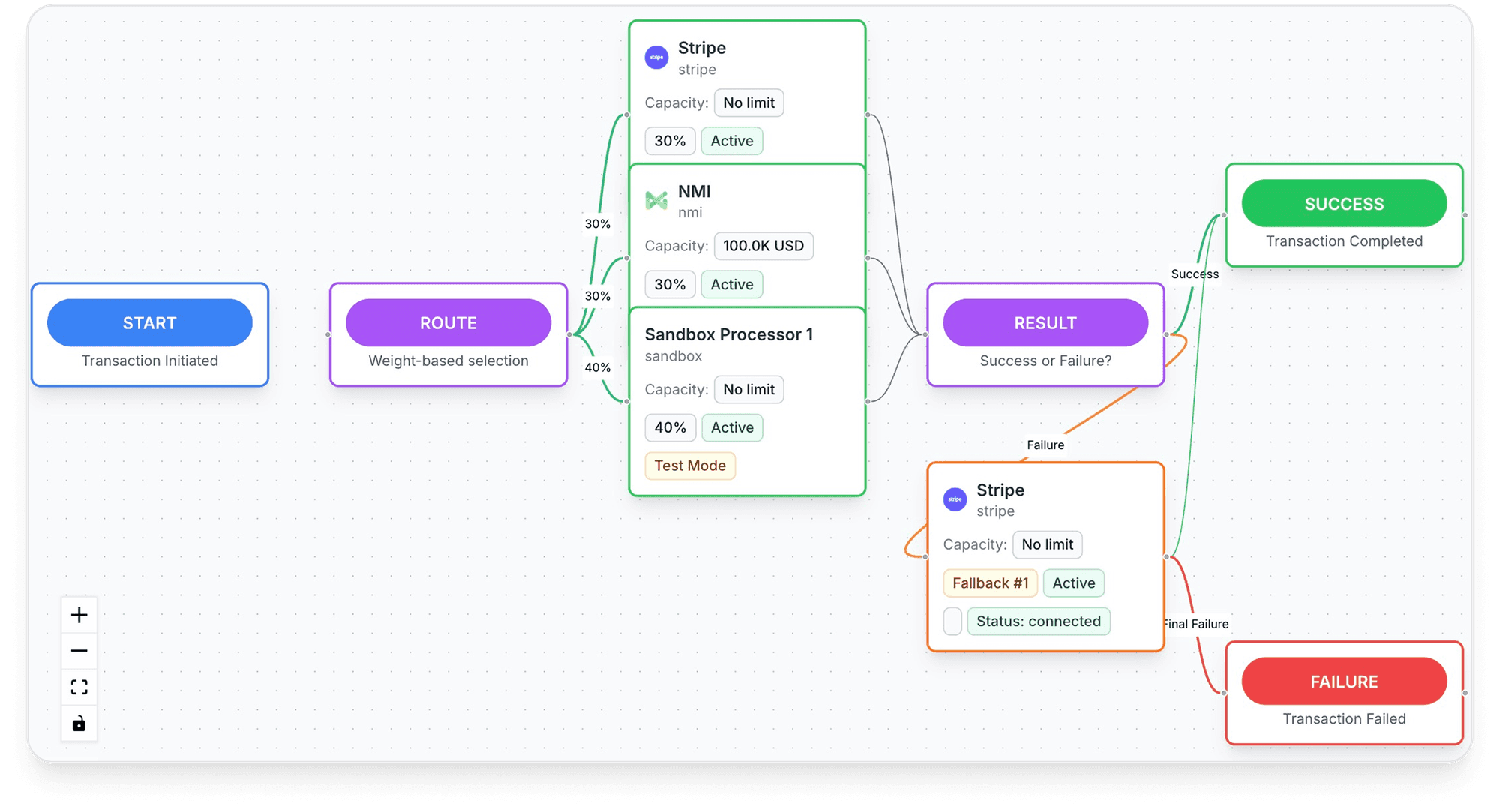
- Routing across Stripe, Adyen and TagadaPay with one logic, and cascade on decline.
- Native 3DS2, device intelligence and a rules engine for European cards and fraud.
- Checkout with Apple Pay and Google Pay.
Plans are on the pricing page.
Frequently asked questions
Why do international card payments cost more?
Why are foreign cards declined more often?
Should I charge customers in their own currency?
What is local acquiring?
Do I need a merchant account in each country?
Sources
Checked October 27, 2026- Visa Core Rules and Visa Product and Service Rules, edition of April 18, 2026: sections 1.5.1.1, 1.5.1.2, 1.7.2.1 and 5.8.9
- Visa Europe, Intra Europe EEA Multi-lateral Interchange Fees, April 2025
- Visa Europe, Inter Europe EEA Multi-lateral Interchange Fees, effective October 19, 2019
- TD Merchant Solutions, Fee Descriptions, July 2026
- Adyen, Cross-border payments: go global, process local, February 3, 2020
- Stripe Docs, Authenticate with 3D Secure (Strong Customer Authentication), read October 26, 2026
- European Central Bank, SPACE 2024, section 2.4
- Visa, Visa Acquirer Monitoring Program fact sheet, 2025
- Stripe Docs, Declines, read October 26, 2026
- Regulation (EU) 2019/518 on currency conversion charges
- Payway, Visa excessive reattempts rule and fees, read October 26, 2026 (secondary source)
TagadaPay
Sell abroad with more than one acquirer
Tell us what you sell and how you sell it. Each application is underwritten, and approval is not guaranteed.
- 01Tell us what you sell and how
- 02Underwriting reviews your business
- 03Process through TagadaPay alongside your other processors