
Merchant Account Approval: Underwriting, Documents and Timelines
What you need to get a merchant account approved: requirements, documents, website checks, how long approval takes, and what to do if you're declined.

Article summary
TL;DR
To get a merchant account approved, apply as a registered business with a business bank account, identify every owner of 25% or more, and send a complete file: ID, bank statements, processing history if you have one, and a live website with clear policies. Published review times run from 1 to 5 business days once the file is complete.
- Visa requires the acquirer to run a due diligence review before signing any merchant.
- US banks must identify each owner of 25% or more, plus one person who controls the company.
- Stripe asks you to allow 3 to 5 business days after you submit documents.
- A MATCH listing stays active for 5 years and "generally disqualifies" a merchant at Stripe.
- Approval can come with conditions such as a reserve. Since April 1, 2026, Visa's merchant threshold for fraud plus disputes is 1.5% in the US.
 ChatGPT
 Claude
 Perplexity
 Grok
On this page
The underwriter decides one thing: whether the bank can carry your risk, and on what terms. The process itself is explained in our page on merchant underwriting. This guide is about the applicant's side: what to prepare, how long it takes, and what to do when the answer is no.
What approval decides
When a cardholder disputes a payment and you can't pay it back, the acquiring bank pays. The US bank regulator puts it this way: the acquirer "is relying on the creditworthiness of the merchant"2OCC, Comptroller's Handbook: Merchant Processing, updated March 20, 2025.
So approval is never just yes or no. There are three outcomes:
Fig. 1Three ways a file comes back
Approved
You process on standard terms.
Approved with conditions
A reserve, a monthly volume cap, delayed payouts or a limited product list.
Declined
The provider won't carry the risk, or the file shows a blocker such as a MATCH listing.
The middle one is the most common for a new brand.
Visa makes the review mandatory. Before contracting, the acquirer "must conduct an adequate due diligence review, including a site visit to the business premises (if applicable) or suitable alternative"1Visa Core Rules and Visa Product and Service Rules, edition of April 18, 2026: sections 5.2.1.2 and 10.10.1.2, table 5-20.
Merchant account requirements: who can apply
Being a new business isn't a blocker in itself. It changes what you can show: bank statements and projections instead of processing history. See merchant accounts for startups. Owners outside the US: US merchant accounts for non-US owners. Large average orders: high-ticket payment processing.
The documents to prepare
Watch out
The names must match everywhere. Registration, EIN record, bank account, website and application should show the same legal name. A mismatch is the first reason files stall10CoreCommerce, Merchant account approval requirements, read October 27, 2026.
Website requirements
Underwriters open your site. Stripe states that "website content should match your business name and product description"4Stripe Docs, Required verification information, read October 14, 2026. The OCC lists what a card-accepting website should show2OCC, Comptroller's Handbook: Merchant Processing, updated March 20, 2025.
- [ ] Customer service phone number and email
- [ ] Delivery terms and shipping times
- [ ] Refund and return policy
- [ ] Privacy statement
- [ ] Company name and address matching your documents
- [ ] Real product pages with prices, not a "coming soon" page11Dodo Payments, Merchant underwriting explained, read October 27, 2026
- [ ] For subscriptions or trials: the amount, billing frequency and trial length shown at the moment of consent, separately from the general terms1Visa Core Rules and Visa Product and Service Rules, edition of April 18, 2026: sections 5.2.1.2 and 10.10.1.2, table 5-20
For subscriptions and free trials, the full card network rules are in our guide to negative option billing.
Fig. 2Your site, as an underwriter reads it
- 1. Contact
- Phone number and email in the footer
- 2. Delivery
- Shipping times on the product page
- 3. Refunds
- Return policy one click away
- 4. Privacy
- Privacy statement linked
- 5. Business details
- Address differs from the registration
- 6. Products
- Real product pages with prices
- 7. Subscription terms
- Amount, frequency and trial length at consent
Illustrative record, not real data.
One missing line is enough to send the file back.
How to apply, step by step
- Check your category first. Some products are restricted or prohibited at mainstream providers. Stripe's list is explained in Stripe's restricted and prohibited businesses list.
- Fix the site using the checklist above. Underwriters check it before they read your file.
- Assemble the file in one folder: registration, EIN, IDs, bank letter, statements, licenses.
- Fill in the application with real numbers. Monthly volume and average order value that don't fit your business model get flagged10CoreCommerce, Merchant account approval requirements, read October 27, 2026.
- Declare every product and offer, including subscriptions, trials and upsells. Approval covers what you declared.
- Answer follow-up questions fast. Underwriters often ask for one more document. Each day you wait adds a day to the review.
- Read the terms before you sign. Rate, reserve, volume cap, payout delay, approved products.
- Run a test transaction, then ramp volume gradually.
Approval covers what you declared. Declare everything, then sign only what you've read.
How long merchant account approval takes
No rule sets a deadline. These are the times providers publish for a complete file.
| Provider | Published time |
|---|---|
| Stripe | "Allow us 3-5 business days" after documents are submitted5Stripe Support, What is the verification status of my account?, read October 27, 2026 |
| Dodo Payments (merchant of record) | 1 to 3 business days, most within 72 hours11Dodo Payments, Merchant underwriting explained, read October 27, 2026 |
| CoreCommerce | 24 to 48 hours for a complete application10CoreCommerce, Merchant account approval requirements, read October 27, 2026 |
| PaymentCloud (high risk) | 24 hours to 5 business days; several weeks if documents are missing or an enhanced review applies9PaymentCloud, How to open a high-risk merchant account, read October 27, 2026 |
Fig. 3From application to first payment
- ApplicationForm, documents, site
- ReviewQuestions back to you
- Decision1 to 5 business days after a complete file
- TermsRate, reserve, limits, approved products
- LiveTest transaction, then volume ramp
The clock starts when the file is complete, not when you send it.
Two things slow files down: missing documents and a mismatch between the application and what the underwriter finds10CoreCommerce, Merchant account approval requirements, read October 27, 2026.
Watch out
An account opened "instantly" hasn't been fully reviewed yet. The review continues on your live payments, and that's when funds get frozen10CoreCommerce, Merchant account approval requirements, read October 27, 2026. What to do if that happens: merchant account closed and funds held.
Why applications get declined
| Reason | What the underwriter sees | What you can fix |
|---|---|---|
| Mismatched information | Legal name, address or owners differ across documents | Align every document before applying10CoreCommerce, Merchant account approval requirements, read October 27, 2026 |
| ProhibitedOr restricted category | The product isn't allowed under the provider's or the bank's policy | Apply to a provider that accepts your category |
| MATCH or VMSS listing | A previous acquirer terminated the business or its owner | Only the listing acquirer can remove it, see below6Stripe Docs, Terminated merchant files (MATCH and VMSS), read October 27, 2026 |
| Chargeback history | Past disputes above the provider's limits | Lower your ratio first: how to prevent chargebacks |
| Unclear site or offer | NoPolicies, hidden trial terms, "coming soon" pages | Fix the site, then reapply11Dodo Payments, Merchant underwriting explained, read October 27, 2026 |
| Unrealistic volume | Projected sales that don't fit the business | Declare real numbers and explain peaks10CoreCommerce, Merchant account approval requirements, read October 27, 2026 |
| Weak financial standing | Bank statements that can't absorb refunds | Reapply with more history, or accept a reserve10CoreCommerce, Merchant account approval requirements, read October 27, 2026 |
The OCC tells banks to reject a merchant with "a history of substantial charge-back volumes, weak financial condition, or failure to operate a valid business"2OCC, Comptroller's Handbook: Merchant Processing, updated March 20, 2025.
Approved with conditions
Conditions are a normal outcome for new or higher-risk businesses. The OCC lists delayed settlement and reserves as tools for internet merchants with higher fraud or chargeback risk2OCC, Comptroller's Handbook: Merchant Processing, updated March 20, 2025.
| Condition | How it works | Where to read more |
|---|---|---|
| Reserve | A share of your funds is held for a set period. Stripe sizes it on your industry, payment activity, dispute and refund rates, and financial stability12Stripe Support, Reserves FAQ, read October 14, 2026 | Rolling reserves |
| Delayed payouts | Funds reach your bank later than standard | Payout schedules |
| Volume cap | A monthly processing limit, raised as history builds | Ask the provider for the review date |
| Limited product list | Only the products you declared are approved | Ask before you add a product line |
Ask for every condition in writing, with the date or the criteria for review.
If you're declined
- Ask for the reason. Some providers give little detail, but the category is usually clear: documents, category, history or site.
- Fix the cause, not the file. If the site or the offer was the problem, change the site.
- Don't reapply with a different story. Underwriters compare files and share terminated merchant data.
- Choose a provider that serves your category. Risk appetite differs a lot between providers.
- Build history. Start with one-time purchases and clear terms, and keep disputes low.
A refusal names a cause. Fix that cause before any new application.
If you're on the MATCH list
Acquirers must screen every applicant against MATCH and VMSS. A listing stays active for 5 years, and only the acquirer that added it can request a removal or correction6Stripe Docs, Terminated merchant files (MATCH and VMSS), read October 27, 2026.
| MATCH code | Threshold in the same calendar month |
|---|---|
| 4, Excessive chargebacks | Chargebacks above 1% of Mastercard sales transactions and 5,000 USD or more6Stripe Docs, Terminated merchant files (MATCH and VMSS), read October 27, 2026 |
| 5, Excessive fraud | Fraud of 8% or more of sales amount, 10 or more fraud transactions, 5,000 USD or more6Stripe Docs, Terminated merchant files (MATCH and VMSS), read October 27, 2026 |
A MATCH listing can be removed in two cases only: it was added in error, or it was a code 12 (PCI) listing and you are now compliant6Stripe Docs, Terminated merchant files (MATCH and VMSS), read October 27, 2026. If you don't know which acquirer listed you, Stripe points to Mastercard's address: matchbusinessowner@mastercard.com6Stripe Docs, Terminated merchant files (MATCH and VMSS), read October 27, 2026.
Every reason code: the MATCH list. More on what happens after a termination: merchant account closed and funds held.
Approval isn't the end
Underwriting continues after approval. The OCC expects transactions to be "monitored rigorously" for fraud, chargebacks and suspicious activity2OCC, Comptroller's Handbook: Merchant Processing, updated March 20, 2025. Adyen verifies users again when they change their data13Adyen Docs, Verification process, read October 14, 2026.
| What's watched | Threshold |
|---|---|
| Visa VAMP, merchant "Excessive" (US, Canada, EU, Asia Pacific) | 1.5% fraud plus disputes since April 1, 2026, down from 2.2%, with at least 1,500 events a month8Visa, Visa Acquirer Monitoring Program fact sheet, 2025 |
| Mastercard ECM | 100 to 299 chargebacks and a ratio of 1.5% to 2.99%7Stripe Docs, Dispute monitoring programs, read October 14, 2026 |
| Mastercard HECM | 300 or more chargebacks and a ratio of 3% or more7Stripe Docs, Dispute monitoring programs, read October 14, 2026 |
Fig. 4Visa's line for fraud plus disputes
0.9%VAMP ratio
Most providers act well before it.
Tagada follows Visa and Mastercard rules and the laws that apply to payments.
Changes that usually trigger a new review: a new owner, a new product line, a new trial or subscription offer, or a sudden jump in volume. Tell your provider before, not after.
By industry
The rules above apply to every business. What changes by industry is what underwriters read on your site and labels.
| Industry | What changes | Guides |
|---|---|---|
| Supplements | Structure/function claims, FDA disclaimer, trial and auto-ship offers | Get a supplement merchant account approved · New supplement brands |
| Skincare | Cosmetic vs drug claims, before-and-after photos, subscriptions | Get a skincare merchant account approved · New skincare brands |
How Tagada helps
An underwritten account, with the refusals stated upfront
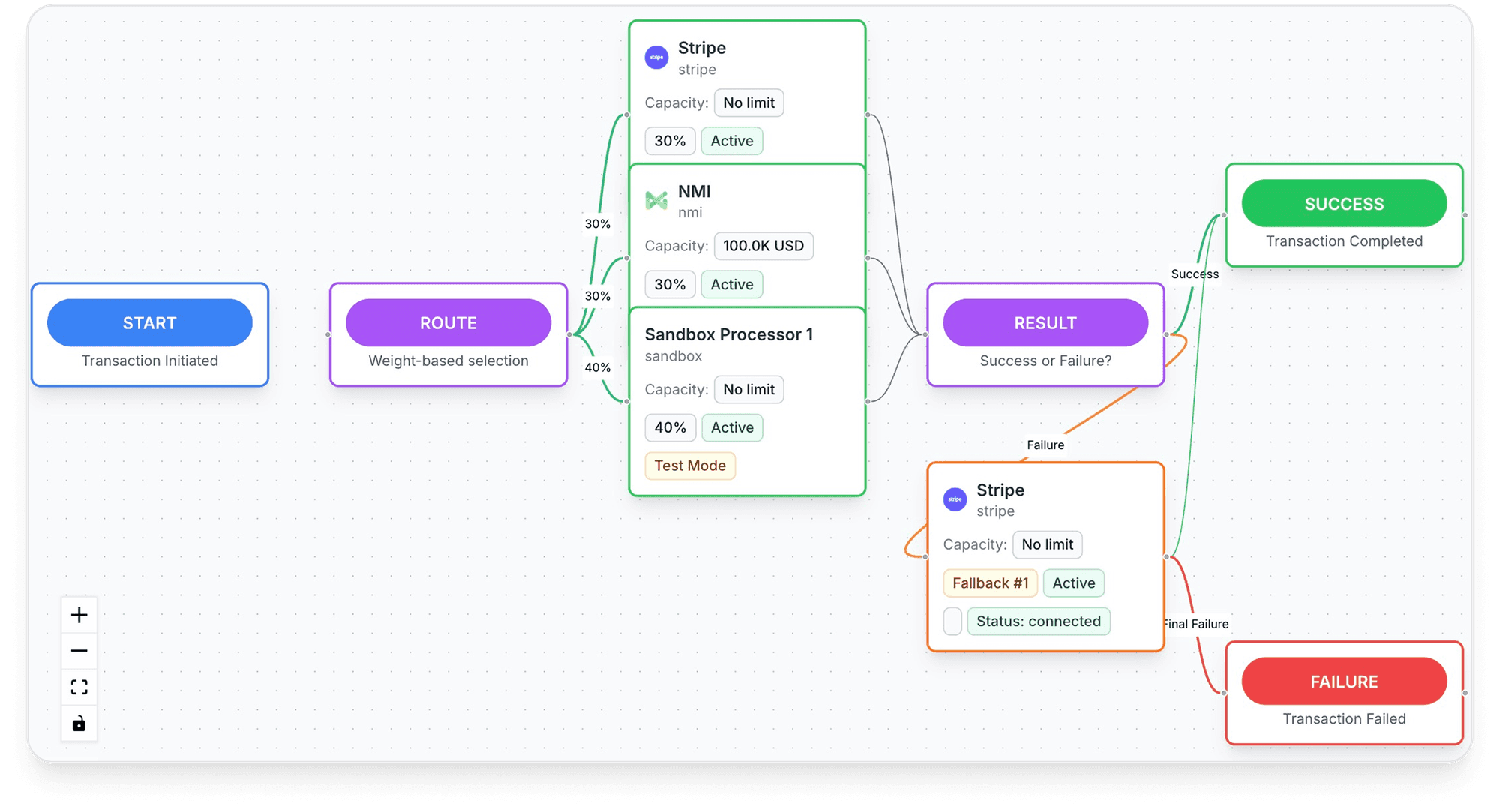
- One processor among several: Tagada routes payments across Stripe, Adyen and its own TagadaPay processor with one logic, and cascades on decline.
- Every file is reviewed: "Each file is still underwritten, with enhanced review on regulated verticals."
- Clear refusals: TagadaPay refuses falsified documents, counterfeits, chargeback circumvention, deceptive marketing around trials, subscriptions and cancellation, and MATCH-listed merchants.
- Subscriptions with trials, billing cycles, retries and automatic recovery.
Plans are on the pricing page.
Frequently asked questions
How long does it take to get approved for a merchant account?
What documents do I need for a merchant account?
Can I get a merchant account with bad credit?
Can I get a merchant account if I'm on the MATCH list?
Do I need a business bank account?
Sources
Checked October 27, 2026- Visa Core Rules and Visa Product and Service Rules, edition of April 18, 2026: sections 5.2.1.2 and 10.10.1.2, table 5-20
- OCC, Comptroller's Handbook: Merchant Processing, updated March 20, 2025
- 31 CFR 1010.230, Beneficial ownership requirements for legal entity customers
- Stripe Docs, Required verification information, read October 14, 2026
- Stripe Support, What is the verification status of my account?, read October 27, 2026
- Stripe Docs, Terminated merchant files (MATCH and VMSS), read October 27, 2026
- Stripe Docs, Dispute monitoring programs, read October 14, 2026
- Visa, Visa Acquirer Monitoring Program fact sheet, 2025
- PaymentCloud, How to open a high-risk merchant account, read October 27, 2026
- CoreCommerce, Merchant account approval requirements, read October 27, 2026
- Dodo Payments, Merchant underwriting explained, read October 27, 2026
- Stripe Support, Reserves FAQ, read October 14, 2026
- Adyen Docs, Verification process, read October 14, 2026
TagadaPay
One file, several processors behind it
Tell us what you sell and how you sell it. Each application is underwritten, and approval is not guaranteed.
- 01Tell us what you sell and how
- 02Underwriting reviews your business
- 03Process through TagadaPay alongside your other processors