
What "Pseudo-Pharmaceutical" Means for Supplement Brands on Stripe and Shopify
What Stripe and Shopify Payments mean by pseudo-pharmaceutical, why supplement brands get classified, the words that trigger it, and how to respond.

Article summary
TL;DR
It's an official category. Stripe prohibits "pseudo-pharmaceuticals or nutraceuticals that are not safe or make harmful claims", and Shopify Payments excludes products "that make health claims that are not verified by a local or national regulatory body". For a supplement brand, the trigger is almost always the claim, not the ingredient: drug-like promises on labels, pages, ads or reviews.
- Stripe lists "Nutraceuticals and pseudo-pharmaceuticals" as a heading of its prohibited businesses (updated September 22, 2026).
- Shopify Payments defines pseudo pharmaceuticals as products with health claims no regulator has verified.
- Shopify Payments also applies its processors' lists.
- Under FDA rules, a claim to diagnose, treat, cure or prevent a disease makes a supplement a drug.
- Merchants report single label words, such as "brightening", being flagged.
 ChatGPT
 Claude
 Perplexity
 Grok
On this page
This guide is part of our hub on nutraceutical payment processing.
The exact definitions
| Provider | Wording | Where |
|---|---|---|
| Stripe | "Pseudo-pharmaceuticals or nutraceuticals that are not safe or make harmful claims" | ProhibitedBusinesses, heading "Nutraceuticals and pseudo-pharmaceuticals"1Stripe, Restricted and prohibited businesses, updated September 22, 2026 |
| Shopify Payments | "Pharmaceuticals and other products that make health claims that are not verified by a local or national regulatory body" | Shopify Payments eligibility2Shopify Help Center, Shopify Payments eligibility, read October 26, 2026 |
| Shopify Payments (US) | ProhibitedCategories "are provided by each Payment Processor" | Terms of Service3Shopify Payments Terms of Service (US), read October 9, 2026 |
The two definitions point the same way: a product sold with health promises it can't back as an approved drug.
The test is the claim
| Same ingredient, supplement claim | Same ingredient, drug-like claim |
|---|---|
| "Supports restful sleep" | "Cures insomnia" |
| "Supports healthy joints" | "Reverses arthritis" |
| "Supports immune function" | "Prevents the flu" |
| "Supports healthy blood sugar levels already in the normal range" | "Lowers blood sugar", "for diabetics" |
The left column is a structure/function claim, allowed with the FDA disclaimer and a notice to the FDA421 CFR 101.93, Certain types of statements for dietary supplements. The right column is a disease claim: the product becomes a drug421 CFR 101.93, Certain types of statements for dietary supplements, and reviewers read it as an unverified health claim2Shopify Help Center, Shopify Payments eligibility, read October 26, 2026.
Watch out
"FDA-approved" on a supplement is false: the FDA "does not approve dietary supplements or their labeling"5FDA, Questions and Answers on Dietary Supplements, August 27, 2026. It is itself a red flag.
Where reviewers find claims
- Labels and product names, including words like "cure", "treat", "heal", "therapy".
- Product pages, FAQs and blog posts on the same domain.
- Ads and landing pages that send traffic to your checkout7FTC, Health Products Compliance Guidance, December 2022.
- Reviews you feature: a customer's "it cured my..." becomes your claim when you display it816 CFR 255.1(d), Consumer endorsements.
- Affiliate and influencer posts816 CFR 255.1(d), Consumer endorsements.
- URLs, tags and collection names, such as /anxiety-relief/.
Merchants report single label words, such as "brightening", being flagged.6UK Business Forums, Advice needed having Shopify/Stripe payment issues, read October 26, 2026 (merchant reports)
Fig. 1Six places a reviewer reads your claims
Labels and names
Words like "cure", "treat", "heal", "therapy".
Product pages
FAQs and blog posts on the same domain count too.
Ads and landing pages
Anything that sends traffic to your checkout.
Featured reviews
A customer's "it cured my..." becomes your claim.
Affiliates
Influencer and affiliate posts are read as yours.
URLs and tags
Collection names such as /anxiety-relief/.
A claim counts wherever it sends traffic to your checkout.
Audit your words
- [ ] List every claim on labels, pages, ads and emails.
- [ ] Mark each as structure/function or disease421 CFR 101.93, Certain types of statements for dietary supplements.
- [ ] Rewrite disease claims, or remove them.
- [ ] Add the FDA disclaimer next to each remaining claim421 CFR 101.93, Certain types of statements for dietary supplements.
- [ ] Check you hold evidence for each claim7FTC, Health Products Compliance Guidance, December 2022.
- [ ] Remove featured reviews that make disease claims.
- [ ] Rename URLs, tags and collections with condition names.
- [ ] Send affiliates the approved claims list.
Fig. 2One product page, before and after the audit
- Headline
- "Cures insomnia" becomes "Supports restful sleep"
- Badge
- "FDA-approved" removed
- Featured review
- "It cured my..." removed
- URL
- /anxiety-relief/ renamed without the condition
- Disclaimer
- FDA disclaimer next to the claim
Illustrative record.
Same formula. Only the words changed.
If you've been classified
- Ask which products and pages triggered the decision.
- Fix the claims everywhere, not only on the flagged page.
- Ask for a review with the corrected pages and your claim evidence.
- If refused, apply to a processor that underwrites supplements before you process: how to get approved.
- On Shopify, connect that processor as your third-party provider: selling supplements on Shopify.
Fix every claim before asking for a review. The provider still decides.
After a Stripe closure: what to do next.
How Tagada helps
Underwritten for supplements, on Shopify or standalone
- TagadaPay lists "Supplements / nutra" among its industries; each file is underwritten, with enhanced review on regulated verticals
- On Shopify or standalone, as a checkout and payments layer
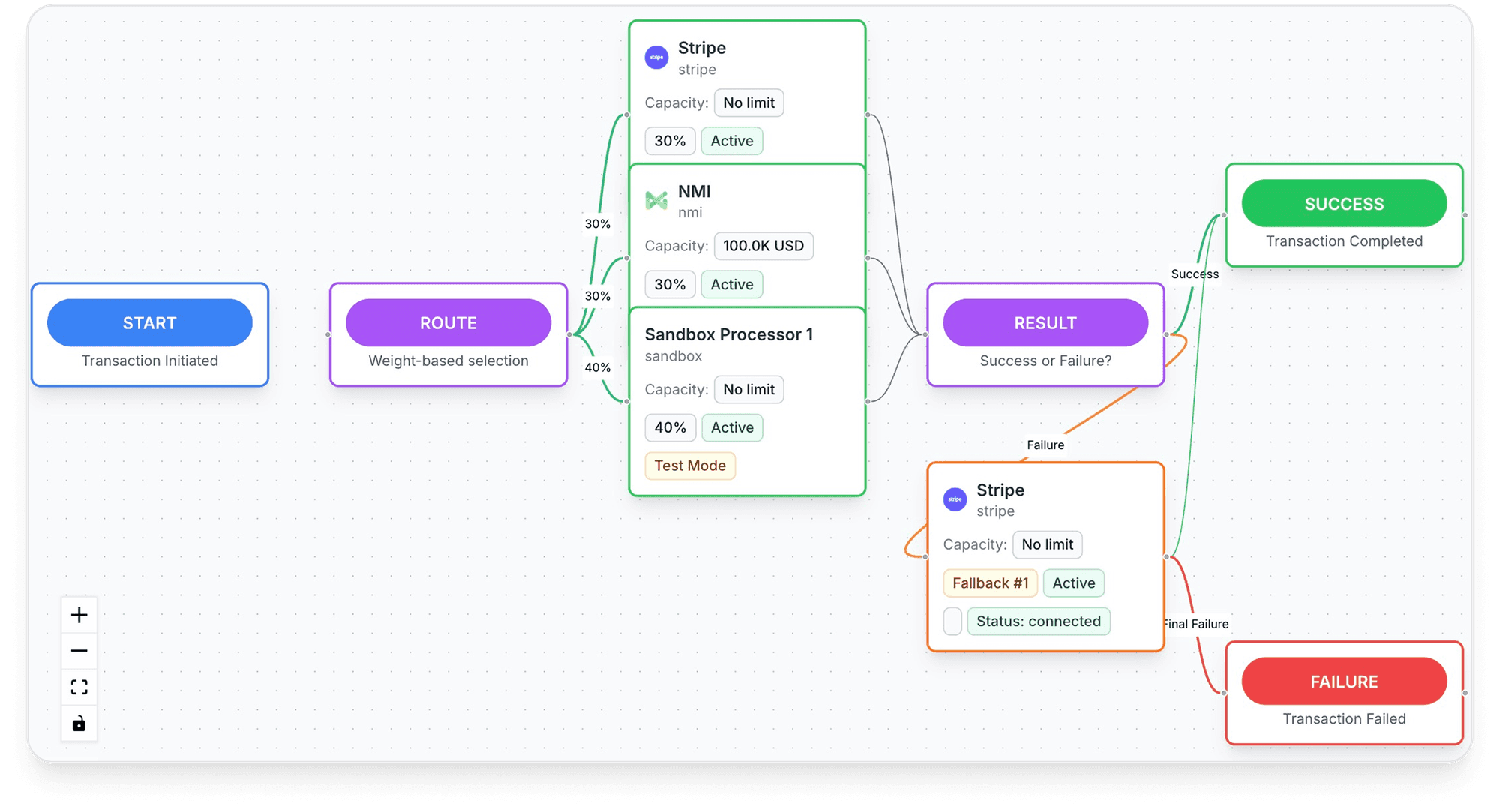
- Routing across Stripe, Adyen and TagadaPay, cascade on decline
- Subscriptions with trials, billing cycles, retries and automatic recovery
Plans are on the pricing page.
Frequently asked questions
What is a pseudo-pharmaceutical?
Are all supplements pseudo-pharmaceuticals on Stripe?
Why did Shopify Payments flag my supplements?
Can I get unflagged?
Sources
Checked October 26, 2026- Stripe, Restricted and prohibited businesses, updated September 22, 2026
- Shopify Help Center, Shopify Payments eligibility, read October 26, 2026
- Shopify Payments Terms of Service (US), read October 9, 2026
- 21 CFR 101.93, Certain types of statements for dietary supplements
- FDA, Questions and Answers on Dietary Supplements, August 27, 2026
- UK Business Forums, Advice needed having Shopify/Stripe payment issues, read October 26, 2026 (merchant reports)
- FTC, Health Products Compliance Guidance, December 2022
- 16 CFR 255.1(d), Consumer endorsements
TagadaPay
Flagged for claims? Get reviewed before you process
Tell us what you sell and how you sell it. Each application is underwritten, and approval is not guaranteed.
- 01Tell us what you sell and how
- 02Underwriting reviews your business
- 03Process through TagadaPay alongside your other processors