
Ecommerce Funnel Builder: What It Must Do and How to Choose One
What an ecommerce funnel builder must do: pages, checkout, bumps, post-purchase upsells, branching, payments, tracking, tests. Four kinds compared.

Article summary
TL;DR
An ecommerce funnel builder must run the sale, not just draw pages: a checkout with an order bump, a one-click upsell on the stored card, rules that send each buyer to the right next step, a backup route when a processor fails, and purchase events sent from the server. Judge those jobs before the page editor.
- Baymard's documented average cart abandonment rate is 70.22%, across 50 studies (updated September 2025).
- 10% of US shoppers who abandoned a checkout left after a declined card; a funnel whose failed exit leads nowhere can't win any of them back.
- On Shopify, apps that change the information, shipping and payment pages are available only on Shopify Plus.
- An upsell that starts a subscription needs its terms shown before billing details and the buyer's express informed consent under ROSCA.
- Baymard estimates better checkout design could lift an average large ecommerce site's conversion rate by 35.26%.
 ChatGPT
 Claude
 Perplexity
 Grok
On this page
This page is about choosing and running the tool. For each step of the funnel and the numbers to watch, see building a funnel for ecommerce. For named tools side by side, see sales funnel software compared.
What an ecommerce funnel builder has to do
Eight jobs. Most builders draw good pages; the gaps show up at the checkout, after payment and in the reporting.
| Job | Ask the vendor | Red flag |
|---|---|---|
| Landing and sales pages | Can I edit the mobile layout and add my own code? | Templates you can't change on a phone |
| Checkout | Is the checkout part of the tool, or a redirect to another platform? | A redirect that drops the cart or the tracking |
| Order bump | Can a bump show only for some products or cart totals? | One bump for every order |
| Post-purchase upsell | Is the upsell charged to the card from the first payment, with no card entry? | The buyer types the card again |
| Branching | Can the next step depend on country, device, traffic source or cart? | One path for everyone |
| Payments | Which processors work, and where does a payment go when one is down? | One processor, no backup route |
| Tracking | Are purchases sent to ad platforms from the server, per step? | Browser pixels only |
| Testing | Can I split traffic on one step and compare paid orders? | Tests that report clicks |
Each job has its own guide: the checkout, order bumps and one-click upsells.
Draw the funnel before you pick the tool
A funnel is a graph: steps joined by wires. Every step has exits, and every exit needs a destination. Draw yours on paper first; the tool has to be able to draw the same thing.
Fig. 1A product funnel, step by step
- Landing pageOne product, one promise
- CheckoutOrder bump, wallets, 3DS if needed
- OfferOne-click upsell, second charge
- DownsellOnly if the offer is declined
- Thank youConversion event fires
the offer step has two exits, and both lead somewhere
| Step | Exits | Where each exit should go |
|---|---|---|
| Checkout | Paid, failed | Paid: the offer. Failed: back to checkout to try another card or wallet |
| Offer | AcceptedDeclined | AcceptedThe next offer or thank you. Declined: a cheaper downsell, then thank you |
| Rule | Match, otherwise | Match: the offer for that segment. Otherwise: the default offer |
| Landing, thank you | Next | The following step |
Tagada's funnel canvas uses this exact model: a checkout exits on paid or failed, an offer on accepted or declined, and a rule branches on country, device, UTM source or cart content7Tagada Docs, Funnel Canvas, read November 3, 2026.
Watch out
A "failed" exit with no wire is a dead end. The buyer who was declined is the one most likely to leave, and 10% of abandoners already cite a declined card1Baymard Institute, Cart abandonment rate statistics and reasons for abandonment, updated September 22, 2025.
Four kinds of funnel builders
They differ on one thing: who runs the checkout. That decides what you can sell after payment and which processor takes the money.
| Kind | Examples | Who runs the checkout | Upsell after payment | Processors |
|---|---|---|---|---|
| Page app inside your store | Shopify page builder apps | The store platform | What the platform allows | The platform's |
| All-in-one funnel builder | ClickFunnels, Funnelish | The funnel tool | Built in | The tool's list of gateways |
| Plugin on your own site | WooCommerce funnel plugins | WooCommerce, through the plugin | Through the plugin | Your WooCommerce gateways |
| Checkout platform with a page builder | Tagada, Checkout Champ | The checkout platform | Built in, tied to the payment | Several, with routing |
The all-in-one tools say it on their own pages. Funnelish lists order bumps, one-click post-purchase upsells and downsells, native split testing, Stripe and PayPal, and a two-way sync with Shopify4Funnelish, Funnel Builder, read November 3, 2026. ClickFunnels lists a "Smart Checkout" and A/B tests "on your funnels or email campaigns"5ClickFunnels, Sales Funnels, read November 3, 2026.
Fig. 2Pick the kind before the brand
You only need nicer pages
A page app inside your store is enough. The store's checkout stays as it is.
You sell offers after payment
You need a tool that runs the checkout, so the upsell can charge the stored card.
One processor decides every sale
You need a checkout that can send a payment to a second processor when the first one is down.
the checkout decides more than the editor
Tools compared
Seven tools buyers shortlist for an ecommerce funnel, one or two per kind. Prices are the published list prices, billed monthly, as of November 2026.
| Tool | Kind | Published price (as of November 2026) | What it does | Main limit |
|---|---|---|---|---|
| ClickFunnels | All-in-one | Launch $97, Scale $197, Optimize $297 a month; $81, $164, $248 billed yearly11ClickFunnels, Pricing, read November 3, 2026 | Funnels, checkout, email, courses and A/B tests in one plan | Plans bundle email and courses; the price is the same if you only need checkout and offers |
| Funnelish | All-in-one | Basic $49, Pro $99, Advanced $249 a month; no extra Funnelish processing fee12Funnelish, Pricing, read November 3, 2026 | Pages, order bumps, one-click upsells, split tests; with Shopify or standalone4Funnelish, Funnel Builder, read November 3, 2026 | Visitor caps per plan (20,000 a month on Basic); gateway pools only on Advanced12Funnelish, Pricing, read November 3, 2026 |
| Checkout Champ | Checkout platform | Growth $300 a month plus 1% of sales, for stores with $50K+ monthly sales13Checkout Champ, Pricing, read November 3, 2026 | Checkout, funnels, CRM and subscriptions on many gateways | A share of sales on top of the monthly fee |
| sticky.io | Checkout platform | From $499 a month plus 1% of gross sales up to $500K a month, and $0.04 per decline14sticky.io, Pricing, read November 3, 2026 | CRM, drag-and-drop funnel and checkout builder, subscriptions14sticky.io, Pricing, read November 3, 2026 | Fees scale with sales volume and with each decline |
| CartFlows | WooCommerce plugin | Pro $199 the first year, then $299 a year; Starter $99, then $149, without bumps or upsells15CartFlows, Pricing, read November 3, 2026 | Replaces the WooCommerce checkout, with bumps, one-click upsells and A/B tests on Pro | WordPress and WooCommerce only; one-click upsells on its listed gateways15CartFlows, Pricing, read November 3, 2026 |
| Shopify with GemPages | Page app in your store | GemPages Build $29, Optimize $59, Enterprise $199 a month at list price, plus your Shopify plan16GemPages, Pricing, read November 3, 2026 | Drag-and-drop pages and post-purchase offers inside one Shopify store | The checkout stays Shopify's; checkout-page apps need Shopify Plus, from $2,300 a month2Shopify Help Center, Checkout apps, read November 2, 202617Shopify, Pricing, read November 3, 2026 |
| Tagada | Checkout platform | Plans on the pricing page | Funnel canvas, native checkout, bumps, upsells, per-step tests and routing7Tagada Docs, Funnel Canvas, read November 3, 20268Tagada Docs, Funnel Orchestrator, read November 3, 2026 | More to set up than a template builder: domains, processors and tracking per funnel9Tagada Docs, Funnel Lifecycle: Save, Publish and Go-Live, read November 3, 2026 |
Two numbers decide the real cost: the fee as a share of sales, and what the processor charges on top. More names, fees and trade-offs: sales funnel software compared, Funnelish alternatives and Tagada vs Funnelish.
Where the funnel runs: Shopify, WooCommerce, standalone or headless
Your store platform sets the limits. Check them before you design the offers.
Fig. 3What your platform lets the funnel do
- Shopify, Plus planApps on the information, shipping and payment pagesWhich offers your checkout apps support
- Shopify, other plansApps on thank you and order status pages onlyMove checkout off Shopify to sell before payment
- WooCommerceA plugin replaces checkout pagesThat it works with your payment gateway
- Standalone or headlessYou own every stepWho maintains pages, payments and tracking
the payment page is where most limits bite
On Shopify, apps that customize the information, shipping and payment pages are "available only to Shopify Plus"2Shopify Help Center, Checkout apps, read November 2, 2026. A funnel that sells a bump before payment on another plan has to run its checkout outside Shopify. Options side by side: Shopify checkout alternative.
Payments inside the funnel
The funnel is only as good as the payment in the middle of it. Three things to check.
- A second route when a processor fails. When the first processor times out, is down or blocks the payment under its own risk rules, the funnel should send it to another one, not end.
- No reroute after a bank decline. Visa forbids changing the acquirer, the MCC or the country to resubmit a transaction the card's bank declined, and any new attempt after a Category 1 decline (Core Rules §1.7.2.1, October 24, 2026 edition)10Visa Core Rules and Visa Product and Service Rules, edition of October 24, 2026, §1.7.2.1. The buyer tries another card or wallet instead.
- A stored card for the upsell. The post-purchase offer charges the card saved at checkout, with the buyer's consent, so the buyer never types it again.
- Consent for recurring offers. An upsell that starts a subscription needs clear terms before billing details, express informed consent and a simple way to cancel under ROSCA3Restore Online Shoppers' Confidence Act, 15 U.S.C. § 8403, read November 2, 2026.
Fig. 4One order through a funnel with a backup route
approved declined or closed routing step
- CheckoutCard or wallet, order bump ticked
- charges
 Processor ATimeout, or down or timed outDeclined
- retries
 Processor BApprovedApproved
- paid exitOffer pageSecond charge on the stored card
- nextThank youPurchase event sent
a processor failure is recovered before the offer step
How routing works: payment orchestration and dynamic payment routing. Subscription offers and their rules: subscriptions.
Track every step
A funnel spread over several tools loses buyers in the reports. Send one event per step, and the purchase from the server.
- One session across steps: same visitor ID from the landing page to the thank you page, even if a step lives on another domain.
- Purchase from the server: fire it when the payment succeeds, once, with value and currency. Ad blockers don't stop a server call.
- One event per charge: the upsell is a second payment, so it gets its own purchase event and transaction ID.
- Drop-off per step: views, entries and conversions for each step, so you know which one to fix first.
How it works: server-side tracking and cross-domain tracking.
Funnel math: what one extra step is worth
The value of a funnel is the revenue per buyer, not the conversion rate of one page. Work out each step on your own numbers before you build it.
Example
1,000 paid orders at $50 each. A bump at $9 taken by 1 buyer in 5 adds $1,800. A one-click upsell at $30 accepted by 1 buyer in 10 adds $3,000. Average order value moves from $50 to $54.80, from the same ad spend. Illustrative figures: measure your own take rates.
| Step | What to measure | Formula |
|---|---|---|
| Landing page | Click-through to checkout | Checkout visits ÷ landing visits |
| Checkout | Paid orders | Paid orders ÷ checkout visits |
| Order bump | Take rate | Bumps sold ÷ orders where it was shown |
| Offer | Acceptance | Offers accepted ÷ offers shown |
| Whole funnel | Average order value | Revenue ÷ paid orders |
More on the formulas: average order value and upsell rate. The full worked funnel: building a funnel.
Launch a funnel in six steps
- Draw the graph: steps, exits, and where each exit goes, including the failed payment.
- Build the pages: landing, checkout with one bump, one offer, one downsell, thank you.
- Set payments and tracking: processors and the backup route, wallets, server-side purchase events per step.
- Preview without real payments, on a staging address, and walk every exit once.
- Publish on your domain, then send a share of traffic to it.
- Test one step at a time, on paid orders and revenue per visitor, not clicks.
Order of work for a first funnel on a new builder.
Testing a step without fooling yourself: checkout A/B testing. Building the first page: ecommerce landing page builder.
By industry
| Industry | What changes | Guide |
|---|---|---|
| Supplements | Supply tiers on the landing page, a subscription offer with its own consent, a backup processor | Sales funnels for supplement brands |
| Skincare | A quiz that matches the visitor to a routine, then a kit and a refill subscription | Sales funnels for skincare brands |
| Fitness | Accessory bumps, freight on heavy equipment, sports nutrition renewals | Sales funnels for fitness brands |
| Info products | Webinar and sales pages, payment plans, offers that stay clear of income promises | Sales funnels for info product businesses |
| Online pharmacy | Eligibility questions, a card hold until prescription review, refills | Sales funnels for online pharmacies |
| Telehealth | A branching intake, a clinician decision before any charge, no health data in tracking | Sales funnels for telehealth companies |
How Tagada helps
One funnel, from the ad click to the second charge
- Funnel pages three ways: the native checkout with no code, your own HTML, or the Plugin SDK in React or JavaScript, which handles tokenization, 3DS and payment (funnel pages)6Tagada Docs, Funnel Pages, read November 3, 2026.
- Page types for each step: landing, checkout with order bumps, offer for upsells and downsells, thank you where conversion fires, custom, external, and Shopify or WooCommerce storefront entries6Tagada Docs, Funnel Pages, read November 3, 2026.
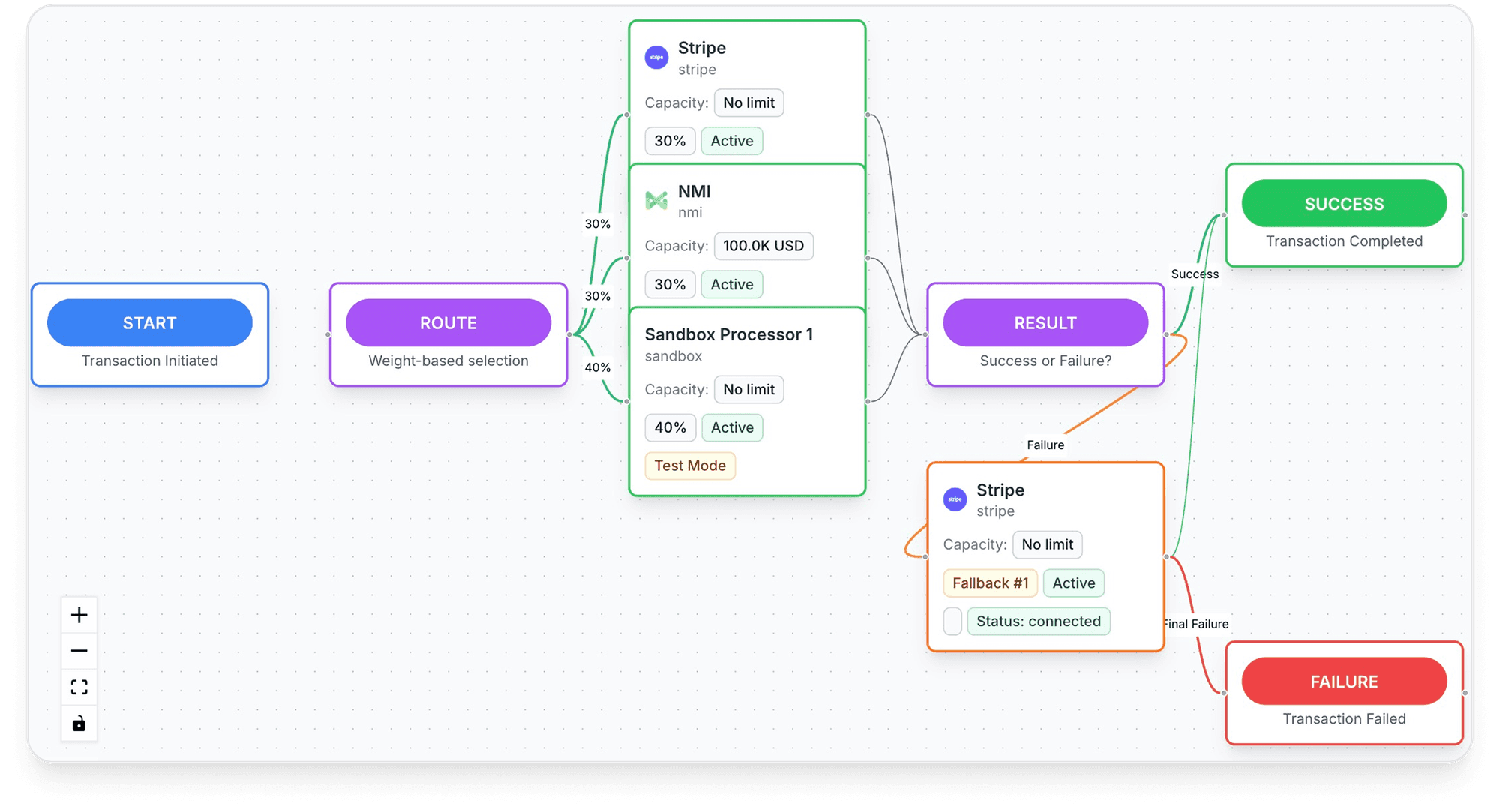
- A canvas with exits and rules: paid or failed, accepted or declined, and branches on country, device, UTM source or cart content (funnel canvas)7Tagada Docs, Funnel Canvas, read November 3, 2026.
- Conversion analytics per step and A/B tests per step, with routes mounted when you save (funnel orchestrator)8Tagada Docs, Funnel Orchestrator, read November 3, 2026.
- Staging, preview and publish: save to a staging address, test with a preview session, promote to your own domain (funnel lifecycle)9Tagada Docs, Funnel Lifecycle: Save, Publish and Go-Live, read November 3, 2026.
- Pixels and scripts per step for Meta, TikTok, Snapchat and Google Tag Manager, plus the Meta Conversions API from the server (scripts and pixels per step).
- TagadaStudio to design pages by drag and drop, with an MCP server so an AI agent can edit them live (TagadaStudio).
- Payments in the same flow: routing across TagadaPay and processors such as Stripe, NMI and Airwallex, with one logic18Tagada Docs, Payment Processors, read November 3, 2026. "Automatic cascade, weighted routing, sticky MID." TagadaPay reports a "+18% approval uplift."
- A vault you own: "Switch processors without re-onboarding customers. No vendor lock-in. Ever."
- Already on a platform? "Already on Shopify, WooCommerce, ClickFunnels or BigCommerce? Drop TagadaPay in."
Tagada follows Visa and Mastercard rules and the laws that apply to payments. It runs standalone, on Shopify, on WooCommerce or headless. Plans are on the pricing page. To take payments with TagadaPay, apply today: "Most merchants are live under 24 hours," according to TagadaPay.
Frequently asked questions
What is the best funnel builder for ecommerce?
Do I need a funnel builder if I have Shopify?
What is the difference between a funnel builder and a landing page builder?
Can a funnel builder use my own payment processor?
How many steps should an ecommerce funnel have?
How do I track a funnel that spans several tools?
Sources
Checked November 3, 2026- Baymard Institute, Cart abandonment rate statistics and reasons for abandonment, updated September 22, 2025
- Shopify Help Center, Checkout apps, read November 2, 2026
- Restore Online Shoppers' Confidence Act, 15 U.S.C. § 8403, read November 2, 2026
- Funnelish, Funnel Builder, read November 3, 2026
- ClickFunnels, Sales Funnels, read November 3, 2026
- Tagada Docs, Funnel Pages, read November 3, 2026
- Tagada Docs, Funnel Canvas, read November 3, 2026
- Tagada Docs, Funnel Orchestrator, read November 3, 2026
- Tagada Docs, Funnel Lifecycle: Save, Publish and Go-Live, read November 3, 2026
- Visa Core Rules and Visa Product and Service Rules, edition of October 24, 2026, §1.7.2.1
- ClickFunnels, Pricing, read November 3, 2026
- Funnelish, Pricing, read November 3, 2026
- Checkout Champ, Pricing, read November 3, 2026
- sticky.io, Pricing, read November 3, 2026
- CartFlows, Pricing, read November 3, 2026
- GemPages, Pricing, read November 3, 2026
- Shopify, Pricing, read November 3, 2026
- Tagada Docs, Payment Processors, read November 3, 2026
Tagada
Pages, checkout and offers in one funnel
Funnels, one-click upsells, subscription billing and payment routing, on one customer record.
- 01Create your free account
- 02Connect your store or build a checkout
- 03Launch funnels, upsells and subscriptions